Express.Love

💝Human
The Science of Forgiveness and Brain Healing
Greater Good Science Center explains how forgiveness activates brain networks for emotional regulation, breaks rumination loops, and promotes biological healing through neuroplasticity.

🎬Video
Dopamine, Serotonin, Oxytocin, Endorphin - Happy Brain Chemicals
Discover how dopamine, serotonin, oxytocin, and endorphins actually work — revealed through animal behavior. Each chemical fires only when survival is at stake, not as a constant reward.

🎬Video
Optimize Your Health | The Science Behind Vagus Nerve Stimulation
Dr. Dan Nightingale reveals 9 free ways to stimulate the vagus nerve and boost vagal tone for mental health. Deep nasal breathing, humming, probiotics, and cold exposure activate the parasympathetic system to reduce trauma responses and stress.

🎬Video
Dacher Keltner on the Vagus Nerve
The vagus nerve — your body's "love nerve" — activates during compassion and connects heart rate, breathing, and immune response. People with stronger vagal activity show more kindness, deeper social bonds, and a greater sense of shared humanity.

🎬Video
Basic Science of the Brain and Addiction: Serotonin Neurotransmitters
Your brain has 22+ serotonin receptor subtypes — and your genetics determine which ones you have. This explains why antidepressants like Prozac work differently for each person and why alcohol triggers a calming chemical surge.

🎬Video
SOCIAL ISOLATION: Episode 120 | WHO Science in 5 Series
Loneliness raises your risk of early death by up to 32%—matching dangers like smoking and obesity. Strong social bonds, not just frequent contact, protect your heart, brain, and mental health.
🎬Video
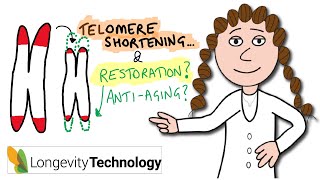
Why telomeres shorten and restoration strategies in aging
Telomere shortening drives cellular aging by triggering replicative senescence at the Hayflick limit, halting cell division after ~50 replications. Nobel-winning research on telomerase reveals how cells can rebuild these protective DNA caps — and why that ability links directly to cancer and longevity.
🎬Video
Fungi: Death Becomes Them - CrashCourse Biology #39
Fungi decompose nearly every dead organism on Earth, recycling organic matter back into soil that makes all new life possible. Louis Pasteur's 1857 yeast experiments revealed that fermentation — the same process behind beer and bread — is fungi's ancient superpower: absorbing energy by breaking down complex molecules.
🎬Video
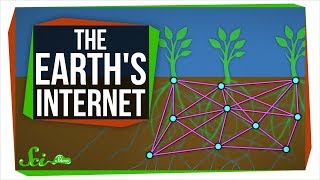
The Earth's Internet: How Fungi Help Plants Communicate
Ecologist Suzanne Simard's radioactive carbon experiment proved trees share nutrients through underground fungal networks called mycorrhizae. These "Wood Wide Web" connections let plants warn each other of pests, feed shaded neighbors, and even pass carbon to the next generation.

🎬Video
Eco-Grief and Ecofeminism | Heidi Hutner | TEDxSBU
A cancer survivor traces her family's three diagnoses to environmental toxins, uncovering how synthetic chemicals and radiation have driven childhood cancer rates from near-zero to a leading killer. Eco-grief becomes fuel: women-led movements prove collective action can reverse the damage.

🎬Video
What Does The Vagus Nerve ACTUALLY Do?
Vagus nerve stimulation uses electrical pulses to treat epilepsy, depression, and stroke recovery — but the science behind *why* it works remains incomplete. DIY "vagus nerve resets" trending on social media range from partially grounded in physiology to genuinely dangerous.

🎬Video
The Science of Emotion Regulation: How Our Brains Process Emotions
Your amygdala, hippocampus, and prefrontal cortex work together to generate and regulate emotions — often before you're consciously aware. Early trauma can overactivate the amygdala, hijacking rational thought and trapping you in uncontrollable emotional responses.

🎬Video
The Science of Social Starvation (How Isolation Changes You)
Loneliness triggers the same brain circuits as hunger, causes oxytocin dysregulation, and shrinks the hippocampus by up to 10% after prolonged isolation. Evolution wired social pain as a survival alarm — but in modern life, that alarm can rewire your brain against connection.
🎬Video
Insights from Assessing Management Impacts on the Soil Microbiome
Soil scientist Dr. Liz Riki links tillage intensity to microbial community shifts using 124 North American research sites. No-till soils consistently host distinct microbes that drive higher carbon mineralization — a measurable sign of living soil health.

🎬Video
Arnold B. Scheibel - How Brain Scientists Think About Consciousness
A neuroscientist holds a real human brain to map how two parallel systems — the cortex and reticular core — generate consciousness, attention, and memory. Damage to the hippocampus reveals that without it, the brain loses all ability to form new memories while old ones remain intact.
🎬Video
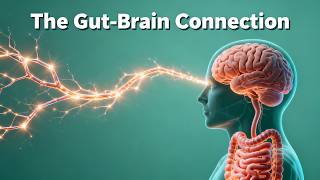
The Gut-Brain Connection (Science Explained Simply)
Your gut contains 100 million nerve cells and produces 90% of your body's serotonin, directly shaping mood, focus, and stress. Learn how the gut-brain axis works and which daily habits restore balance between your microbiome and mental clarity.
🐾Animal
A World Without Bees
Bees pollinate 70 of the world's top 100 crops — and WWF Chief Scientist John Hoekstra reveals their loss could slash agave reproduction to 1/3,000th. Without bees, food costs soar, ecosystems collapse, and your diet shrinks to little more than grain.
🐾Animal
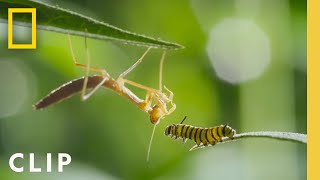
Monarch Migration and Metamorphosis
A dying monarch butterfly lays hundreds of eggs on backyard milkweed, completing her life's only mission before her babies hatch. Science reveals her caterpillars inherit her exact GPS and purpose — evolution's most elegant relay race.
🌍Planet
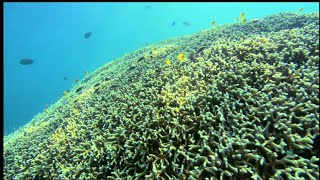
Phytoplankton Levels Dropping
NASA satellites detected a 1% annual drop in Northern Hemisphere phytoplankton from 1998–2012. These invisible ocean plants drive 25% of human CO₂ absorption and anchor the entire marine food chain.
🌍Planet
Interceptor Solutions to Stop Plastic
The Ocean Cleanup's Interceptor targets the 1% of rivers responsible for 80% of ocean plastic — stopping pollution at its source. Deploying these machines across 1,000 rivers worldwide proves that scalable technology, paired with local partnerships, can rapidly close the tap on plastic reaching our seas.
🌍Planet
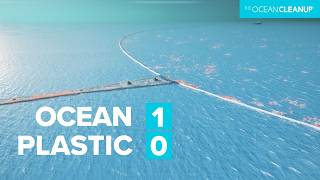
Heres How We Rid the Worlds Oceans of Plastic
Join us as we explore innovative solutions and inspiring initiatives that are making waves in the fight against ocean plastic. Together, we can create a cleaner, healthier planet for all.
🌍Planet
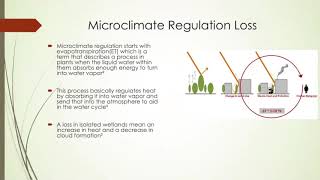
Geographically Isolated Wetland Deregulation and the Impacts of its Destruction on the United States
Carla Peralta's research reveals how destroying isolated wetlands — 29% of all U.S. wetlands — strips away flood control, microclimate cooling, and pollution filtration. Deregulation under the Clean Water Act rollback now lets pesticides and fertilizers overwhelm these ecosystems, triggering algal dead zones and worsening urban flooding.
🌍Planet
IN HINDI ✅ Wetland & it's Types | Importance, Threats & Protection of wetlands |@DharmrajCreation
Wetlands act as nature's water banks — filtering pollution, recharging groundwater, and sheltering wildlife across marshes, swamps, and coastal mangroves. Urban expansion, illegal construction, and climate change are rapidly destroying these ecosystems, making community awareness and legal protection urgent.

🌍Planet
Human impacts on ecosystems | Biodiversity and human impacts | High school biology | Khan Academy
Human activity disrupts ecosystems through five key forces: habitat destruction, pollution, invasive species, over-exploitation, and climate change. Each threat compounds the others, pushing species toward extinction and ultimately endangering human survival itself.
🐾Animal
The deathly cost of drug-resistant infections
The Eco AMR report projects 39 million deaths and $5 trillion in economic losses from drug-resistant bacteria by 2050. Cutting antimicrobial use 30% in livestock and investing in healthcare now could save 110 million lives with a 28-to-1 return.

🐾Animal
How can we solve the antibiotic resistance crisis? - Gerry Wright
Antibiotic resistance is outpacing new drug discovery, threatening to make routine surgeries and cancer treatment life-threatening. Profit-driven pharmaceutical decisions — not science — explain why we're losing our most critical medical tool.
🐾Animal
What causes antibiotic resistance? - Kevin Wu
Antibiotic-resistant superbugs like MRSA evolve through natural selection, surviving drugs by mutating faster than medicine can keep up. Scientists are fighting back with phage therapy, new antibiotics, and smarter usage to slow the superbug takeover.
🌍Planet
The threat of invasive species - Jennifer Klos
Invasive species like kudzu, Burmese pythons, and European rabbits reveal how ecosystems collapse when limiting factors fail to control a non-native species. Science shows millennia of coevolution create fragile balances that a single introduction can permanently destroy.
🌍Planet
The Invasive Animals Destroying the Planet
Invasive species like silver carp, cane toads, and rabbits have collapsed entire ecosystems after humans introduced them to new environments. Science reveals how quickly nature unravels when even a handful of misplaced animals outcompete, poison, or outbreed every native species around them.
🌍Planet
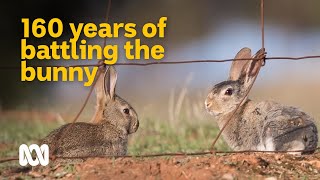
160 year battle against one of Australia's worst invasives 🐇 | Meet the Ferals Ep 6 | ABC Australia
Australia's 165-year war on rabbits — from poison drops and disease to the accidental release of the calicivirus — reveals how 24 imported rabbits reshaped an entire continent. Biological controls like myxomatosis and RCD slashed populations by 90%, triggering dramatic ecological recovery across millions of hectares.
🌍Planet
Overfishing: The worst and best fish you can eat
Seafood Watch scientist Ryan Bigelow breaks down which fish are safe to eat — and which, like bluefin tuna and eel, are critically endangered. Bottom trawling, longline bycatch, and carnivorous fish farms reveal why "sustainable seafood" demands far more than a label.
![इंसान कितनी मछलियां खा रहे हैं, देखिए [What is overfishing?]](https://img.youtube.com/vi/7WlptA9LfNM/mqdefault.jpg)
🌍Planet
इंसान कितनी मछलियां खा रहे हैं, देखिए [What is overfishing?]
Horses pull massive nets through China's frozen Chaqian Lake at -26°C, harvesting 450 tons of fish in just 11 days using a centuries-old tradition. Global overfishing now strips oceans faster than fish can reproduce, threatening the protein supply of 3 billion people worldwide.

🌍Planet
Will the ocean ever run out of fish? - Ayana Elizabeth Johnson and Jennifer Jacquet
Overfishing has pushed species like bluefin tuna and Patagonian toothfish toward collapse through industrial-scale fishing technology once built for war. Science shows marine reserves, fishing limits, and consumer pressure can reverse population crashes — but only with strict enforcement and global cooperation.
🌍Planet
How one scientist took on the chemical industry - Mark Lytle
Rachel Carson's *Silent Spring* exposed how DDT accumulated through food chains, silencing bird populations and threatening human health. Her science-backed challenge to chemical industry power sparked the environmental movement and led to DDT's ban.

🌍Planet
Pesticides - DDT - Rachel Carson - Silent Spring
DDT was once sprayed on children and sold as safe — until Rachel Carson's *Silent Spring* exposed how it silently devastated birds, ecosystems, and human health. Her findings launched the modern environmental movement and proved that "scientific progress" can hide catastrophic blind spots.

🌍Planet
Do we really need pesticides? - Fernan Pérez-Gálvez
Pesticide use has shaped agriculture for centuries — from arsenic sprays to DDT's Nobel Prize-winning rise and eventual ban. Rapid insect evolution keeps creating chemical-resistant "superbugs," pushing scientists toward drones and biological alternatives.
🌍Planet
What if We Accidentally Eat Plastic? | How Microplastics Affect your Health? | Dr. Binocs Show
Humans ingest the equivalent of a credit card's worth of microplastics weekly — absorbing particles that damage organs and disrupt hormones. Swap plastic containers for glass or steel, and cut single-use plastics to reduce your exposure.
🌍Planet
What Is PLASTIC POLLUTION? | What Causes Plastic Pollution? | The Dr Binocs Show | Peekaboo Kidz
Plastic pollution kills millions of animals yearly — sea turtles mistake bags for jellyfish, and microplastics now appear in 114 marine species and most tap water. Single-use plastics make up 40% of all plastic trash, but recycling, reusable containers, and smarter choices can reverse the damage.
🌍Planet
Plastic Pollution: How Humans are Turning the World into Plastic
Plastic takes 500–1,000 years to break down, yet 40% is used for single-use packaging — and 79% of all plastic ever made still pollutes our planet. Microplastics now travel up the food chain into human bodies, with BPA found in 93% of people's urine.
🐾Animal
The 6th Extinction - Decline in Amphibian Populations (Second Life Machinima)
Explore the delicate balance of nature in this poignant machinima, as we delve into the heartbreaking decline of amphibian populations. Join us in raising awareness and fostering a love for these vital creatures that share our planet.
🐾Animal
Wildlife in decline by almost 70% since 1970, says report - BBC News
Wildlife populations have plummeted 69% since 1970, with freshwater species down 83% and Latin American animals losing 94% of their numbers. WWF warns that without urgent global action at December's Montreal summit, collapsing biodiversity will make the 1.5°C climate target impossible to reach.
🐾Animal
What's Killing the World's Amphibians?
A deadly aquatic fungus called Bd has driven nearly 170 amphibian species extinct by destroying the skin they rely on to breathe and absorb vital nutrients. One-third of the world's 7,000 amphibian species now face extinction, partly spread by the global pet and food trade.
🌍Planet
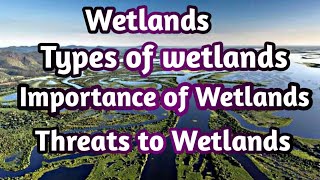
|| Wetlands || Types of Wetlands || Importance of Wetlands || Threats to wetlands||
Wetlands act as natural water filters, flood controllers, and biodiversity hotspots — yet they're vanishing fast. Science shows these ecosystems store carbon, purify water, and sustain millions of species worldwide.
🌍Planet
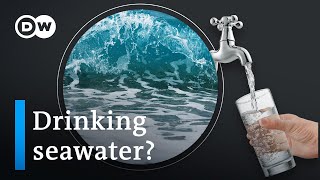
Can desalination solve the global water crisis?
Cape Town's "Day Zero" water crisis reveals why desalination—removing salt from seawater—is becoming humanity's fastest-growing freshwater solution. Solar-powered plants now produce 1,000 liters for 50 cents, but toxic brine waste threatens ocean ecosystems with no global plan in place.
🌍Planet
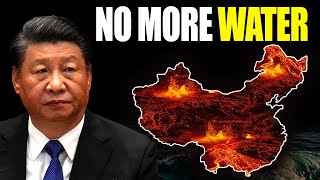
China's Water Crisis, Running Out of WATER, FOOD & ENERGY
China's Jiangling River has run dry amid record heat, leaving 350,000 people without water and crops dying across the region. With only 7% of global freshwater for 21% of the world's population, China's water crisis threatens global food and energy markets.
🌍Planet
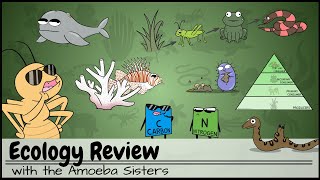
Ecology Review: Food Chains & Webs, Relationships, Nitrogen & Carbon Cycles, Effects on Biodiversity
Termites anchor an ecology review covering food webs, trophic levels, the 10% energy rule, and symbiotic relationships. See how removing one species triggers cascading effects that reveal why biodiversity drives ecosystem stability.

🌍Planet
Climate change: what is ocean acidification?
Ocean acidification is dissolving marine shells 76% thinner and collapsing deep-sea coral reefs — and scientists say the worst is no longer avoidable. Vanessa O'Brien's Challenger Deep dive and 150-year-old shell comparisons reveal how CO2 is rewriting ocean chemistry at an unprecedented speed.
🌍Planet
Climate Change 101 with Bill Nye | National Geographic
Human activity has raised Earth's temperature 1.2–1.4°F in just one century, triggering ocean acidification, melting glaciers, and doubled sea-level rise rates. 97% of climate scientists confirm we caused it — and our daily choices can help reverse it.

🐾Animal
The Power of Pollinators
North America's 4,000+ native wild bee species outperform honeybees as pollinators, using tricks like buzz pollination to fertilize crops no other insect can. With half of wild bee species declining, even one square foot of native wildflowers in your yard can help reverse their extinction.
🐾Animal
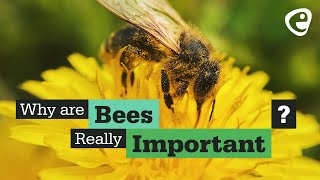
Why are bees important?
Bees pollinate $3 billion worth of food annually, trained to detect explosives, and signal climate shifts — making their collapse a crisis far beyond honey. Colony collapse disorder threatens pizza, biodiversity, flood prevention, and even crime-fighting, revealing how deeply human survival depends on these insects.