
Harnessing Mycorrhizal Networks for Accelerated Ecosystem Recovery and Plant Establishment
Evidence-based science journalism. Every claim verified against peer-reviewed research.
Peer-Reviewed Science
35 published papers · click to read
10,829
combined citations
Georgia C. Drew
Microbial evolution and transitions along the parasite–mutualist continuum — Nature Reviews Microbiology
Zhiqiang Pang
Chinese Academy of Agricultural Sciences
Xishuangbanna Tropical Botanical Garden, Chinese Academy of SciencesLinking Plant Secondary Metabolites and Plant Microbiomes: A Review — Frontiers in Plant Science
656 citations
Abdul Wahab
Chinese Academy of Sciences
Chinese Academy of Sciences, Shanghai 200032Role of Arbuscular Mycorrhizal Fungi in Regulating Growth, Enhancing Productivity, and Potentially Influencing Ecosystems under Abiotic and Biotic Stresses — Plants
433 citations
Kendra K. McLauchlan
Kansas State University
Department of Geography and Geospatial Sciences Kansas State University Manhattan KS USAFire as a fundamental ecological process: Research advances and frontiers — Journal of Ecology
677 citations
Ying Ma
Drought and Salinity Stress Responses and Microbe-Induced Tolerance in Plants
630 citations
Shabana Hoosein
AM fungal-bacterial relationships: what can they tell us about ecosystem sustainability and soil functioning?
9 citations
M. Amine Hassani
Microbial interactions within the plant holobiont
1,408 citations
Jake M. Robinson
Probiotic Cities: microbiome-integrated design for healthy urban ecosystems
8 citations
Seema B. Sharma
Phosphate solubilizing microbes: sustainable approach for managing phosphorus deficiency in agricultural soils
2,046 citations
Kevin D. Hyde
Kunming Institute of Botany
Kunming 650201, People's Republic of ChinaThe amazing potential of fungi: 50 ways we can exploit fungi industrially — Fungal Diversity
794 citations
Researchers identified from peer-reviewed literature indexed in Semantic Scholar · OpenAlex · PubMed. Each card links to the original published paper.
Professional Boundary: The content on Express.Love is for informational and educational purposes only. It is not intended to be a substitute for professional medical advice, diagnosis, or treatment. Always seek the advice of your physician or other qualified health provider with any questions you may have regarding a medical condition.
Soul Intro: The Wood Wide Web Beneath Our Feet
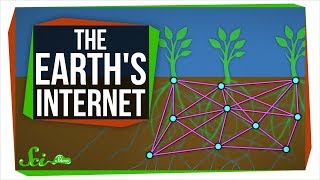
Beneath a seemingly quiet forest floor, a hidden kingdom thrums with activity. Imagine a gossamer network of fungal threads, pale and delicate, weaving through the dark soil. These are the mycelia of mycorrhizal fungi, and they connect the roots of neighboring plants in a living, underground web. Through this network, trees and shrubs share water, nutrients, and even warning signals about pests or drought. This is not science fiction—it is the foundational biology of healthy ecosystems. Mycorrhizal networks are vital for plant resilience, particularly in the face of environmental stress.
They act as a subterranean circulatory system, shuttling resources from nutrient-rich patches to plants in need. For decades, ecologists have understood that these fungi are partners in plant health, but only recently has their potential for ecosystem restoration come into sharp focus. In degraded landscapes, where soil is stripped of life and plants struggle to establish, these fungal allies may be the key to jumpstarting recovery. They are nature’s unsung heroes, working silently to rebuild the living infrastructure of our planet. This article explores the science behind these networks and how we can harness them to accelerate the healing of damaged ecosystems.
Mechanism Deep Dive: The Symbiotic Exchange That Fuels Plant Growth
The partnership between arbuscular mycorrhizal fungi (AMF) and the majority of land plants is one of the most successful symbioses on Earth. In this mutualistic relationship, the fungus colonizes the plant root, sending tiny, tree-like structures called arbuscules into the root cells. These arbuscules are the sites of a critical exchange: the plant provides the fungus with carbon-rich sugars produced through photosynthesis, while the fungus delivers essential nutrients, particularly phosphorus, which is often scarce in soil.
Research demonstrates that AMF promote plant health and productivity, especially under challenging environmental conditions (10.3390/plants12173102). The fungal hyphae extend far beyond the plant’s root zone, acting as a massive extension of the root system. This allows the plant to access water and nutrients from a much larger volume of soil than it could on its own.
The benefits of this relationship are multifaceted and directly relevant to ecosystem recovery. As summarized in the table below, AMF enhance plant growth, improve nutrient absorption, and bolster stress resilience—all critical factors for establishing vegetation in degraded or disturbed landscapes.
| Benefit Category | Specific Impact | Relevance to Ecosystem Recovery |
|---|---|---|
| Plant Growth | Enhanced growth and development | Faster establishment of vegetation post-disturbance |
| Nutrient Absorption | Improved uptake of essential nutrients (e.g., Phosphorus) | Increased plant vigor in nutrient-poor or degraded soils |
| Stress Resilience | Bolstered tolerance to abiotic stresses (drought, salinity) | Higher survival rates and adaptation in harsh or changing environments |
The physical mechanism is elegant: the fungal hyphae secrete enzymes and organic acids that solubilize phosphorus from soil minerals, making it available for plant uptake. In return, the plant sends up to 20% of its fixed carbon to the fungus.
This exchange is not passive; it is regulated by both partners, with the plant able to reward more cooperative fungal partners with more carbon. This dynamic negotiation ensures that the symbiosis remains mutually beneficial, a principle that is crucial for understanding how these networks can be managed for restoration.
Mechanism Deep Dive: How Mycorrhizal Networks Build Resilience Against Stress
Environmental stresses like drought and salinity are major obstacles to plant establishment and ecosystem recovery. These stressors trigger a cascade of detrimental effects on plants, including reduced photosynthesis, altered metabolism, and impaired nutrient uptake.
The impact of drought and salinity on plant growth, development, and productivity occurs through various morphological, physiological, biochemical, and metabolic alterations (10.3389/fpls.2020.591911). In degraded soils, these stresses are often amplified, creating a hostile environment for seedlings.
AMF offer a powerful countermeasure. By improving the plant’s access to water and nutrients, they help buffer the plant against the negative impacts of stress. Research shows that AMF bolster plant resilience and growth during abiotic stress, aiding plant adaptation and stress reduction (10.3390/plants12173102).
The fungal hyphae can directly transport water to the plant, and the improved phosphorus nutrition helps the plant maintain metabolic functions under duress. Furthermore, AMF colonization can trigger changes in the plant’s own stress-response systems, including the production of protective compounds.
This is where the interaction between plant secondary metabolites (PSMs) and the plant microbiome becomes critical. PSMs are chemical compounds produced by plants that serve diverse functions, from defense against herbivores to signaling. The plant microbiome—the community of microorganisms living on and inside the plant—also plays a key role in stress response.
The communication is bidirectional: plants influence their microbiome through the production of PSMs, and the microbiome, in turn, can modulate the plant’s stress response and production of these metabolites. However, not much is known about the specific communications between PSMs and plant microbiomes (10.3389/fpls.2021.621276). Understanding these complex interactions is a frontier of research, but it is clear that AMF are central players in this network, helping to orchestrate the plant’s defense and adaptation strategies in challenging conditions.
Action-Encyclopedia Module: Fungal Biotechnology for Restoration
The practical applications of this knowledge are vast. Fungi as a whole are biotechnologically valuable organisms with diverse survival mechanisms, offering potential for industrial applications and novel products (10.1007/s13225-019-00430-9).
Their ability to thrive in varied environments, produce enzymes, and form symbiotic relationships makes them ideal tools for ecological engineering. For ecosystem restoration, the focus is on harnessing AMF to improve plant establishment and soil health.
Understanding AMF's role is vital for sustainable agriculture, ecosystem management, and climate change mitigation (10.3390/plants12173102). In practice, this means that restoration projects can incorporate AMF inoculation—introducing beneficial fungi to degraded soils—to give native plants a head start. For example, after a mining operation strips topsoil, the land is often left barren and nutrient-poor.
Inoculating the soil with a consortium of native AMF can help pioneer plant species establish, initiating the process of ecological succession. Similarly, in agricultural systems transitioning to regenerative practices, managing soil to support native AMF communities can reduce the need for synthetic fertilizers and improve crop resilience to drought.
The “action” here is clear: support the development and application of AMF-based restoration products. This includes funding research into the most effective fungal strains for different ecosystems, developing cost-effective methods for large-scale fungal cultivation, and training land managers in the use of these biological tools.
By integrating fungal biotechnology into restoration practice, we move beyond simply planting trees and begin rebuilding the living infrastructure of the soil itself.
Action-Encyclopedia Module: Leveraging Dynamic Symbioses for Post-Fire Recovery
Symbiotic relationships between plants and microorganisms are not static; they are dynamic and can evolve rapidly. Microorganisms, including those that form symbioses with plants, can shift along a parasite-mutualist continuum, and these interactions shape host biology and community structure (10.1038/s41579-021-00550-7).
This means that the outcome of a plant-fungal interaction can change depending on environmental conditions. Under stress, a normally beneficial fungus might become less helpful, or a pathogen might become more aggressive. Understanding this dynamism is crucial for managing ecosystems in a changing world.
Fire is a fundamental ecological force that regulates ecosystem function, but increasingly destructive wildfires and fire exclusion pose societal challenges (10.1111/1365-2745.13403). In fire-prone ecosystems, the mycorrhizal network can be severely damaged by intense heat. However, some fungi are adapted to survive fire, either as resistant spores or by colonizing surviving plant roots. These resilient fungi can be crucial for post-fire recovery.
By inoculating burned areas with fire-adapted AMF, we can accelerate the re-establishment of native vegetation. The action here is to integrate knowledge of fire ecology with mycorrhizal biology. This means identifying and preserving “refugia” of healthy soil fungi in fire-prone landscapes, and developing post-fire restoration protocols that include soil fungal inoculation. By working with the dynamic nature of these symbioses, we can help ecosystems recover more quickly and build resilience to future disturbances.
- Support research organizations dedicated to understanding soil microbial ecology and mycorrhizal networks. Organizations like the Society for Ecological Restoration and the International Mycorrhiza Society fund critical research and disseminate practical knowledge. Your donations or volunteer time can help advance the science that underpins effective restoration.
- Advocate for sustainable land management practices that protect soil fungal communities. This includes reducing the use of broad-spectrum fungicides, minimizing soil tillage, and promoting cover cropping in agriculture. Contact local policymakers and land management agencies to voice support for soil-health initiatives.
- Participate in local restoration efforts by joining community groups that focus on native plant gardening or habitat restoration. When planting, ask organizers about using mycorrhizal inoculants. Even small actions, like adding a handful of healthy soil from a nearby woodland to a new garden bed, can help introduce beneficial fungi to a new area.
Conclusion: A Thriving, Interconnected Planet
Mycorrhizal networks are not a biological curiosity; they are a cornerstone of planetary health and resilience. These hidden connections between fungi and plants underpin the productivity of our forests, the fertility of our soils, and the stability of our ecosystems. By understanding and harnessing these networks, we can accelerate the recovery of degraded lands, build resilience to climate change, and create a more sustainable relationship with the natural world.
The science is clear: the future of restoration lies not just in planting seeds, but in nurturing the living web beneath our feet. Imagine a world where every restoration project begins with a healthy soil community, where fungi and plants work in tandem to heal the land. That world is not a distant dream—it is a practical goal, grounded in the biology of connection.
Supporting Videos

Highlight: A Trait-Based Approach to Fungal Ecology | Tom Crowther's Inaugural Speech at ETH Zurich
Related Research in This Series
Continue Reading
More from Ecology Restoration

Unlocking Rapid Ecosystem Recovery: Positive Tipping Points
Positive tipping points can accelerate ecosystem recovery faster than expected. Explore how ecological restoration achieves rapid transformation through...

Mycorrhizal Networks And Climate Resilience
> We walk upon a living fabric, a biological internet woven from fungal hyphae so fine that a single gram of soil can contain several kilometers of thes...

AI for Ecosystem Restoration: Optimizing Nature's Recovery
AI is revolutionizing ecosystem restoration by optimizing nature's recovery through advanced algorithms. Explore how technology enhances conservation ef...
Share this article

Harnessing Mycorrhizal Networks for Accelerated Ecosystem Recovery and Plant Establishment
Fungal networks underground accelerate ecosystem recovery by connecting plants and sharing nutrients, revolutionizing restoration ecology practices and ...