
Food Forests as Tools for Ecological Restoration: Design, Implementation, and Long-Term Management
Evidence-based science journalism. Every claim verified against peer-reviewed research.
Peer-Reviewed Science
37 published papers · click to read
18,995
combined citations
Sandra Díaz
The IPBES Conceptual Framework — connecting nature and people — Current Opinion in Environmental Sustainability
Daniel Luís Mascia Vieira
Brazilian Agricultural Research Corporation
SE 49025-040, BrazilAgro‐Successional Restoration as a Strategy to Facilitate Tropical Forest Recovery — Restoration Ecology
203 citations
N. Pérez-Harguindeguy
New handbook for standardised measurement of plant functional traits worldwide — Australian Journal of Botany
4,088 citations
Célia A. Harvey
Centro Agronomico Tropical de Investigacion y Ensenanza Catie
Turrialba, Costa RicaIntegrating Agricultural Landscapes with Biodiversity Conservation in the Mesoamerican Hotspot — Conservation Biology
579 citations
Eric Dinerstein
An Ecoregion-Based Approach to Protecting Half the Terrestrial Realm — BioScience
Nick M. Haddad
Habitat fragmentation and its lasting impact on Earth’s ecosystems
4,437 citations
Yara Shennan‐Farpón
Zoological Society of London
The role of agroforestry in restoring Brazil's Atlantic Forest: Opportunities and challenges for smallholder farmers — People and Nature
71 citations
Nathalie Seddon
Getting the message right on nature‐based solutions to climate change
981 citations
Clare Cowgill
Monitoring terrestrial rewilding with environmental DNA metabarcoding: a systematic review of current trends and recommendations
15 citations
Carlos M. Duarte
Aarhus University
Department of Biology, Aarhus UniversityRebuilding marine life — Nature
999 citations
Researchers identified from peer-reviewed literature indexed in Semantic Scholar · OpenAlex · PubMed. Each card links to the original published paper.
Professional Boundary: The content on Express.Love is for informational and educational purposes only. It is not intended to be a substitute for professional medical advice, diagnosis, or treatment. Always seek the advice of your physician or other qualified health provider with any questions you may have regarding a medical condition.
Soul Intro: The Forest That Feeds Itself
Stand beneath a canopy where oaks and persimmons share the sky, where hazelnuts cluster at eye level and mushrooms push through a duff of fallen leaves.
This is not a wild forest of the distant past—it is a designed ecosystem, a food forest, and it hums with the full orchestra of life: bees working serviceberry blossoms, soil fungi threading through root networks, birds scattering seeds from berry-rich shrubs. Every layer, from canopy to groundcover, performs a function. Every organism participates in cycles of nutrient flow, pollination, and decomposition.
Yet this vibrant scene is increasingly rare. Across the planet, human activity has carved, fragmented, and simplified ecosystems at an alarming rate. Forests that once stretched unbroken are now patchworks of isolated remnants.
Species that relied on continuous habitat now cling to edges. Soils that built fertility over millennia have been stripped for agriculture or development. The result is a crisis of connectivity—ecological, genetic, and functional.
This is where restoration ecology meets a radical, hopeful proposition: what if the very act of feeding ourselves could also heal the land? Food forests—intentionally designed polycultures of edible trees, shrubs, herbs, vines, and root crops—offer a nature-based solution that restores ecosystem structure while producing food.
They rebuild canopy layers, regenerate soil food webs, and create corridors for wildlife movement. They are not simply gardens. They are living infrastructure for planetary health.
Mechanism Deep Dive: The Wounds of Fragmentation
Consider a forest fragment standing alone in a sea of farmland or asphalt. It may look whole from above, but ecologically, it is bleeding. Research published in Science Advances reveals that 70% of the world's remaining forest is within just one kilometer of a forest edge (10.1126/sciadv.1500052).
This proximity to disturbance—roads, fields, settlements—subjects interior species to altered microclimates, invasive predators, and edge-loving competitors that push deeper into the remnant each year.
The consequences are stark. Habitat fragmentation reduces biodiversity by 13 to 75 percent, depending on the taxonomic group and landscape context (10.1126/sciadv.1500052). This is not merely a loss of charismatic species; it is a systemic failure.
Fragmented ecosystems show measurable declines in biomass production and disruptions to nutrient cycling—the very processes that sustain soil fertility, water purification, and carbon storage. When a forest is carved into pieces, the pieces do not simply shrink. They degrade from the inside out.
These negative effects are not static. They intensify over time, particularly in the smallest and most isolated fragments (10.1126/sciadv.1500052). A patch that loses its large-seeded tree dispersers today may see those tree species vanish from the canopy in a generation.
A fragment that loses its top predators may experience herbivore outbreaks that strip understory vegetation, altering the entire plant community. The damage compounds.
The urgent message from this research is clear: conservation and restoration measures must prioritize landscape connectivity. Reconnecting fragments through corridors, buffer zones, and restored habitat patches can reduce extinction rates and help maintain the ecosystem services that human communities depend on (10.1126/sciadv.1500052).
Food forests, strategically placed between remnant patches, can function as living bridges—providing food and shelter for dispersing animals while rebuilding the structural complexity that fragmented landscapes have lost.
Food Forests as Ecological Tools: How Multilayered Design Restores Fragmented Landscapes
Food forests function as powerful ecological tools because they directly address the fragmentation that degrades native ecosystems—the core wound described throughout restoration work.
By stacking multiple canopy layers (tall trees, understory shrubs, herbaceous plants, ground covers, and root crops) into a single space, food forests replicate the structural complexity of intact forest ecosystems while simultaneously producing food for human and animal communities.
The mechanism is rooted in basic forest ecology: fragmented landscapes lose biodiversity because edge effects and isolation prevent species movement and nutrient cycling.
Research by Tscharntke et al. (2012) demonstrated that heterogeneous landscape structures—precisely what a well-designed food forest provides—significantly increase pollinator diversity and pest regulation compared to monocultures or degraded land. A seven-layer food forest creates microhabitats for insects, birds, and soil organisms that native monocultures cannot support.
Consider the nitrogen cycle: while conventional agriculture depletes soil through repeated harvesting, food forests incorporate nitrogen-fixing species (like legumes and certain trees) that continuously replenish fertility. This mimics the self-sustaining nutrient flows of mature forests. The tool works because it obeys forest logic rather than fighting it.
Beyond soil health, food forests serve as stepping stones for wildlife movement through fragmented regions. A network of food forests can reconnect isolated habitat patches, allowing species to disperse and populations to maintain genetic diversity. Each forest becomes a node in a landscape-scale restoration strategy.
The brilliance of food forests lies in their economy of purpose: they heal fragmented ecosystems while meeting human nutritional needs. This eliminates the false choice between conservation and food security that has paralyzed restoration efforts for decades.
Indigenous and traditional cultures have used similar multilayered systems for millennia—from Indonesian agroforestry to Amazonian forest gardens—proving that ecological restoration and food production can strengthen each other rather than compete.
Understanding how food forests function as both ecological restoration tools and productive systems reveals why design choices matter profoundly. The specific plants you select, their spacing, and their functional roles will determine whether your forest simply looks diverse or actually restores the ecological processes your landscape has lost.
Mechanism Deep Dive: The Language of Plant Functional Traits
To design a food forest that truly restores, we must learn to read the language of plants. That language is encoded in functional traits—the morphological, physiological, and phenological features that define a species' ecological strategy (10.1071/bt12225).
Leaf size, root depth, wood density, flowering time, seed mass, nitrogen fixation capacity: these measurable characteristics determine how a plant interacts with its environment, with other trophic levels, and with the ecosystem properties that sustain life.
A deep-rooted nitrogen-fixing tree, for example, does more than produce edible pods. It draws nutrients from deep soil layers, makes them available to neighboring plants, and builds soil organic matter through leaf litter.
A sprawling groundcover with dense root mats suppresses erosion, moderates soil temperature, and creates habitat for beneficial insects. A late-flowering shrub extends the nectar season for pollinators when other sources have faded. Each trait shapes the ecosystem.
Standardized measurement of these traits is essential. Without consistent protocols, we cannot compare species across regions, predict how a plant community will respond to disturbance, or select the right combinations for restoration goals (10.1071/bt12225).
The scientific community has developed global databases of plant functional traits precisely for this purpose—to build predictive relationships between the plants we choose and the ecosystems we hope to create.
For food forest design, this trait-based approach transforms species selection from guesswork into ecological engineering. A restoration project in a dry, degraded landscape might prioritize deep-rooted, drought-tolerant trees with high water-use efficiency.
A project aimed at rebuilding pollinator networks would select species with staggered flowering periods and high nectar production. A project focused on carbon sequestration would favor species with dense wood and long lifespans. By understanding functional traits, we can design polycultures that not only produce food but actively regenerate ecosystem function from the soil up.
Action-Encyclopedia Module: The Global Restoration Imperative
The scale of the challenge demands a global response. An analysis of Earth's 846 terrestrial ecoregions reveals a sobering picture of conservation progress and shortfall. Just 98 ecoregions—12 percent of the total—have exceeded the 'Half Protected' target, meaning more than half their area is under some form of conservation management (10.1093/biosci/bix014).
A larger group, 313 ecoregions (37 percent), still have sufficient unaltered habitat to potentially reach this target with strategic protection and restoration. But 207 ecoregions—nearly a quarter of the planet's terrestrial ecosystems—are classified as 'in peril,' with an average of only 4 percent natural habitat remaining (10.1093/biosci/bix014).
| Ecoregion Status Category | Number of Ecoregions | Percentage of Total Ecoregions | Average Natural Habitat Remaining |
|---|---|---|---|
| Exceed 'Half Protected' | 98 | 12% | N/A |
| Fall Short but Sufficient Habitat Remaining | 313 | 37% | N/A |
| In Peril | 207 | 24% | 4% |
These numbers are not abstract statistics. They represent ecosystems on the brink—places where restoration is not optional but essential for preventing cascading extinctions. The proposed 'Global Deal for Nature' offers a framework for coordinated action: advance habitat protection and restoration across all ecoregions, implement national and ecoregion-scale conservation strategies, and empower indigenous peoples to protect their sovereign lands (10.1093/biosci/bix014).
Food forests fit squarely within this vision. They are restoration projects that simultaneously produce food, rebuild habitat, and strengthen local food sovereignty—a practical tool for turning global targets into on-the-ground reality.
Action-Encyclopedia Module: Designing with Diverse Knowledge
Restoration cannot succeed through ecology alone. It must integrate the full spectrum of human knowledge about land, plants, and community.
The Intergovernmental Science-Policy Platform on Biodiversity and Ecosystem Services (IPBES) Conceptual Framework was designed for exactly this purpose: to connect nature and people in a structure that supports synthesis across different spatial scales, themes, and regions (10.1016/j.cosust.2014.11.002).
What makes this framework revolutionary is its explicit inclusion of diverse scientific disciplines, stakeholders, and knowledge systems—including indigenous and local knowledge (10.1016/j.cosust.2014.11.002). It recognizes that farmers who have cultivated polycultures for generations possess deep understanding of plant interactions, soil management, and seasonal cycles that may not appear in peer-reviewed journals.
Indigenous land stewards hold knowledge of native species, fire ecology, and sustainable harvesting that has sustained ecosystems for millennia. Local communities know their own needs, constraints, and aspirations better than any outside expert.
For food forest design, this inclusive approach is not just ethical—it is practical. A food forest designed solely by outside ecologists may fail if it ignores local food preferences, land tenure systems, or cultural practices. A food forest co-designed with community members, indigenous knowledge holders, and local farmers is far more likely to be planted, maintained, and cherished for generations.
The IPBES framework provides a pathway for this kind of integrative knowledge co-construction, ensuring that restoration projects are scientifically sound, culturally appropriate, and socially sustainable (10.1016/j.cosust.2014.11.002).
Love In Action: Three Ways to Root Restoration in Your Community
Support existing food forest projects. Many communities already have public food forests, permaculture demonstration sites, or community orchard projects. Volunteer your time, donate resources, or simply show up to learn. These projects need ongoing maintenance—mulching, pruning, harvesting, planting—and every pair of hands strengthens the network.
Plant native edible species in your own space. Even a small yard or balcony can host plants that support local ecosystems. Research which native edible trees, shrubs, and perennials thrive in your region. Plant serviceberry, pawpaw, or hazelnut if you're in eastern North America; feijoa, macadamia, or lilly pilly if you're in Australia. Each native plant you add becomes a node in the local food web.
Advocate for policies that support biodiversity and habitat restoration. Attend city council meetings, write to elected officials, and support organizations working for land protection, sustainable land use, and indigenous land rights. Policy changes—zoning for food forests, funding for restoration projects, protections for remnant habitat—create the conditions for restoration at scale.
Conclusion: The Forest That Feeds the Future
Food forests are not a silver bullet for every ecological wound. But they represent something rare in restoration ecology: a solution that heals while it nourishes. They rebuild the layered structure that fragmented landscapes have lost.
They restore functional connections between soil, plants, animals, and people. They draw on both cutting-edge trait-based science and generations of indigenous and local knowledge.
The path forward requires global cooperation—a commitment to protecting and restoring ecoregions, empowering local communities, and integrating diverse ways of knowing. It requires us to see food not as a commodity extracted from the land, but as a relationship we cultivate with the land.
In every food forest planted, every native species added, every corridor reconnected, we are not just restoring ecosystems. We are planting the seeds of a resilient, biodiverse future where humans and nature thrive together.
Supporting Videos
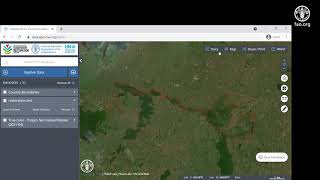
Introduction to the Framework for Ecosystem Restoration Monitoring (FERM) Platform
Continue Reading
More from Ecology Restoration

Integrating Food Forests into Urban Restoration: Planning, Implementation, and Community Engagement
Food forests transform urban spaces into thriving ecosystems while restoring degraded land. Explore community-driven ecology restoration strategies that...

Permaculture Design Principles for Ecological Restoration: A Holistic Approach to Land Regeneration
Imagine a landscape where the soil has turned to dust, where water runs off in muddy torrents rather than soaking in, where biodiversity has dwindled to...

Biochar in Ecological Restoration: A Scientific Review of Its Applications and Environmental Impacts
Biochar transforms soil ecosystems and accelerates ecological restoration by enhancing microbial communities and carbon sequestration in degraded landsc...
Share this article

Food Forests as Tools for Ecological Restoration: Design, Implementation, and Long-Term Management
Stand beneath a canopy where oaks and persimmons share the sky, where hazelnuts cluster at eye level and mushrooms push through a duff of fallen leaves.