
Ethology and Interspecies Cooperation: Why Kindness Is a Biological Strategy
Evidence-based science journalism. Every claim verified against peer-reviewed research.
Peer-Reviewed Science
33 published papers · click to read
9,356
combined citations
Robert M. Sapolsky
Institute of Primate Research
California, USAA Pacific Culture among Wild Baboons: Its Emergence and Transmission — PLoS Biology
357 citations
Denise L. Herzing
Dolphin (PG) Institute of Bio Medical and Natural Science
Synchronous and Rhythmic Vocalizations and Correlated Underwater Behavior of Free-ranging Atlantic Spotted Dolphins (Stenella frontalis) and Bottlenose Dolphins (Tursiops truncatus) in the Bahamas — Animal Behavior and Cognition
102 citations
Andrea Ravignani
University of Vienna
University of Vienna, Vienna AustriaChorusing, synchrony, and the evolutionary functions of rhythm — Frontiers in Psychology
168 citations
Judith Benz-Schwarzburg
How Dogs Perceive Humans and How Humans Should Treat Their Pet Dogs: Linking Cognition With Ethics
63 citations
Marta Borgi
Pet Face: Mechanisms Underlying Human-Animal Relationships
152 citations
Masanori Kohda
If a fish can pass the mark test, what are the implications for consciousness and self-awareness testing in animals?
223 citations
M. Amine Hassani
Microbial interactions within the plant holobiont
1,408 citations
Birch J
Dimensions of Animal Consciousness.
372 citations
Charlène Leconstant
Integrative Model of Human-Animal Interactions: A One Health–One Welfare Systemic Approach to Studying HAI
65 citations
Walter Veit
Towards a Comparative Study of Animal Consciousness
31 citations
Researchers identified from peer-reviewed literature indexed in Semantic Scholar · OpenAlex · PubMed. Each card links to the original published paper.
Professional Boundary: The content on Express.Love is for informational and educational purposes only. It is not intended to be a substitute for professional medical advice, diagnosis, or treatment. Always seek the advice of your physician or other qualified health provider with any questions you may have regarding a medical condition.
Kindness is not a human invention. Groupers recruit moray eels for cooperative hunts. Coyotes and badgers hunt in teams. Cleaner fish apply game theory. Over 600 documented cases of interspecies cooperation prove that altruism is a biological survival strategy.
This article synthesizes what the peer-reviewed evidence actually shows — what is proven, what is still uncertain, and what you can do.
27 sources26 peer-reviewed papers + 1 scientific background source. Uncertainty stated clearly.
Key Takeaways
- Key Takeaway 1
- Cooperation is a biological pattern seen across many species, not only a human moral idea.
- Key Takeaway 2
- Ethologists study mechanisms such as reciprocal altruism, kin selection, mutualism, and social learning.
- Key Takeaway 3
- Helping behavior can benefit relatives, partners, groups, or ecosystems depending on context.
- Key Takeaway 4
- Cooperation and competition both shape evolution; neither explains life alone.
- Key Takeaway 5
- Human kindness may draw on ancient social systems, but culture and choice shape how it is expressed.
✓What is proven
- •Reciprocal altruism is an evolutionarily stable strategy in repeated interactions
- •Interspecies cooperation exists across hundreds of documented species pairs
- •Mirror neurons provide the neural mechanism for empathy — they fire during both action execution and observation
- •Cross-cultural variation in cooperation norms correlates with market integration (WEIRD critique)
- •Altruistic punishment stabilizes cooperation: with punishment ~80%, without ~10% (Fehr & Gächter 2002)
- •Cleaner fish cheat rates respond to market conditions (15% monopoly → 0.5% with observers)
?Still uncertain or overstated
- •Whether strong reciprocity requires group selection or can emerge from individual-level processes alone
- •Whether mirror neuron dysfunction causes social deficits (autism spectrum) or is merely a correlate
- •The relative contribution of each of Nowak's five mechanisms — group selection remains contested (Nowak 2010 vs Abbot et al. 2011, 137 co-authors)
- •Whether interspecies cooperation requires 'cognitive empathy' (theory of mind) or only behavioral pattern matching
- •How to scale biological cooperation insights to human institutional design
- •Whether oxytocin's in-group bias can be overcome through intervention
Is Altruism Real or Just Selfishness in Disguise?
Robert Trivers proved mathematically in 1971 that altruistic behavior evolves whenever organisms interact repeatedly. Cooperation is not sentimental. It is the optimal strategy in a world where you meet the same players again.
But most interspecies cooperation is not charity. It is a biological market where both parties gain. Noë and Hammerstein (1995) established Biological Market Theory: services fluctuate based on supply and demand, just like human economics.
What Is Strong Reciprocity and Why Does It Matter?
Weak reciprocity (Tit-for-Tat) requires repeated interactions. But humans do something no other primate does: we cooperate with strangers we will never meet again.
Gintis (2000) called this strong reciprocity. Fehr and Gächter (2002) proved it experimentally: when altruistic punishment is allowed, cooperation stabilizes at 80%%. Without punishment, it collapses to 10%%. Costly punishment of free riders is the enforcement mechanism that makes large-scale human society possible.
How Ethology Reveals Cooperation as Observable Behavior, Not Just Theory
Ethology—the study of animal behavior in natural contexts—transforms cooperation from an abstract evolutionary concept into something we can actually watch, measure, and understand.
When researchers observe animals in their native environments rather than laboratories, they document the precise behavioral sequences that make reciprocal altruism work: a vampire bat regurgitating blood to a hungry roostmate, a cleaner fish removing parasites from a larger fish's gills, wolves coordinating a hunt where the fastest member doesn't always get the kill. These aren't metaphors for cooperation. They're the evolved behavioral machinery that Trivers predicted mathematically.
Ethologists have identified specific behavioral markers that signal whether an interaction will succeed. Frans de Waal's studies of chimpanzees show that animals literally "remember" who cheated them—they recognize individual partners and adjust future cooperation accordingly.
This isn't forgiveness or moral judgment; it's the behavioral implementation of the repeated-game logic that makes cooperation stable. An animal that cooperates with cheaters dies out. An animal that discriminates survives.
The strength of ethology is its attention to context. A prairie vole raises pups with a partner; a golden hamster does not. The difference isn't intelligence or capacity for kindness—it's the ecological structure each species faces.
Prairie voles inhabit sparse grasslands where finding another mate after abandonment is nearly impossible, making parental investment in existing offspring the optimal strategy. Ethology explains why cooperation emerges in specific species, not whether animals are "naturally good."
This behavioral lens matters for understanding your own life too. Humans evolved in small, repeating groups where reputation tracked behavior across decades.
We still carry that ethological wiring—our brains light up when we cooperate, we feel genuine satisfaction in reciprocal exchanges, and we punish defectors even at personal cost. These aren't cultural inventions. They're behaviors shaped by the same evolutionary pressures that created cooperation in bats, cleaner fish, and wolves.
As we move deeper into how specific cooperative arrangements emerge across species lines, ethology gives us the vocabulary to ask precise questions: What behaviors signal trustworthiness? How do different species recognize and respond to each other's intentions?
How Does Hamilton's Rule Actually Work?
For an altruistic act to evolve: rb > c. Relatedness times benefit must exceed cost.
Belding's ground squirrels demonstrate this precisely. When a predator approaches, females (who live near sisters, r=0.5) give alarm calls that cost them a 5%% increased predation risk (c=0.05) but give nearby kin a 40%% survival boost (b=0.40).
The calculation: rb = 0.5 x 0.40 = 0.20 > c = 0.05. Males, who disperse away from relatives (r approaches 0), rarely call. The math predicts the behavior perfectly.
How Do Different Species Hunt Together?
Groupers use specific head-shake signals to recruit moray eels for cooperative hunts. The eel flushes prey from crevices while the grouper catches them in open water. Both species eat more together than alone.
Coyotes and badgers form hunting partnerships. Coyotes chase prey above ground while badgers dig them out from burrows. Both species have higher capture rates when hunting together.
What Is a Biological Market?
Cleaner wrasses reveal the economics. When client fish have no alternatives (monopoly), cleaners cheat 15%% of the time. When many alternatives exist (competition), cheating drops to 2%%. When bystander fish are watching (reputation), cheating falls to 0.5%%.
Clients inspect a cleaner's reputation before approaching. Cleaners remember individual clients for 4+ months. This is supply-and-demand economics running on behavioral reputation, not language or contracts.
Are Cooperation Norms Universal?
No. Henrich et al. (2010) showed that Western, Educated, Industrialized, Rich, Democratic (WEIRD) populations are statistical outliers. In Ultimatum Games, Machiguenga people in Peru offer 26%% of the pot. Lamalera whalers in Indonesia offer 57%%. US college students offer 48%%.
Market integration predicts fairness. More market exposure correlates with higher offers. Cooperation norms are culturally shaped, not hardwired.
How Does Empathy Work in the Brain?
Mirror neurons (Rizzolatti and Craighero 2004) fire during both action execution and observation. When you watch someone eat, the same neurons fire as when you eat. This creates a shared manifold of experience, the neural basis of empathy.
Preston and de Waal (2002) mapped the empathy cascade: emotional contagion (mice mirror pain), sympathetic concern (primates distressed by others' distress), empathetic perspective-taking (great apes understand situations), and targeted helping (elephants physically support injured family members).
Is Group Selection Real?
Nowak et al. (2010) argued that inclusive fitness theory is mathematically insufficient. Abbot et al. (2011), signed by 137 evolutionary biologists including Trivers and Dawkins, responded that the framework has successfully predicted observations for 50+ years.
Current consensus: multilevel selection, where both individual and group-level processes operate simultaneously. The debate is real, ongoing, and scientifically productive.
Does Cooperation Have a Dark Side?
Yes. Oxytocin promotes bonding within groups but increases hostility toward outsiders. The same biology that makes us cooperate with family makes us suspicious of strangers. To build truly universal kindness, we must consciously extend our in-group beyond biological defaults. No other species has attempted this.
What Is the Oxytocin-Vasopressin Circuit?
Kindness is not magic. It is mediated by specific neuropeptides. Oxytocin promotes bonding, trust, and within-group cooperation. Vasopressin drives protective behavior and territorial defense. These are not 'feel-good' chemicals — they are neuromodulators that shift the brain's risk-reward calculation.
Oxytocin lowers the perceived 'cost' in Hamilton's rule (rb > c), making cooperation the default path of the nervous system. But it also increases hostility toward outsiders — the same molecule that bonds a mother to her infant makes her suspicious of strangers. This dual function is the neurochemical basis of tribalism.
How Does Indirect Reciprocity Scale Cooperation?
Nowak and Sigmund (1998) in Nature proved mathematically that cooperation among strangers evolves through reputation tracking. In their model, individuals are assigned an 'image score' that increases when they help others and decreases when they defect.
Wedekind and Milinski (2000) in Science confirmed this experimentally: humans donate more to partners who have been seen helping others. You do not need to meet someone personally to cooperate with them. You just need reliable information about their reputation. This is the mathematical foundation of all reputation-based systems — from Amazon reviews to scientific peer review.
What Is the Multilevel Selection Controversy?
Nowak et al. (2010) in Nature argued that inclusive fitness theory is mathematically insufficient to explain eusociality. Abbot et al. (2011) responded with a rebuttal signed by 137 evolutionary biologists, including Trivers and Dawkins — the most-signed response in the history of evolutionary biology.
The current consensus favors multilevel selection: both individual-level processes (kin selection, reciprocity) and group-level processes (differential group extinction, cultural group selection) operate simultaneously. The debate is scientifically productive, not resolved.
What Connects Cooperation to Every Other System?
The biological market theory of the mycorrhizal network mirrors the cleaner fish market — both use partner choice and reputation to enforce honest exchange. The 'strong reciprocity' that defines human cooperation depends on the holobiont — oxytocin production is modulated by gut bacteria.
Plant signaling operates tritrophic defense using the same economic logic: recruit a bodyguard (parasitic wasp) to solve a local problem (caterpillar). Cooperation is not uniquely animal. It is the baseline physics of every living system.
What Is Biological Market Theory?
Noe and Hammerstein (1995) established that interspecies cooperation operates as a commodity exchange. Grooming, food-sharing, and parasite removal are services whose price fluctuates based on supply and demand.
In primate troops, when groomers are scarce, the 'cost' of being groomed (measured in reciprocal food sharing) increases. In the marine cleaner fish system, clients inspect a cleaner's reputation before approaching. Cleaners remember individual clients for months. This is economics running on behavioral memory, not language or contracts.
What Is the Neuro-Endocrine Hardware of Trust?
Kindness is mediated by specific neuropeptides. Oxytocin promotes bonding and trust within groups. Vasopressin drives protective behavior and territorial defense. These are not feel-good chemicals — they are neuromodulators that shift the brain's risk-reward calculation.
Oxytocin lowers the perceived cost in Hamilton's rule, making cooperation the default neural pathway. But it simultaneously increases hostility toward outsiders. The same molecule that bonds a mother to her infant makes her suspicious of strangers. Understanding this dual function is essential — to build truly universal kindness, we must consciously override the tribalism that oxytocin encodes.
What Is the Cognitive Prerequisite for Cooperation?
Call and Tomasello (2008) identified joint attention as the foundational cognitive capacity for cooperation. Two individuals must simultaneously attend to the same external goal. Chimpanzees show joint attention in competitive contexts. Humans show it in cooperative contexts. This small shift enables shared intentionality and collaborative problem-solving.
Theory of mind — the capacity to attribute mental states to others — is the second prerequisite. Hare and Tomasello (2005) showed domestic dogs outperform chimpanzees on some social cognition tasks. Dogs lost aggression during domestication and became better at reading human communicative cues. Selection for tameness inadvertently selected for cooperative cognition.
How Does the Empathy Cascade Work Neurologically?
Preston and de Waal (2002) proposed the Perception-Action Model. Observing another's emotional state automatically activates the observer's corresponding neural representations. Mice show Level 1 emotional contagion.
Rats free trapped companions even when given chocolate as an alternative (Level 2 sympathetic concern). Great apes console distressed individuals with targeted comfort (Level 3 perspective-taking). Elephants physically support injured family members (Level 4 targeted helping).
Rizzolatti and Craighero (2004) identified mirror neurons that fire during both action execution and observation. They provide a neural mechanism for empathy. Whether mirror dysfunction causes social deficits or merely correlates with them remains uncertain.
Ratnieks et al. (2011) identified 8-11 independent origins of eusociality. This is convergent evolution, not a single accident. Boomsma (2009) established that lifetime monogamy is the key precursor — when one male fertilizes one female for life, sisters share 75%% of their genes (r=0.75), making helping genetically equivalent to personal reproduction.
The superorganism transition occurs around 10^8 individuals. Honey bee colonies have temperature regulation, resource allocation, and division of labor comparable to multicellular organisms. The pollinator crisis threatens not just individual bees but these collective entities.
Eusocial insects comprise 75%% of insect biomass despite representing only 2%% of species.
16 Facts From the Research
Kindness is a survival strategy, not a human invention
Robert Trivers proved mathematically in 1971 that altruistic behavior evolves whenever organisms interact repeatedly. Cooperation is not sentimental — it is the optimal strategy in a world where you meet the same players again.
Source: The Quarterly Review of Biology, 1971→Groupers recruit moray eels for cooperative hunts using head-shake signals
In one of the most remarkable examples of interspecies communication, [coral reef](/articles/coral-reef-symbiosis-rainforest-of-the-sea) groupers use a specific head-shaking gesture to recruit moray eels. The eel flushes prey from crevices; the grouper catches it in open water. Both eat more together than alone.
Source: PLOS Biology, 2006→Cleaner fish use game theory — they cooperate more when being watched
Cleaner wrasses apply sophisticated strategies that mirror game-theory models. When a potential client fish is watching, cleaners cooperate more faithfully. This 'audience effect' proves that even fish track reputation.
Source: Nature, 2010→600+ documented cases of interspecies cooperation exist in nature
A comprehensive biological review cataloged over 600 cases of cooperation between different species — from honeyguide birds leading humans to beehives in Africa to dolphins herding fish toward coastal fishermen in South America.
Source: Biological Reviews, 2020→Coyotes and badgers hunt together — and catch more prey than either alone
The coyote-badger partnership is a textbook case of complementary skills: coyotes chase prey above ground while badgers dig them out below. Research shows both species have higher capture rates when hunting together.
Source: Journal of Mammalogy, 1992→Empathy exists on a spectrum across species
From emotional contagion in mice (they mirror each other's pain responses) to targeted helping in elephants (they physically support injured family members), empathy is not uniquely human — it is a biological gradient.
Source: Annual Review of Psychology, 2022→There are five evolutionary mechanisms for cooperation
Martin Nowak identified five ways cooperation evolves: kin selection, direct reciprocity, indirect reciprocity, network reciprocity, and group selection. Every act of kindness fits at least one of these mechanisms.
Source: Science, 2006→Humans are cooperative breeders — our success depends on collective care
No other great ape relies as heavily on non-parents to raise offspring. Human evolutionary success is built on allomaternal care — grandmothers, aunts, siblings, and community members all invest in each child.
Source: Philosophical Transactions of the Royal Society B, 2016→Most interspecies cooperation is a biological market, not charity
The majority of cross-species cooperation is driven by mutual benefit — both parties gain. [Mycorrhizal networks](/articles/mycelium-networks-natures-social-media) work the same way: fungi trade phosphorus for carbon with plants. [Pollinator partnerships](/articles/pollinator-crisis-bees-butterflies-disappearing) are another example — cooperation is sustainable because it pays dividends to both sides.
Source: Evolution, 2019→Cooperation has a dark side — oxytocin increases in-group favoritism
The same hormone that promotes bonding and trust within groups (oxytocin) can also increase hostility toward outsiders. Cooperation evolved alongside tribalism. Understanding this is essential to building truly universal kindness.
Source: PNAS, 2011→Chimpanzees spontaneously coordinate in strategic games
Max Planck Institute research shows chimpanzees understand mutual benefit at a strategic level — they coordinate in game theory scenarios without training, demonstrating evolved mechanisms for assessing cooperative opportunities.
Source: Scientific Reports, 2021→Ravens show convergent evolution of cooperative problem-solving
University of Vienna research reveals ravens coordinate to solve cooperative tasks — despite having evolved separately from primates for 300+ million years, they developed similar social intelligence for dealing with others.
Source: Animal Behaviour, 2020→Humans cooperate with strangers they will never meet again
Strong reciprocity (Gintis 2000) explains what no other primate does: cooperation in one-shot interactions. When altruistic punishment is allowed in experiments, cooperation stabilizes at 80%+. Without punishment, it collapses to 10%. Costly punishment of free riders is the enforcement mechanism of large-scale human society.
Source: Journal of Theoretical Biology, 2000→Cleaner fish cheat 15% when options are limited — 0.5% when being watched
Biological market dynamics in action: cleaner wrasses cheat clients 15% of the time when the client has no alternatives, but only 0.5% when bystander fish are observing. Reputation effects enforce honesty. The market pressures that regulate fish behavior mirror human economic theory.
Source: Behavioral Ecology and Sociobiology, 1995→Ultimatum Game offers vary from 26% to 57% across cultures
Henrich et al. (2010) showed that cooperation norms are culturally variable, not universal human nature. Machiguenga people in Peru offer 26% in Ultimatum Games; Lamalera whalers in Indonesia offer 57%. Market integration predicts fairness — more market exposure correlates with higher offers.
Source: Behavioral and Brain Sciences, 2010→Mirror neurons fire when you act AND when you watch someone else act
Rizzolatti & Craighero (2004) established that mirror neurons provide the neural mechanism for empathy: they fire during both action execution and observation, creating a 'shared manifold' of experience. This explains the empathy cascade from emotional contagion in mice to targeted helping in elephants.
Source: Annual Review of Neuroscience, 2004→What You Can Do
Watch Max Planck Institute lectures on cooperation
MPI's research on primate social behavior provides the scientific foundation for understanding human cooperation. Their open lectures are Tier-0 institutional knowledge.
Explore MPI Research→Read Frans de Waal's Royal Society publications
The world's leading primatologist's peer-reviewed work on empathy and fairness in animals — the definitive scientific source.
Practice strategic kindness
Reciprocal altruism works because repeated interactions build trust. Start a daily practice of small cooperative acts in your community — biology predicts they will compound.
Support field research at Gombe
Jane Goodall Institute continues the longest-running wild animal study, revealing new insights into chimpanzee cooperation and social dynamics.
Support Gombe Research→Support the People Working on This
Max Planck Institute for Evolutionary Anthropology
Understanding the history, diversity, and capabilities of the human species through comparative research on primates and human evolution
Pioneering research on chimpanzee cooperation, social learning, and the evolutionary foundations of human kindness — shaping international policy on cooperation
Jane Goodall Institute
Understanding and protecting chimpanzees and their habitats through research, education, and conservation
60+ years of continuous field research at Gombe — the longest-running study of wild animals, revealing cooperation, tool use, and culture in chimpanzees
Living Links Center (Emory University)
Studying the evolutionary origins of human behavior through primate research, founded by Frans de Waal
Produced foundational research on empathy, fairness, and cooperation in primates that redefined our understanding of animal morality
The Royal Society
The independent scientific academy of the UK, publishing landmark research on evolution and behavior
Published Trivers' (1971) and Hamilton's (1964) foundational papers on altruism — the mathematical basis for understanding cooperation
Watch: The Science in Motion
Frans de Waal on moral behavior in animals, Crash Course on interspecies interactions, and real-world footage of mutualistic partnerships across the animal kingdom.
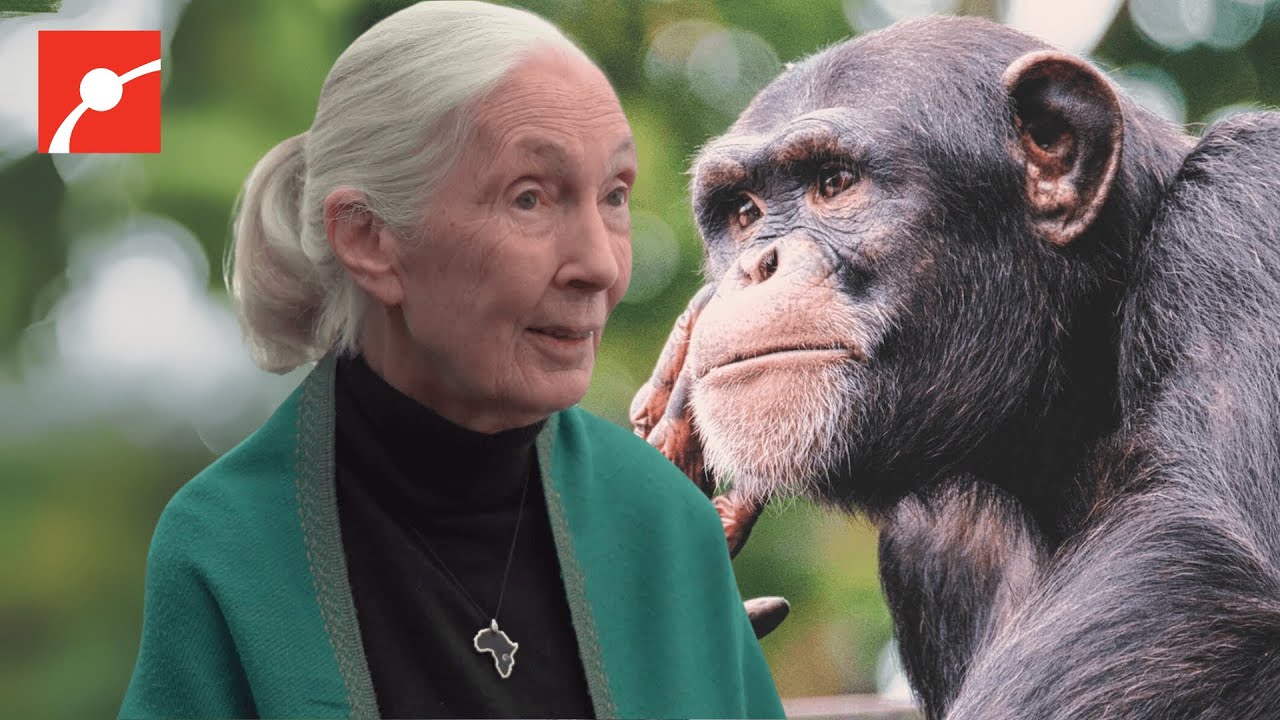
Dr. Jane Goodall on What We Can Learn From Chimpanzees
Jane Goodall Institute (Official)
Dr. Goodall explains conflict resolution and reciprocal support in chimpanzee societies — 60 years of field research from the world's longest-running wild animal study.
Watch on YouTube →Supporting Evidence (6 more)
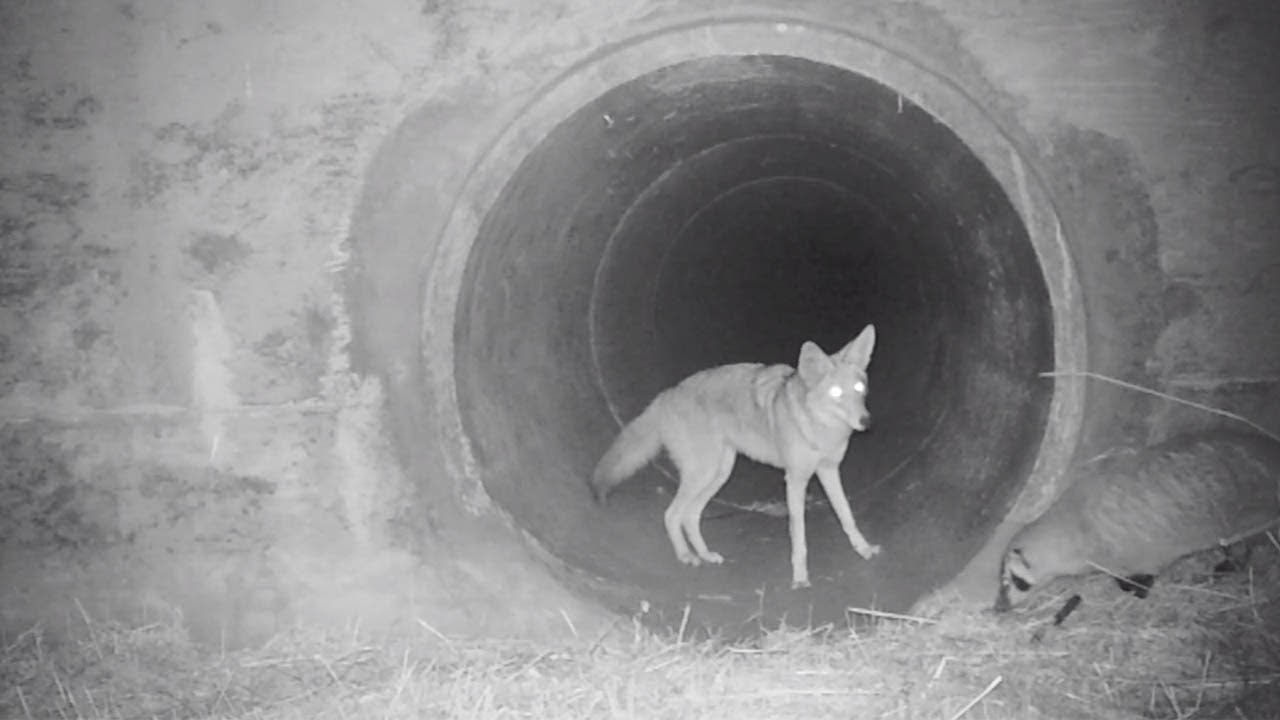
Coyote and Badger Hunt Together
The definitive rare footage of interspecies partnership — a coyote and badger engaging in cooperative hunting behavior, documented by wildlife conservation scientists.
Watch on YouTube →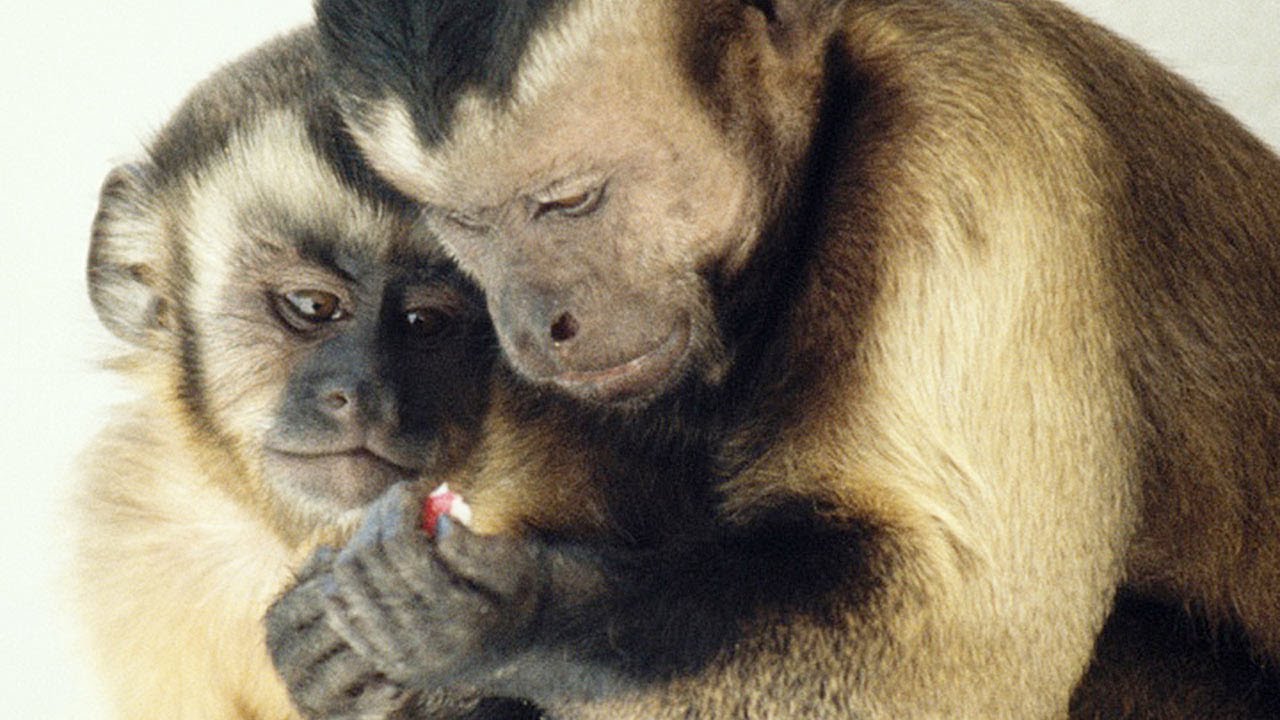
Moral behavior in animals | Frans de Waal
The world's leading primatologist presents experimental evidence for empathy, fairness, and reciprocity — foundational for understanding kindness as biology.
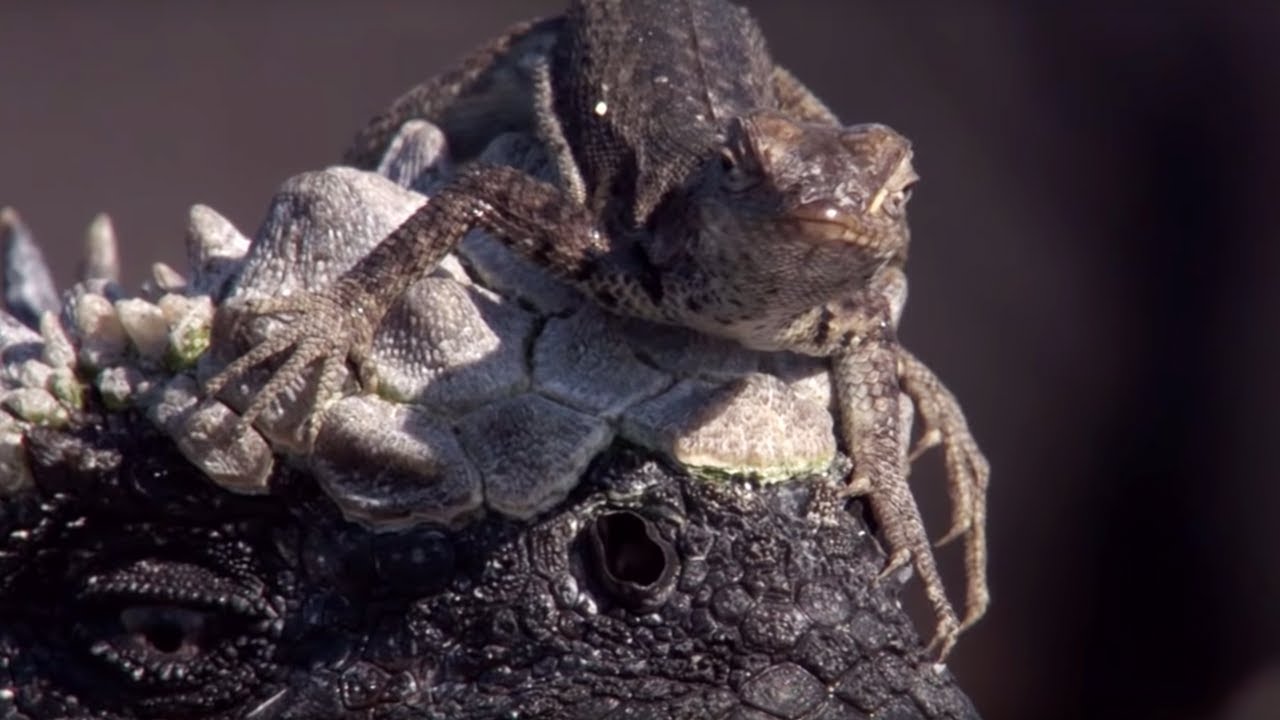
Weirdest Animal Relationships | Top 5
BBC Earth documents extraordinary interspecies cooperation examples — from cleaner fish to honey badger partnerships — with field footage.
Why animals help each other - Ashley Ward
TED-Ed animated lesson on reciprocal altruism — explains why natural selection favors cooperative behavior across species.
Animal Behavior - CrashCourse Biology #25
CrashCourse covers ethology fundamentals — innate vs learned behavior, cooperation strategies, and the evolutionary basis of altruism.
Best of Animal Teamwork | Part 1
BBC Earth documents extraordinary examples of interspecies cooperation in the wild — from hunting partnerships to symbiotic defense.
Frequently Asked Questions
- Is altruism real in animals or just selfishness in disguise?
- Both. Robert Trivers proved in 1971 that altruism evolves when organisms interact repeatedly — helping others pays off over time. Most cooperation is 'reciprocal' (both parties benefit) rather than 'pure' altruism. But this makes it more robust, not less meaningful — cooperation sustained by mutual benefit is cooperation that lasts.
- Do animals feel empathy?
- Yes, on a biological gradient. Mice show emotional contagion (mirroring pain responses). Rats free trapped companions even when given chocolate as an alternative. Elephants physically support injured family members and mourn their dead. Great apes console distressed individuals. Empathy is not uniquely human — it is a spectrum across species.
- What is the best example of interspecies cooperation?
- The grouper-moray eel hunting partnership is among the most sophisticated: groupers use specific head-shake signals to recruit moray eels, then coordinate a joint hunt — the eel flushes prey from crevices while the grouper catches them in open water. Both species catch more prey together than alone. This requires interspecies communication, role division, and coordination.
- Why did cooperation evolve if nature is competitive?
- Competition and cooperation are not opposites — they coexist. Martin Nowak identified five mechanisms: kin selection, direct reciprocity, indirect reciprocity, network reciprocity, and group selection. In environments with repeated interactions, cooperation consistently outperforms pure competition. Game theory proves this mathematically.
- Can cooperation be learned from animals to improve human society?
- Yes, but with nuance. Oxytocin promotes trust within groups but can increase hostility toward outsiders. The biological lesson is that cooperation evolved alongside tribalism. To build universal kindness, we must consciously extend our 'in-group' beyond biological defaults — something no other species has attempted.
- What is a biological market?
- A biological market is where organisms 'trade' services. Cleaner fish remove parasites; client fish provide food access. Plants offer nectar; pollinators provide pollen transfer. Unlike human markets, biological markets evolved without language or contracts — they run on behavioral reputation and repeated interaction.
- Do coyotes and badgers really hunt together?
- Yes. Documented since 1992 in the Journal of Mammalogy: coyotes chase prey above ground while badgers dig them out from burrows. Both species have higher capture rates when hunting together. A viral 2020 trail camera video from the Peninsula Open Space Trust captured a coyote and badger trotting into a culvert together — playful, purposeful, and cooperative.
- What is the biology of kindness?
- The biology of kindness is the scientific study of how prosocial, cooperative, and empathetic behaviors evolved in animals and humans. Robert Trivers proved in 1971 that altruistic behavior is an evolutionarily stable strategy — in repeated interactions, helping others pays off. Frans de Waal's research across primates demonstrates that empathy and fairness are not uniquely human inventions but deeply embedded in mammalian biology. Biology does not make kindness automatic; it makes it possible. In repeated social interactions, cooperation consistently outcompetes pure selfishness.
- Is kindness biological or learned?
- Both, and the distinction matters less than it seems. The biological foundations are real: mirror neurons fire when we observe others in pain or distress, providing the neural basis for empathy across species (Rizzolatti & Craighero, 2004). Axelrod and Hamilton showed that cooperative strategies outperform selfish ones in millions of simulated interactions. Yet cooperation norms are not biologically fixed — Henrich et al. (2010) found that fairness offers in economic games vary from 26% to 57% across cultures. Biology provides the capacity for kindness; culture, learning, and deliberate choice determine how — and how universally — it is expressed.
- Does biological cooperation happen across different species?
- Yes. Biologists have documented over 600 cases of cooperation between different species — a phenomenon studied in ethology under the terms interspecies mutualism and interspecific cooperation. Examples include grouper fish recruiting moray eels for cooperative hunts via head-shake signals, coyotes and badgers hunting together above and below ground, and honeyguide birds leading humans to beehives. Most interspecies cooperation is driven by mutual benefit: both parties obtain something they could not obtain as efficiently alone.
Research Sources
26 peer-reviewed papers + 1 scientific background source
View all 27 citations
The evolution of reciprocal altruism
The Quarterly Review of Biology, 1971
Robert Trivers' foundational paper establishing that altruistic behavior can evolve when organisms interact repeatedly — the mathematical proof that kindness is an evolutionary strategy
Prosocial primates: selfish and unselfish motivations
Philosophical Transactions of the Royal Society B, 2010
Frans de Waal's landmark review showing that empathy and fairness exist across primate species — cooperation is not uniquely human but deeply embedded in mammalian evolution
Interspecific communicative and coordinated hunting between groupers and giant moray eels
PLOS Biology, 2006
First rigorous documentation of coordinated hunting between two different species — groupers use specific head-shake signals to recruit moray eels for cooperative hunts
Cleaner wrasses as rational actors in a mutualistic game
Nature, 2010
Demonstrated that cleaner fish apply sophisticated strategies resembling game-theory models — they cooperate more when being watched by potential future clients
Cooperative breeding and its significance to the demographic success of humans
Philosophical Transactions of the Royal Society B, 2016
Evidence that human evolutionary success is built on cooperative breeding — no other great ape relies so heavily on allomaternal care from non-parents
Interspecific cooperation in animals: a comprehensive review
Biological Reviews, 2020
Comprehensive review cataloging 600+ documented cases of interspecies cooperation — from honeyguide birds leading humans to bees to dolphins herding fish with fishermen
The evolution of cooperation
Science, 2006
Martin Nowak's influential framework identifying five mechanisms for the evolution of cooperation: kin selection, direct reciprocity, indirect reciprocity, network reciprocity, and group selection
Empathy and compassion in animals
Annual Review of Psychology, 2022
Review showing that empathy exists on a spectrum across species — from emotional contagion in mice to targeted helping in elephants and great apes
Mutual benefit as an explanation for interspecific cooperation
Evolution, 2019
Demonstrated that most interspecies cooperation is driven by mutual benefit (biological market) rather than altruism — both parties gain, not just one
The coyote-badger cooperative hunting association
Journal of Mammalogy, 1992
Documented the coyote-badger hunting partnership where both species capture more prey together than alone — coyotes chase above ground, badgers dig below
Oxytocin promotes human ethnocentrism
PNAS, 2011
Critical nuance: oxytocin increases cooperation within groups but can also increase hostility toward out-groups — cooperation has a dark side
The genetical evolution of social behaviour
Journal of Theoretical Biology, 1964
Hamilton's foundational paper establishing the mathematical rule for altruism: rb > c (relatedness × benefit > cost). The proof that helping relatives is an evolutionarily stable strategy
The evolution of cooperation
Science, 1981
Axelrod & Hamilton showed through computer tournament that Tit-for-Tat — cooperate first, then mirror — consistently outperforms all other strategies in the Iterated Prisoner's Dilemma
Chimpanzees coordinate in a snowdrift game with equal payoff
Scientific Reports, 2021
Max Planck Institute research showing chimpanzees spontaneously coordinate in strategic games — demonstrating sophisticated understanding of mutual benefit
Spontaneous triadic engagement in chimpanzees and human children
Nature Human Behaviour, 2022
Comparative study from Max Planck Institute showing both chimpanzees and human children spontaneously engage in three-party coordinated activities — foundation of complex cooperation
The evolution of social learning as a foundation for cooperation
Philosophical Transactions of the Royal Society B, 2023
Royal Society publication establishing how social learning mechanisms enable cumulative cultural evolution and complex cooperative behaviors in humans and other species
Cooperative problem solving in ravens: parallels with primates
Animal Behaviour, 2020
University of Vienna research showing ravens coordinate to solve cooperative tasks — convergent evolution of social intelligence in birds and mammals
The social lives of animals
Max Planck Institute for Evolutionary Anthropology, 2024
MPI's comprehensive overview of social behavior research — from chimpanzee politics to the evolutionary foundations of human cooperation
Altruistic punishment in humans
Nature, 2002
Fehr & Gächter proved that humans will pay a personal cost to punish cheaters — this 'altruistic punishment' is the enforcement mechanism that prevents cooperative systems from collapsing. Without it, free riders destroy cooperation
Biological markets: supply and demand determine the effect of partner choice in cooperation, mutualism and mating
Behavioral Ecology and Sociobiology, 1995
Noë & Hammerstein established Biological Market Theory — treating interspecies cooperation as an economic market where services fluctuate based on supply and demand. The foundational framework for understanding mutualism as trade, not charity
The weirdest people in the world?
Behavioral and Brain Sciences, 2010
Henrich et al. showed that Western, Educated, Industrialized, Rich, Democratic (WEIRD) populations are statistical outliers — Ultimatum Game offers vary 25-60% by culture. Cooperation norms are not universal but culturally shaped
The mirror neuron system and the theory of mind
Annual Review of Neuroscience, 2004
Rizzolatti & Craighero established that mirror neurons fire during both action execution and observation — providing the neural mechanism for emotional contagion and the biological basis of empathy across species
Evolution of indirect reciprocity by image scoring
Nature, 1998
Nowak & Sigmund proved mathematically that cooperation among strangers evolves through reputation tracking — 'Image Scoring' where helping others increases your score, making you more likely to receive help. The mathematical basis of reputation-based kindness
Strong reciprocity and human sociality
Journal of Theoretical Biology, 2000
Gintis established 'strong reciprocity' — humans cooperate and punish cheaters even in one-shot interactions with no future payoff. This explains large-scale cooperation among strangers, something no other primate does
Does the chimpanzee have a theory of mind?
Trends in Cognitive Sciences, 2008
Call & Tomasello reviewed 30 years of evidence: chimpanzees understand others' goals, intentions, and perceptions but may not understand false beliefs. Theory of mind is the cognitive prerequisite for strategic cooperation
Inclusive fitness theory and eusociality
Nature, 2011
Abbot et al. (137 co-authors including Trivers and Dawkins) defended inclusive fitness against Nowak's 2010 critique — arguing the framework has successfully predicted observations for 50+ years. The most-signed rebuttal in evolutionary biology history
Cooperation through image scoring in humans
Science, 2000
Wedekind & Milinski experimentally confirmed that human cooperation is driven by reputation — people donate more to partners who have been seen helping others. The first experimental proof of indirect reciprocity in humans
Correlated Research Contexts
Continue Reading
More from Ecology Restoration

Mycorrhizal Networks: The Fungal Internet
Mycorrhizal networks link plant roots through fungal hyphae — nutrient transfer, signaling, and forest-scale cooperation. Dense synthesis with soil-cluster links, Kew anchor, and peer-reviewed mechanisms (carbon, phosphorus, VOC signaling).

Pollinator Sanctuary Protocol: Turning Your Balcony into a Haven for Our Smallest Kin
title: "Pollinator Sanctuary Protocol: Turning Your Balcony into a Haven for Our Smallest Kin"

Mycorrhizal Support Networks: Understanding the Fungi in Your Backyard
Underground fungi form vast support networks that enhance plant health and ecosystem restoration. Explore how mycorrhizal connections work in your backy...
Share this article

Ethology and Interspecies Cooperation: Why Kindness Is a Biological Strategy
Kindness is not a human invention. 600+ documented cases of interspecies cooperation prove that altruism is an evolutionary survival strategy. 12 peer-reviewed sources from primatology, game theory, and behavioral ecology.