
The Pollinator Crisis: Why Bees, Butterflies, and Insects Are Disappearing
Evidence-based science journalism. Every claim verified against peer-reviewed research.
Peer-Reviewed Science
33 published papers · click to read
15,354
combined citations
Jeff Ollerton
University of Northampton
Northampton NN2 6JD, United Kingdom;Pollinator Diversity: Distribution, Ecological Function, and Conservation — Annual Review of Ecology Evolution and Systematics
755 citations
Reed M. Johnson
University of Nebraska–Lincoln
USAPesticides and honey bee toxicity – USA — Apidologie
670 citations
Cédric Alaux
AgroParisTech
84914 Avignon, FranceInteractions between <i>Nosema</i> microspores and a neonicotinoid weaken honeybees ( <i>Apis mellifera</i> ) — Environmental Microbiology
555 citations
David L. Wagner
Insect Declines in the Anthropocene
1,309 citations
Øystein H. Opedal
Using hierarchical joint models to study reproductive interactions in plant communities
13 citations
Caspar A. Hallmann
More than 75 percent decline over 27 years in total flying insect biomass in protected areas
3,388 citations
Markus K. Brunnermeier
Deciphering the Liquidity and Credit Crunch 2007–2008
3,388 citations
Marcus Morgan
Why meaning-making matters: the case of the UK Government’s COVID-19 response
62 citations
Carlos M. Herrera
Complex long‐term dynamics of pollinator abundance in undisturbed Mediterranean montane habitats over two decades
81 citations
Mike Allsopp
Valuing Insect Pollination Services with Cost of Replacement
335 citations
Researchers identified from peer-reviewed literature indexed in Semantic Scholar · OpenAlex · PubMed. Each card links to the original published paper.
Professional Boundary: The content on Express.Love is for informational and educational purposes only. It is not intended to be a substitute for professional medical advice, diagnosis, or treatment. Always seek the advice of your physician or other qualified health provider with any questions you may have regarding a medical condition.
Every third bite of food depends on pollinators. Yet 40% of insect species are declining, and the 4,000+ native bee species that actually sustain ecosystems are disappearing faster than honeybees.
This article synthesizes what the peer-reviewed evidence actually shows — what is proven, what is still uncertain, and what you can do.
23 sources22 peer-reviewed papers + 1 scientific background source. Uncertainty stated clearly.
Key Takeaways
- Key Takeaway 1
- 75% of food crop types depend on animal pollination — 35% of total crop volume relies on pollinators.
- Key Takeaway 2
- Flying insect biomass crashed 76% in 27 years — even inside protected German nature reserves.
- Key Takeaway 3
- 40% of insect species are declining globally, with total biomass dropping 2.5% per year.
- Key Takeaway 4
- Climate change has reduced bumble bee populations by up to 46% in North America.
- Key Takeaway 5
- Wild pollinators outperform managed honeybees on every crop studied — yet receive less protection.
✓What is proven
- •Insect populations are declining significantly in many studied regions, including protected areas
- •Neonicotinoid pesticides harm bee reproduction and colony survival at field-realistic exposures
- •Habitat loss (conversion of meadows, hedgerows, native landscapes) is the primary driver of pollinator decline
- •75% of food crop types depend at least partially on animal pollination
- •Climate change is compressing the habitable range of bumble bees and other temperature-sensitive pollinators
?Still uncertain or overstated
- •Exact global rate of decline — most studies are from Europe and North America; tropical data is limited
- •Whether managed honey bee colony losses represent a permanent decline or reflect management challenges that can be overcome
- •Precise contribution of each stressor (pesticides vs habitat vs climate vs disease) — they interact in complex ways
- •Long-term effectiveness of current conservation interventions at reversing population trends globally
Why Are Pollinators Worth $577 Billion?
This is not a conservation estimate. It is the direct annual contribution of animal pollinators to global food crop production, calculated by the Intergovernmental Science-Policy Platform on Biodiversity (IPBES). Without insect pollinators, 75%% of the world's food crop types would produce significantly less food.
But the economic number hides a biological truth: pollination is not one service. It is a collection of specialized mechanical interactions between specific insects and specific flowers, evolved over millions of years.
Why Are Native Bees More Important Than Honeybees?
Honeybees (Apis mellifera) get the headlines, but they are generalists. Native solitary bees — mason bees, leafcutter bees, mining bees — are often 100 times more efficient at pollinating specific crops. This is because of buzz pollination: bumblebees and some solitary bees vibrate their flight muscles at a specific frequency that shakes pollen loose from tomatoes, peppers, and blueberries. Honeybees cannot do this.
Garibaldi et al. (2013) in Science showed that wild insect visits to crops improved fruit set on every farm studied, regardless of honeybee abundance. Wild pollinators are not a supplement to managed hives. They are the foundation.
What Are Neonicotinoids Doing to Bee Brains?
Neonicotinoid pesticides (imidacloprid, clothianidin, thiamethoxam) are systemic — they are absorbed by the plant and persist in pollen and nectar. Kessler et al. (2015) in Nature made a disturbing discovery: bees cannot taste neonicotinoids and actually prefer contaminated food. They are neurologically attracted to the chemicals that harm them.
Sub-lethal exposure does not always kill bees outright. Instead, it damages the mushroom bodies of the bee brain — the structures responsible for learning and navigation. Exposed bees get lost, forage less efficiently, and fail to return to the hive. Colony collapse is often not sudden death but slow neurological degradation.
What Is the Pollinator Diversity Crisis?
The headline is not just fewer bees. It is fewer species of bees. A 2021 study in One Earth found 25%% fewer bee species reported since the 1990s. This matters because different crops need different pollinators at different times. Almond pollination in February needs different species than apple pollination in May.
When we lose pollinator diversity, we lose resilience. A monoculture of managed honeybees is as fragile as a monoculture of corn.
What Are Pollination Syndromes?
Flowers and their pollinators have co-evolved specific matching systems called pollination syndromes. Red tubular flowers evolved for hummingbirds. White fragrant night-blooming flowers evolved for moths. Flat open flowers evolved for beetles and flies.
When we plant ornamental hybrids bred for visual appeal, we often break these evolved partnerships. Many garden-center flowers produce little usable nectar or pollen. Planting native wildflowers that match your region's pollinator syndromes is more effective than any bee hotel.
How Do Pesticides Disable the Plant's Own Defense?
Plants naturally recruit predatory insects via volatile organic compounds (VOCs) when attacked by herbivores. Broad-spectrum pesticides kill these beneficial predators along with the pests, disabling the plant's evolved tritrophic defense system.
The result is a dependency spiral: more pesticides needed because the natural biocontrol agents are dead. Integrated Pest Management (IPM) and regenerative practices restore these biological defense networks.
What Can You Actually Do?
The most impactful action is not building bee hotels — it is planting native wildflowers that bloom from early spring through late fall, and eliminating neonicotinoid-treated plants from your garden. 70%% of native bees nest in the ground, not in structures. Leave bare soil patches and dead wood. The Xerces Society provides region-specific planting guides that match your local pollinator communities.
Neonicotinoids bind to nicotinic acetylcholine receptors (nAChRs) in the insect mushroom bodies — the brain structures responsible for learning, memory, and spatial navigation. Matsuda et al. (2001) in Nature mapped the molecular target: binding occurs at concentrations as low as 0.1 nanomolar.
Sub-lethal exposure does not kill the bee. It jams the optic flow system — the internal GPS bees use to measure distance and calculate return vectors to the hive. An exposed bee can still fly but cannot navigate home. Colony collapse is not sudden death. It is slow neurological degradation — bees departing the hive and never returning.
Kessler et al. (2015) in Nature added a disturbing dimension: bees actively prefer neonicotinoid-contaminated food. They cannot taste the toxin. They are neurologically attracted to the chemicals that damage them, similar to nicotine addiction in humans.
What Are Pollination Syndromes and Why Do They Matter?
Fenster et al. (2004) defined 12 distinct pollination syndromes — co-evolutionary contracts between flowers and their pollinators. Bee-pollinated flowers have UV nectar guides and landing platforms. Moth-pollinated flowers are white, tubular, and night-blooming. Bat-pollinated flowers are dull-colored with strong scent. Bird-pollinated flowers are red with no scent.
When we plant ornamental hybrids bred for visual appeal to humans, we often break these evolved partnerships. Many garden-center flowers produce little usable nectar or pollen. The most effective conservation action is planting native wildflowers that match your region's specific pollinator syndromes.
How Does Climate Create a Phenological Mismatch?
Hegland et al. (2009) quantified the timing gap: flowers now bloom 2-10 days earlier per decade due to warming. But pollinator emergence shifts only 0-5 days per decade. This creates a growing temporal mismatch that reduces seed set and threatens food production.
By 2050, the mismatch could reach 5+ days for many crop-pollinator pairs. Almonds, which require 1.9 million honeybee colonies for California's February bloom, are especially vulnerable — if bloom timing shifts outside the pollinator availability window, yield collapses.
How Do Diseases Spread Between Managed and Wild Bees?
Furst et al. (2014) in Nature showed that managed honeybee colonies act as disease reservoirs. Deformed Wing Virus (DWV) and Nosema ceranae spill over to wild bumblebee populations. Varroa destructor mites vector 20+ viruses across species boundaries.
Co-infection with Varroa and DWV increases mortality 6x. The more managed hives we concentrate in agricultural areas, the higher the disease pressure on wild pollinators. This creates a paradox: adding more honeybees to compensate for wild pollinator decline can actually accelerate that decline.
What Connects Pollinators to Every Other System?
70%% of native bees nest in the ground — their habitat is the soil microbiome. Flower scent signals are volatile organic compounds that enter the air microbiome and can be degraded by air pollution. Plant signaling co-evolved with pollinators over 100 million years — each flower is a communication device designed for a specific insect receiver.
The billion annual value of pollination services depends on the entire Circle of Life functioning: healthy soil for nesting, clean air for scent transmission, diverse plants for year-round forage, and functional mycorrhizal networks supporting the wildflowers that feed wild bees.
Which Conservation Interventions Actually Work?
Flower strips covering just 25%% of farm area can restore full pollination service. Reduced tillage increases ground-nesting bee populations by 40%%. Agri-environment schemes deliver return on investment of 3:1 to 11:1 when pollination service gains are counted.
The most effective action is not building bee hotels — 70%% of native bees nest in bare ground. Leave patches of undisturbed soil, piles of dead wood, and hollow stems. The Xerces Society provides region-specific planting guides matching local pollinator syndromes. The cheapest, most impactful intervention is doing less, not more: stop tilling, stop spraying, stop mowing margins.
How Does Adding More Honeybees Sometimes Make Things Worse?
Managed honeybees are generalists that compete with wild specialists for limited floral resources. Garibaldi et al. (2013) in Science proved that wild pollinators enhance fruit set on every crop studied regardless of honeybee abundance. Wild bees are the foundation, not the supplement.
Concentrating 1.9 million honeybee colonies for California's almond bloom creates intense disease pressure on surrounding wild pollinator populations. Furst et al. (2014) in Nature showed honeybee colonies act as disease reservoirs. The paradox: adding more managed bees to compensate for wild pollinator decline can accelerate that decline through competition and disease spillover.
What Is the Landscape Connectivity Threshold?
Greenleaf et al. (2007) established that wild bee foraging range scales with body size. Small sweat bees forage 100-300 meters. Large bumble bees forage 2-5 kilometers. Isolation greater than 1 kilometer from habitat reduces pollination by 50%% or more. The relationship is non-linear with a sharp threshold effect.
Ricketts et al. (2008) showed hedgerows increase pollinator density 2-4 fold in adjacent fields. Minimum effective corridor width is 50 meters. Gaps should not exceed 250 meters. The soil microbiome also benefits from these undisturbed strips — they support ground-nesting bees and microbial communities.
How Do Bees Detect Floral Electric Fields?
Clarke et al. (2013) in Science demonstrated that bumblebees detect floral electric fields at 30 volts per meter. Flowers maintain a slight negative charge. Bees accumulate positive charge during flight. When a bee visits a flower, the charge changes — creating an electrical footprint lasting minutes that subsequent bees detect and avoid. This is information transfer between pollinators via plant-mediated electric fields.
Whether pesticides or electromagnetic pollution interfere with this sense is uncertain. Neonicotinoids impair learning and memory. They may disrupt electric field association formation.
Why Does Adding More Honeybees Sometimes Make Things Worse?
Garibaldi et al. (2013) in Science showed managed honey bees compete with wild pollinators for floral resources. A single hive places millions of visits on local flowers daily, depleting nectar and pollen. Wild bees with smaller ranges cannot relocate as effectively. At high densities, honey bees displace wild species.
Managed bees also transmit diseases. Deformed Wing Virus spreads from apiaries to wild bumble bee populations. The paradox: adding more managed bees to compensate for wild pollinator decline can accelerate that decline through competition and disease spillover. Honey bees are livestock. Wild bees are wildlife. They require different conservation strategies.
12 Facts From the Research
75% of food crop types depend on animal pollination
The IPBES global assessment found that approximately 75% of food crop types and 35% of global crop production volume depend at least partly on animal pollination. Without pollinators, diets lose diversity and nutrition.
Source: IPBES, 2016→Flying insect biomass dropped 76% in 27 years — even in nature reserves
A landmark study in German protected areas found a 76% decline in total flying insect biomass over 27 years. This isn't happening on farms — it's happening in supposedly protected habitats.
Source: PLOS ONE, 2017→40% of insect species are declining globally
A comprehensive review of insect population studies found that roughly 40% of insect species are declining, with total insect biomass dropping at approximately 2.5% per year.
Source: Biological Conservation, 2019→Neonicotinoid pesticides reduce wild bee reproduction
Large-scale European field studies confirmed that neonicotinoid pesticides reduce wild bee reproduction and honey bee colony survival at real-world agricultural exposure levels. This connects to broader [biodiversity](/articles/biodiversity-crisis-sixth-mass-extinction) concerns from agricultural intensification.
Source: Science, 2017→Climate change has reduced bumble bee populations by up to 46%
Rising temperatures have compressed the habitable range of bumble bees, reducing their occurrence probability by up to 46% in North America. Species are being squeezed from below by heat and from above by geography, similar to [forest range shifts](/articles/forest-bathing-phytoncides-immune-function) seen in warming climates.
Source: Science, 2020→It's not one cause — it's the combination that kills
No single factor explains pollinator decline. Habitat loss, pesticides, and parasites interact: bees weakened by pesticide exposure become more vulnerable to disease, and flower-poor landscapes amplify both stressors. This [systems-level crisis](/articles/biodiversity-crisis-sixth-mass-extinction) mirrors what's happening across ecosystems globally.
Source: Science, 2015→Western monarch butterflies declined 99% before partial recovery
The western monarch population crashed from millions in the 1980s to fewer than 2,000 at the 2020 low point. Conservation efforts have driven a partial recovery, but the species remains at risk.
Source: US Fish & Wildlife Service, 2023→Pollination services are worth EUR 153 billion per year globally
The economic value of animal pollination to world agriculture has been estimated at EUR 153 billion annually — 9.5% of total agricultural production value. This doesn't count wild plant pollination.
Source: Proceedings of the Royal Society B, 2009→Habitat destruction is the primary driver
While pesticides get headlines, habitat loss is the single largest driver of pollinator decline. Converting wildflower meadows, hedgerows, and native grassland to [monoculture](/articles/regenerative-agriculture-farming-ecosystem-repair) removes the food and nesting resources pollinators need. [Urban rewilding](/articles/urban-rewilding-cities-biodiversity-corridors) efforts can restore some of this lost habitat.
Source: Nature Ecology & Evolution, 2021→Wild bees do most of the work — and they're declining fastest
Managed honey bees get attention, but wild bees are often more effective pollinators and provide the majority of pollination services for many crops. Building a [DIY mason bee house](/articles/diy-mason-bee-house-guide) supports these more efficient native pollinators.
Source: Annual Review of Ecology, Evolution, and Systematics, 2021→Wild pollinators outperform honeybees on every crop studied
A landmark Science study proved that wild insects enhanced fruit set on every single crop examined — regardless of how many honeybees were present. The 'Save the Bees' narrative that focuses only on honeybees actually masks the crisis facing the wild species that matter most.
Source: Science, 2013→25% fewer bee species are being reported since the 1990s
Analysis of 20,000+ occurrence records shows a decline not just in bee abundance but in bee diversity — 25% fewer species detected since the 1990s. We are losing entire species, not just individuals.
Source: One Earth, 2021→What You Can Do
Plant native wildflowers
Even a small patch of native flowers provides food for pollinators year-round. Choose species native to your region. A single window box helps.
Stop using pesticides in your garden
Neonicotinoids are the worst, but all broad-spectrum insecticides harm pollinators. Switch to organic pest control or accept a few nibbled leaves.
Support the Xerces Society
The Xerces Society is the leading science-based invertebrate conservation organization. They protect pollinators through habitat restoration and policy.
Donate to Xerces Society→Create a pollinator habitat certification
Bee City USA and Pollinator Partnership certify communities and gardens that meet pollinator-friendly standards. Get your garden, school, or city certified.
Join Bee City USA→Support the People Working on This
Xerces Society for Invertebrate Conservation
Science-based conservation of invertebrates and their habitats — the leading pollinator conservation organization
Protected and restored pollinator habitat across millions of acres through farm conservation programs [VERIFY on xerces.org]
Pollinator Partnership
The largest organization in the world dedicated exclusively to the protection and promotion of pollinators and their ecosystems
Created the National Pollinator Week and operates the NAPPC — North American Pollinator Protection Campaign [VERIFY on pollinator.org]
Bee City USA / Bee Campus USA
Certifying communities and campuses that commit to sustaining pollinators through habitat, education, and reduced pesticide use
Certified over 200 Bee Cities and 170 Bee Campuses across the United States [VERIFY on beecityusa.org]
The Bee Conservancy
Community-based education, habitat creation, research, and advocacy to protect bees and safeguard pollination
Sponsors and installs beehives through community programs and runs the Sponsor-a-Hive initiative [VERIFY on thebeeconservancy.org]
Monarch Watch
Education, conservation, and research focused on monarch butterflies and their spectacular migration
Distributed over 650,000 free milkweed plugs for monarch habitat restoration since 2015 [VERIFY on monarchwatch.org]
Watch: The Science in Motion
Beyond honeybees — the Xerces Society, Buglife, and Pollinator Partnership on why wild pollinators are the true foundation of food security.
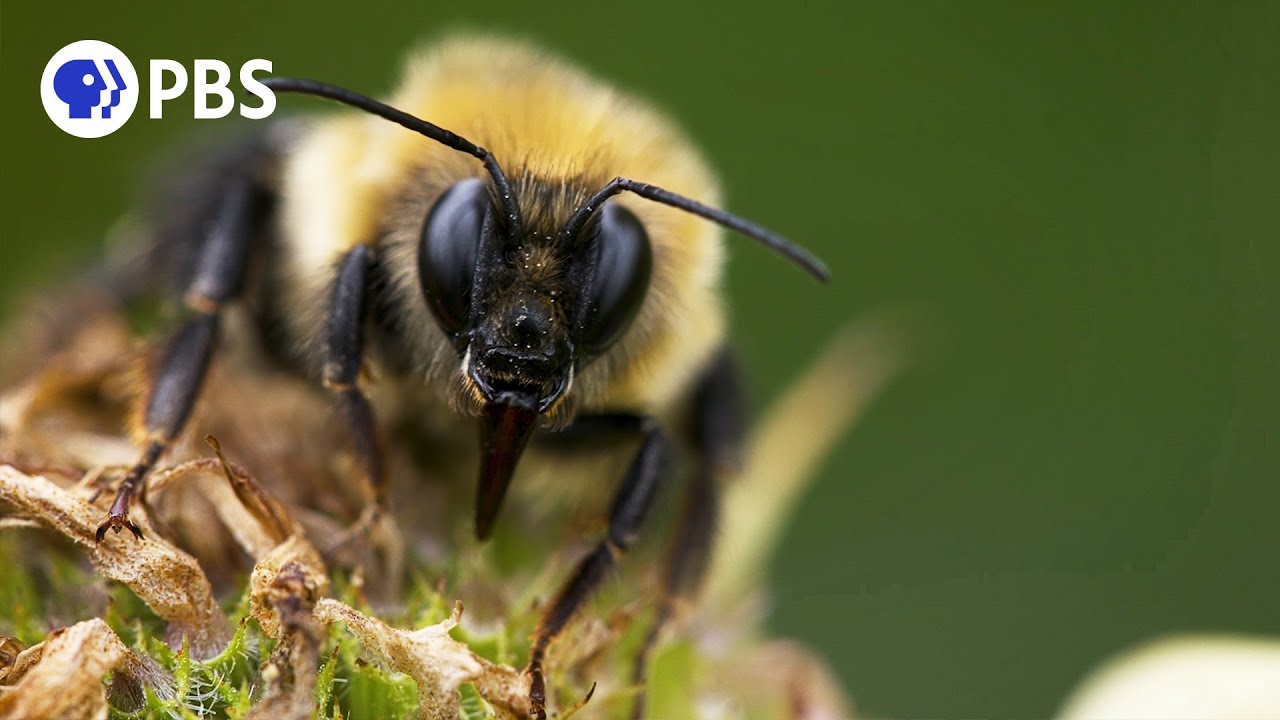
The Power of Pollinators
Nature on PBS
Comprehensive PBS documentary covering why pollinators matter to ecosystems and food production
Watch on YouTube →Supporting Evidence (7 more)
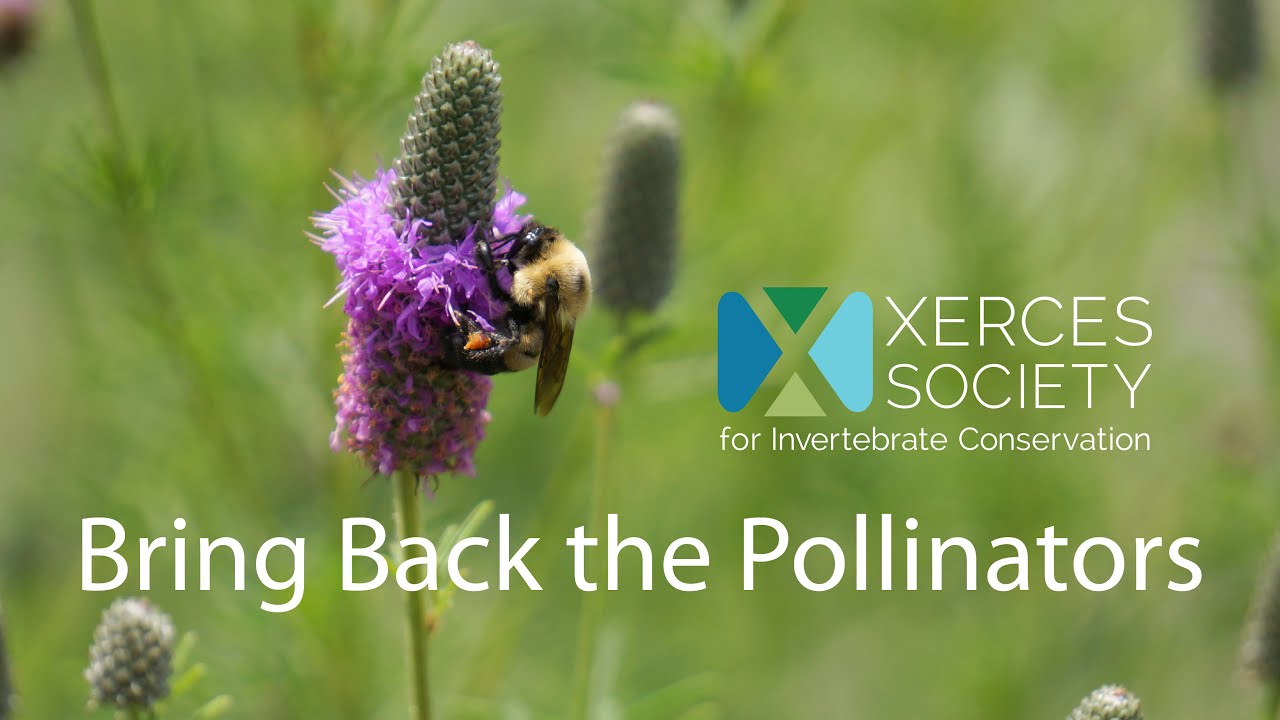
Bring Back the Pollinators
The world's leading invertebrate conservation organization explains why wild pollinators — not just honey bees — are the foundation of food security.
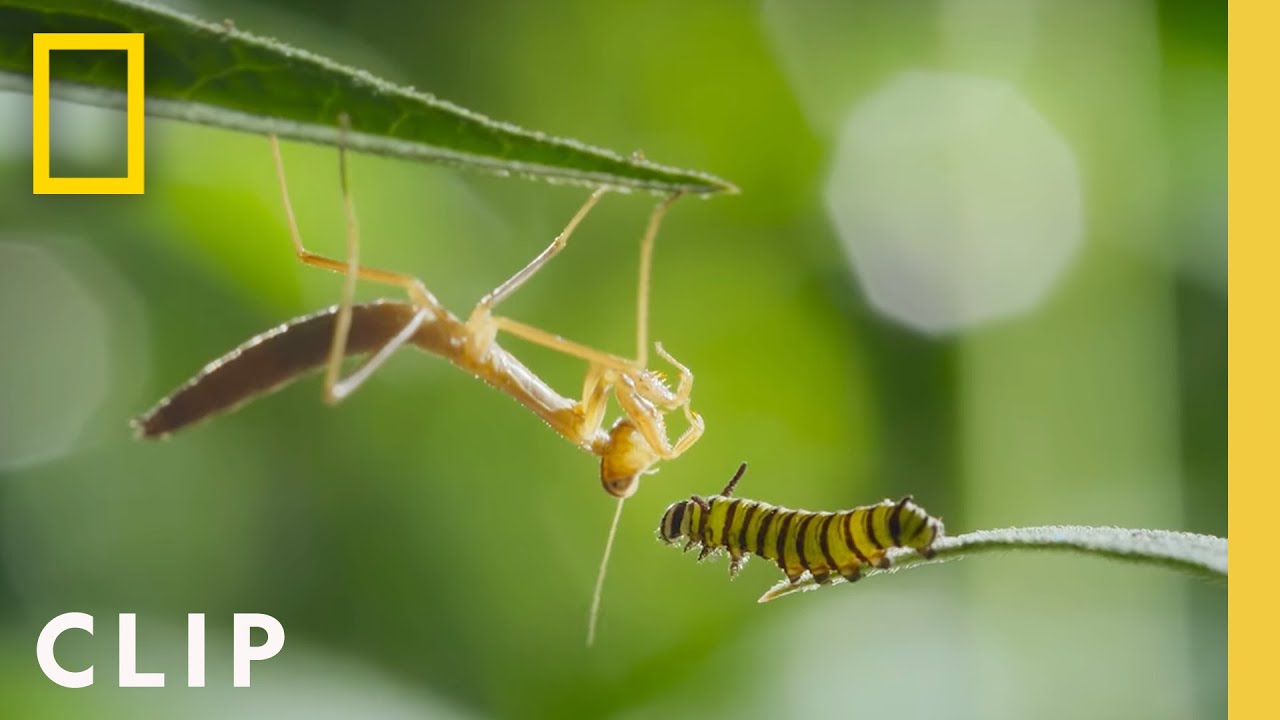
Monarch Migration and Metamorphosis
Stunning footage of the monarch butterfly migration — one of nature's most endangered spectacles

Bee Safe, Grow Well: Pollinator-Safe Nursery Practices
The first 10 minutes provide an unmatched scientific overview of systemic pesticide impacts on non-target insects — from the leading invertebrate conservation organization.

Pollinator Partnership — About Us
Current science-based overview of their Bee Friendly Farming certification and pollinator habitat programs across North America.

In the Life of Nocturnal Pollinators
Moths, beetles, and bats — the forgotten pollinators that work the night shift. Unique ecological angle most articles miss entirely.
Flies: The Maligned Pollinators
Beyond bees — a museum specialist explains why flies are critical pollinators that most conservation efforts overlook. Broadens the article past bee-only framing.
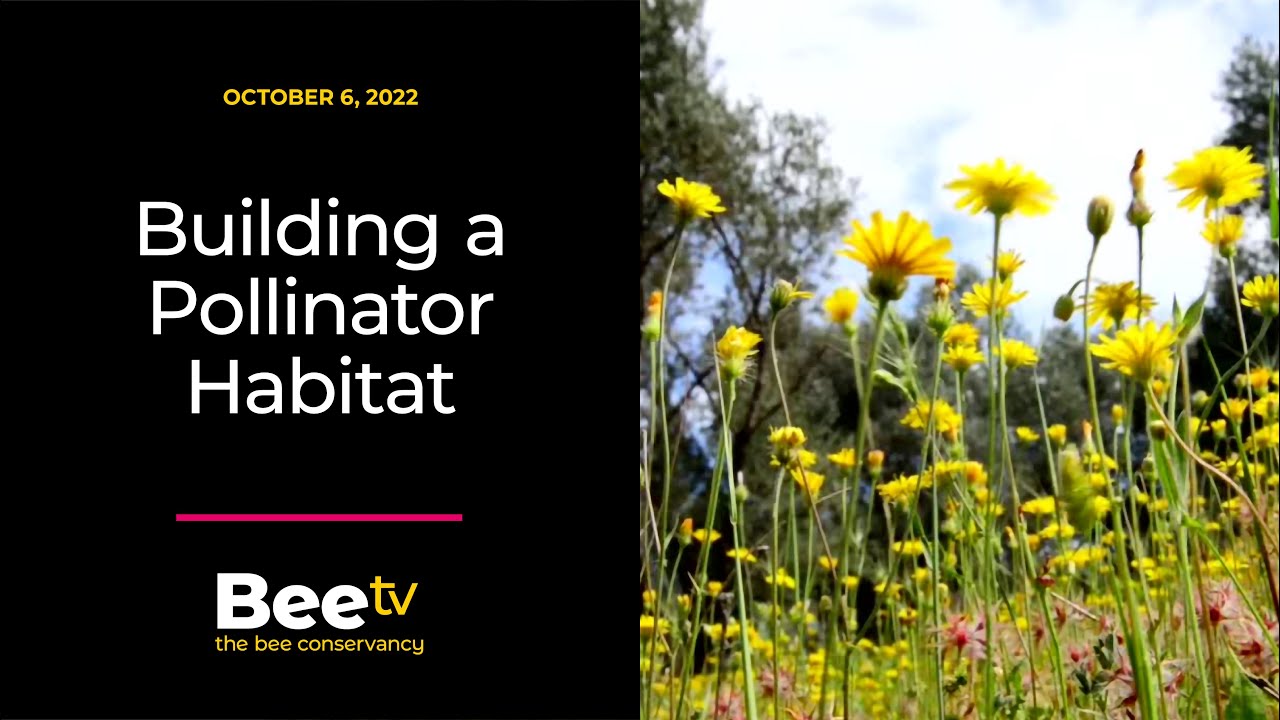
Building a Pollinator Habitat
Practical, educational webinar on creating pollinator habitat — from the organization dedicated to protecting all bee species, not just honeybees.
Frequently Asked Questions
- Why are native bees more important than honeybees?
- Native wild bees are often more effective pollinators than managed honeybees and provide the majority of pollination for many crops and wild plants. There are over 4,000 native bee species in North America alone. Honeybees are a single agricultural species; wild bees are the diverse foundation of ecosystem pollination.
- Do bee hotels actually help or spread disease?
- Bee hotels can help solitary bee species if properly maintained — cleaned annually and built with appropriate tube sizes. Poorly maintained hotels can become breeding grounds for parasites and pathogens that spread to wild populations. The Xerces Society recommends natural nesting habitat (bare ground, dead wood) over artificial structures.
- Are flies and moths as important as bees for pollination?
- Yes. Flies are the second most important group of pollinators after bees, and moths pollinate many night-blooming plants that bees cannot reach. Beetles, wasps, and bats also provide critical pollination services. The focus on bees alone misses 60% of pollinator diversity.
- What habitat features matter most for native pollinators?
- Native pollinators need three things: diverse native flowers blooming from spring through fall, nesting sites (bare soil for ground-nesters, dead wood for cavity-nesters), and pesticide-free areas. Even a small garden with these features can support dozens of pollinator species.
- How can homeowners reduce pesticide harm to pollinators?
- Stop using neonicotinoid pesticides (imidacloprid, clothianidin, thiamethoxam) — these are systemic and persist in pollen and nectar. Choose organic pest control, tolerate minor plant damage, avoid treating blooming plants, and buy plants from nurseries that don't pre-treat with neonicotinoids.
- What is a B-Line pollinator corridor?
- B-Lines are landscape-scale corridors of wildflower-rich habitat that connect isolated pollinator populations. Developed by Buglife, they function as biological highways allowing insects to move between food sources and nesting sites across fragmented landscapes. Without corridors, isolated populations cannot maintain genetic diversity.
- How many pollinator species are at risk globally?
- Approximately 40% of invertebrate pollinator species — particularly bees and butterflies — face extinction according to the IPBES global assessment. The western monarch butterfly declined 99% before partial recovery. Over 700 North American bee species are in decline, with habitat loss as the primary driver.
Research Sources
22 peer-reviewed papers + 1 scientific background source
View all 23 citations
Worldwide decline of the entomofauna: A review of its drivers
Biological Conservation, 2019
Meta-review finding 40% of insect species declining, with total insect biomass dropping 2.5% per year across studied regions
Assessment Report on Pollinators, Pollination and Food Production
IPBES, 2016
Landmark assessment: 75% of food crop types depend on animal pollination; 5-8% of global crop production directly attributable to animal pollination
Country-specific effects of neonicotinoid pesticides on honey bees and wild bees
Science, 2017
Large-scale field study across Europe showing neonicotinoids reduce wild bee reproduction and honey bee colony survival
Climate change contributes to widespread declines among bumble bees
Science, 2020
Climate change has reduced bumble bee occurrence probability by 46% in North America and 17% in Europe
Habitat loss, pesticides and parasites are driving insect decline
Nature Ecology & Evolution, 2021
Analysis identifying habitat destruction, pesticide use, and parasites as the three primary drivers of insect decline globally
More than 75 percent decline over 27 years in total flying insect biomass in protected areas
PLOS ONE, 2017
Landmark study: 76% decline in flying insect biomass over 27 years in German protected areas — even in nature reserves
Bee declines driven by combined stress from parasites, pesticides, and lack of flowers
Science, 2015
Multiple interacting stressors — not a single cause — drive bee declines, with flower loss amplifying pesticide and parasite impacts
The decline of wild bees: causes, consequences, and conservation
Annual Review of Ecology, Evolution, and Systematics, 2021
Comprehensive review of wild bee decline mechanisms and evidence-based conservation strategies
Western monarch butterfly population trends and status
US Fish & Wildlife Service, 2023
Western monarch population declined by over 99% from the 1980s to 2020 low point, with partial recovery since
Global crop pollination: economic value and pollinator dependence
Proceedings of the Royal Society B, 2009
Global economic value of pollination services estimated at EUR 153 billion annually — 9.5% of world agricultural production value
Wild pollinators enhance fruit set of crops regardless of honey bee abundance
Science, 2013
Definitive study proving wild pollinators are more effective than managed honeybees for crop pollination — wild insects enhanced fruit set on every crop studied
A global-scale expert assessment of drivers and risks associated with pollinator decline
Nature Ecology & Evolution, 2021
Expert assessment ranking land-use change, pesticide management, and climate change as the top 3 global drivers of pollinator decline
Worldwide occurrence records suggest a global decline in bee species richness
One Earth, 2021
Analysis of 20,000+ occurrence records showing 25% fewer bee species reported since the 1990s — a decline in diversity, not just abundance
Global pollinator declines: trends, impacts and drivers
Trends in Ecology & Evolution, 2010
Foundational review establishing the framework for understanding pollinator decline — cited over 4,000 times
Why Pollinators Matter
USDA Natural Resources Conservation Service, 2024
Authoritative USDA summary of pollinator importance to US agriculture and food security
Bees prefer foods containing neonicotinoid pesticides
Nature, 2015
Kessler et al. showed bees cannot taste neonicotinoids and actively prefer contaminated food — they are neurologically attracted to the chemicals that harm them, similar to nicotine addiction in humans
Neonicotinoids target distinct nicotinic acetylcholine receptors and neurons
Nature, 2001
Matsuda et al. mapped the molecular target of neonicotinoids — nicotinic acetylcholine receptors (nAChRs) in the insect mushroom bodies. Sub-lethal binding at 0.1nM impairs navigation, learning, and waggle dance communication
Detection and learning of floral electric fields by bumblebees
Science, 2013
Clarke et al. discovered that bumblebees detect and learn floral electric fields (30V/m) — flowers change their charge after a bee visit, signaling 'recently depleted' to the next visitor. A sensory channel invisible to humans
How does climate warming affect plant-pollinator interactions?
Ecology Letters, 2009
Hegland et al. quantified the phenological mismatch: flowers bloom 2-10 days earlier per decade, but pollinator emergence shifts 0-5 days — creating a growing temporal gap that reduces seed set and threatens food security
Importance of pollinators in changing landscapes for world crops
Proceedings of the Royal Society B, 2007
Klein et al. classified 115 crop species by pollinator dependency — from fully dependent (almonds, cherries) to partially dependent (coffee, cocoa) to independent (cereals, rice). The definitive crop-pollinator dependency matrix
Disease associations between honeybees and bumblebees as a threat to wild pollinators
Nature, 2014
Fürst et al. showed that managed honeybee colonies act as disease reservoirs — Deformed Wing Virus and Nosema ceranae spill over to wild bumblebee populations, with Varroa mites vectoring 20+ viruses across species
Bee foraging ranges and their relationship to body size
Oecologia, 2007
Greenleaf et al. established that wild bee foraging range scales with body size (0.1-2.5 km) — habitat isolation >1 km from nesting sites reduces pollination by 50%. The landscape connectivity threshold for pollinator conservation
Pollination syndromes and floral specialization
Annual Review of Ecology, Evolution, and Systematics, 2004
Fenster et al. defined 12 pollination syndromes: bee (UV guides, landing platforms), moth (white tubular, night-blooming), bat (dull, strong scent), fly (carrion-scented), bird (red, no scent). Each syndrome is a co-evolutionary contract
Continue Reading
More from Animal Conservation

Fish Nociception and Pain: What Studies Found and Why the Debate Persists
Some studies in specific fish species have documented nociceptors and behavioral responses to noxious stimuli. What these findings prove — and equally important, what they do not — remains the subject of an unresolved structural disagreement in the peer-reviewed literature.

Octopus Sentience: The Science of Distributed Consciousness and Its Ethical Implications
The octopus challenges brain-centric consciousness theories with 500 million neurons distributed across its body.

Adoption Trauma: Healing the Nervous System of Rescues
### Why Love Isn’t Enough: The Physiology of Adoption Trauma You brought your new dog or cat home with a full heart, a soft bed, and the best food you could find. You expected gratitude, or at least relief. Instead,...
Share this article

The Pollinator Crisis: Why Bees, Butterflies, and Insects Are Disappearing
Every third bite of food depends on pollinators — and they are disappearing. Here is what 10 peer-reviewed studies show about the causes, the consequences, and what you can do.