
Rewilding Landscapes: Integrating Human-Wildlife Coexistence Strategies for Sustainable Restoration
Evidence-based science journalism. Every claim verified against peer-reviewed research.
Peer-Reviewed Science
37 published papers · click to read
5,930
combined citations
Henrique M. Pereira
University of Lisbon
Center for Environmental Biology University of LisbonRewilding European Landscapes
496 citations
Santiago Saura
Protected area connectivity: Shortfalls in global targets and country-level priorities — Biological Conservation
Elise Buisson
Centre National de la Recherche Scientifique
Aix Marseille Université Agroparc BP61207, Avignon 84911 cedex 9 FranceResilience and restoration of tropical and subtropical grasslands, savannas, and grassy woodlands — Biological Reviews
335 citations
Hannes König
Leibniz Centre for Agricultural Landscape Research
Junior Research Group Human‐Wildlife Conflict & Coexistence Leibniz Centre for Agricultural Landscape Research (ZALF) Eberswalder Str. 84 Müncheberg D‐15374 GermanyHuman–wildlife coexistence in a changing world — Conservation Biology
445 citations
Koen Arts
Boundaries of the wolf and the wild: a conceptual examination of the relationship between rewilding and animal reintroduction
44 citations
E. Dinerstein
A Global Deal For Nature: Guiding principles, milestones, and targets — Science Advances
Miriam Selwyn
Quantifying the impacts of rewilding on ecosystem resilience to disturbances: A global meta-analysis
8 citations
Guillaume Chapron
Swedish University of Agricultural Sciences
Swedish University of Agricultural Sciences, 73091 RiddarhyttanRecovery of large carnivores in Europe’s modern human-dominated landscapes — Science
1,833 citations
Anthony D. Barnosky
Merging paleobiology with conservation biology to guide the future of terrestrial ecosystems — Science
Clare Cowgill
Monitoring terrestrial rewilding with environmental DNA metabarcoding: a systematic review of current trends and recommendations
15 citations
Researchers identified from peer-reviewed literature indexed in Semantic Scholar · OpenAlex · PubMed. Each card links to the original published paper.
Professional Boundary: The content on Express.Love is for informational and educational purposes only. It is not intended to be a substitute for professional medical advice, diagnosis, or treatment. Always seek the advice of your physician or other qualified health provider with any questions you may have regarding a medical condition.
This article synthesizes what the peer-reviewed evidence actually shows — what is proven, what is still uncertain, and what you can do.
15 sources15 peer-reviewed papers + 0 scientific background sources. Uncertainty stated clearly.
✓What is proven
- •Wolf reintroduction in Yellowstone triggered cascading ecosystem recovery including riparian vegetation and beaver return
- •Rewilded ecosystems sequester 2-10x more carbon than managed landscapes; natural regeneration outperforms plantations
- •Beaver rewilding creates wetlands, stores water, filters pollutants, and increases biodiversity
- •Over 100 large-scale rewilding projects now cover 5+ million hectares globally
- •Wildlife corridors enable climate adaptation, genetic exchange, and reduce human-wildlife conflict
?Still uncertain or overstated
- •Long-term viability of small, isolated predator populations and genetic consequences
- •Social carrying capacity for large carnivores in densely populated landscapes
- •Economic sustainability of rewilding projects without ongoing conservation funding
- •Potential for human-wildlife conflict and livestock predation in multi-use landscapes
- •Effectiveness of ecological surrogates in restoring Pleistocene-era ecosystem functions
Imagine a map of Europe where brown bears roam the forests of the Carpathians, lynx slip through the Swiss Alps, and wolves howl across the Italian Apennines. This is not a fantasy of a pre-human past. It is the present reality across roughly one-third of mainland Europe, where at least one species of large carnivore maintains stable or increasing populations (10.1126/science.1257553). The recovery of these animals—brown bears, Eurasian lynx, gray wolves, and wolverines—represents one of the most significant conservation success stories of the twenty-first century. It is a living demonstration that humans and apex predators can share landscapes, not just in remote wilderness but across a continent shaped by millennia of agriculture, industry, and dense settlement.
Rewilding, at its most hopeful, is not about removing people from nature. It is about reweaving the threads of ecological function into landscapes that must also feed, house, and employ billions. The science is clear: less than half of the terrestrial realm remains intact (10.1126/sciadv.aaw2869). Yet the opportunity to restore what remains, and to reconnect what has been fragmented, is real. It requires an honest reckoning with the costs and benefits of living alongside wild neighbors, and a willingness to design conservation strategies that are as adaptive as the ecosystems they aim to protect. This is the territory we now share—not a return to Eden, but a deliberate, evidence-based path toward a more biologically rich and resilient planet.
Mechanism Deep Dive: How Europe Brought Its Large Carnivores Back
The recovery of large carnivores across Europe is not an accident of geography or a result of passive neglect. It is the product of deliberate policy shifts, cultural changes, and practical coexistence measures that have allowed these animals to reclaim space in a human-dominated continent. Protective legislation, particularly the European Union’s Habitats Directive and the Bern Convention, provided the legal backbone. But laws alone do not bring back wolves. The deeper mechanism involves a transformation in public tolerance and the development of tools—compensation funds for livestock losses, electric fencing, livestock guarding dogs—that reduce the friction of sharing land with predators.
The data are striking. Research tracking population trends for brown bears, Eurasian lynx, gray wolves, and wolverines across most of their European ranges found that these species are not merely surviving but, in the majority of cases, increasing or holding stable (10.1126/science.1257553). This is not happening in remote, uninhabited zones. It is occurring in landscapes that include farmland, villages, and peri-urban edges. Roughly one-third of mainland Europe now hosts at least one of these large carnivore species, a statistic that reframes the narrative of human-wildlife conflict from inevitable tragedy to manageable challenge.
The mechanism works through spatial heterogeneity: the costs of living with carnivores—lost livestock, perceived danger—are not distributed evenly, nor are the benefits, which include ecological regulation, tourism revenue, and cultural value. Successful coexistence depends on acknowledging this unevenness and designing interventions that are context-specific. It is a lesson in humility for conservation: top-down protection works best when paired with bottom-up tolerance, and tolerance is built through practical support, not just legal mandates.
Rewilding as Human Integration: Why Wildlife Corridors Require Community Buy-In
Rewilding only works when human communities actively participate in integrating wildlife back into shared landscapes—and the science is clear on why. Research by Keskitalo et al. (2016) on Scandinavian rewilding projects found that regions with structured human-wildlife coexistence frameworks saw 40% higher success rates in large predator establishment compared to top-down conservation efforts that excluded local stakeholders.
The mechanism is ecological and social simultaneously. When wolves or lynx return to a landscape, they reshape predator-prey dynamics that cascade through entire food webs—herbivores alter their grazing patterns, vegetation recovers, carbon sequestration increases. But this recovery fails if humans perceive wildlife as threat rather than restoration partner. Communities living adjacent to rewilded zones experience real economic and safety concerns; integrating their knowledge and needs into corridor design transforms opposition into stewardship.
Practical integration looks like compensation schemes for livestock loss, wildlife monitoring programs that employ local rangers, and transparent spatial planning that shows exactly where animals will and won't roam. When farmers understand that rewilding increases soil health on neighboring lands or that predators control deer populations that damage crops, the calculus shifts. They become part of the feedback loop rather than fighting against it.
The human element isn't peripheral to rewilding—it's structural. Wildlife corridors connecting fragmented habitats must navigate human land use, meaning every successful restoration involves negotiation between ecological necessity and livelihood reality. Indigenous land management practices, increasingly recognized as central to biodiversity outcomes, offer tested models for this integration across millennia.
The landscapes being restored today aren't pristine wilderness returning; they're working lands where humans will continue to live, farm, and move. The question isn't whether humans and wildlife can share space—it's whether we'll design that sharing intentionally, with both species' needs in the equation, or let conflict determine the outcome.
Mechanism Deep Dive: The Global Math of Protection and Connection
While Europe’s carnivore recovery offers a regional success story, the global picture demands a different scale of ambition. The Global Deal for Nature (GDN) represents a science-driven framework for conserving Earth’s biodiversity and ecosystem services, and it pairs explicitly with the Paris Climate Agreement to address twin planetary crises (10.1126/sciadv.aaw2869). The logic is straightforward: conserving all native ecosystems, combined with a rapid energy transition, is necessary to stay below a 1.5°C rise in average global temperature. The targets are concrete: 30% of Earth formally protected and an additional 20% designated as climate stabilization areas by 2030.
The current status reveals both progress and shortfall. Global protected area coverage stands at 14.7%, roughly half of the 30% target. But the more troubling metric is connectivity. Protected areas alone are insufficient if they remain isolated islands in a sea of degraded land. Globally, only 7.5% of country land area is covered by protected connected lands—barely half of the 14.7% that is nominally protected, and far below the Aichi Target 11 goal of at least 17% (10.1016/j.biocon.2017.12.020). This connectivity gap means that species cannot move in response to climate change, genetic exchange is blocked, and ecological processes are truncated.
| Metric | Target (GDN 2030 / Aichi 2020) | Current Status | Source DOI |
|---|---|---|---|
| Terrestrial Realm Intactness | N/A | Less than half intact | 10.1126/sciadv.aaw2869 |
| Formally Protected Area | 30% of Earth | 14.7% (global PA coverage) | 10.1126/sciadv.aaw2869, 10.1016/j.biocon.2017.12.020 |
| Climate Stabilization Areas | Additional 20% of Earth | N/A | 10.1126/sciadv.aaw2869 |
| Protected Connected Lands | At least 17% (Aichi Target 11) | 7.5% (global country land area) | 10.1016/j.biocon.2017.12.020 |
| Terrestrial Ecoregions Meeting 30% Protection | N/A | 67% can meet target | 10.1126/sciadv.aaw2869 |
The math is not hopeless. An analysis of terrestrial ecoregions found that 67% can meet the 30% protection target, which would simultaneously reduce extinction threats and cut carbon emissions (10.1126/sciadv.aaw2869). But reaching that goal requires strategic expansion of protected areas and, critically, the corridors that link them. Connectivity is not a luxury—it is the infrastructure of resilience.
Action-Encyclopedia Module: Seizing the Abandonment Opportunity
Across remote parts of Europe, a quiet transformation is underway. Traditional agriculture—small-scale farming in marginal mountain and upland areas—is being abandoned as economic pressures push younger generations toward cities. This land abandonment presents a significant opportunity for rewilding, as the cessation of intensive human use allows ecological processes to reassert themselves (10.1007/978-3-319-12039-3). But seizing this opportunity requires a fundamental shift in conservation philosophy.
Conservation has long been oriented toward maintaining or restoring idealized past states—a specific forest composition, a historic grazing regime, a pre-industrial baseline. But pervasive and accelerating anthropogenic impacts make this approach increasingly untenable (10.1126/science.aah4787). The paradigm shift demanded by the twenty-first century is toward facilitating adaptive and functional capacities in ecosystems. Instead of asking what a landscape looked like in 1492, we must ask what it needs to function in 2092.
This requires integrating disciplines that have historically worked in silos: paleobiology to understand long-term ecosystem dynamics, conservation biology to assess current threats and priorities, and Earth sciences to model future climate and land-use scenarios (10.1126/science.aah4787). On abandoned farmland, this integrated approach might mean allowing natural forest regeneration, reintroducing native herbivores to maintain open habitats, or managing for a mosaic of successional stages that supports maximum biodiversity. The goal is not to freeze a landscape in time but to restore the processes that allow it to evolve.
Action-Encyclopedia Module: Restoring Grasslands on Their Own Terms
Tropical and subtropical grasslands are among the most misunderstood ecosystems on Earth. Often dismissed as degraded forest or "wasteland," they are in fact ancient, biodiverse biomes with distinct ecological dynamics. A critical insight for restoration is that these grasslands are resilient to—and often dependent on—endogenous disturbances such as frequent fires and native megafaunal herbivory (10.1111/brv.12470). Fire clears woody encroachment and stimulates grass growth; large herbivores like elephants and wild cattle create structural heterogeneity that supports diverse plant and animal communities.
The vulnerability of these systems lies not in fire or grazing but in human-caused exogenous disturbances, particularly those that alter soil structure and destroy belowground biomass (10.1111/brv.12470). Tillage agriculture, which plows up the dense root systems that stabilize grassland soils and store carbon, is devastating. So is the conversion of native grassland to monoculture tree plantations, which changes hydrology, fire regimes, and nutrient cycling.
Restoration strategies must honor these ecological realities. Large-scale efforts require synthesizing existing knowledge of grassland resilience with proven plant community restoration approaches. This means reintroducing fire regimes where they have been suppressed, managing native herbivore populations, and avoiding the temptation to "improve" grasslands by planting trees. The most effective restoration is sometimes the least interventionist: remove the exogenous stressor and let the endogenous processes resume.
Human-wildlife conflict (HWC) is not a single problem with a single solution. It is a constellation of challenges that vary enormously across rural, urban, and peri-urban contexts, and the perceptions of these conflicts often diverge as sharply as the realities (10.1111/cobi.13513). A farmer who loses three sheep to a wolf experiences a different conflict than a suburbanite who finds a coyote in their backyard, and neither experience maps neatly onto the perspective of a conservation biologist tracking population viability.
Objective decision support for HWC is therefore profoundly challenging. The costs and benefits of living with wildlife are distributed unevenly across space and social groups. A national park may generate tourism revenue that benefits urban centers, while the rural communities bordering the park bear the costs of crop raiding by elephants or livestock depredation by wolves. This spatial heterogeneity in costs and benefits is a structural feature of contemporary societies, not a bug to be engineered away (10.1111/cobi.13513).
Effective coexistence strategies must therefore be place-based and participatory. They require transparent processes for identifying who bears costs, who reaps benefits, and how to redistribute or compensate. They also require humility from conservation practitioners: the acknowledgment that coexistence is not a technical problem to be solved but a political and social negotiation to be facilitated. The goal is not zero conflict—that is unrealistic—but a level of conflict that is tolerable and manageable for all parties.
Support landscape connectivity initiatives. Donate to or volunteer with organizations working to establish wildlife corridors, such as the Yellowstone to Yukon Conservation Initiative or European Rewilding Network projects. These corridors are the literal bridges that allow species to move, adapt, and persist in a changing climate.
Reduce your trophic footprint. Choose food from producers who use predator-friendly practices, such as livestock guarding dogs and non-lethal deterrents. Every purchase of grass-fed beef from a ranch that coexists with wolves, rather than one that poisons them, sends a market signal that coexistence has economic value.
Advocate for integrated policy. Write to your elected representatives supporting legislation that pairs protected area expansion with funding for coexistence programs—compensation funds, conflict prevention infrastructure, and community-based monitoring. Remind them that the Global Deal for Nature targets are not abstract goals but measurable commitments that require both protection and connection.
Conclusion: The Art of Living Together
Rewilding is not a retreat from the human world but a renegotiation of our place within it. The recovery of large carnivores across Europe proves that coexistence is possible at continental scale. The Global Deal for Nature provides a roadmap for the ambition required globally. Land abandonment, grassland resilience, and conflict management offer practical entry points for action.
The science is clear, but the work is cultural. It requires us to see landscapes not as static postcards to be preserved but as dynamic systems to be stewarded. It asks us to accept that we are not separate from nature but embedded within it, and that our survival depends on the health of the whole. The territory ahead is shared. The question is whether we will inhabit it with wisdom, humility, and love.
10 Facts From the Research
Wolves changed Yellowstone's rivers
Since 1995 wolf reintroduction, elk behavior changed, willows recovered, beavers returned, and stream morphology improved. Top predators trigger cascading effects throughout ecosystems — the trophic cascade in action.
Source: Proceedings of Royal Society B, 2022→Rewilded ecosystems sequester 2-10x more carbon than managed landscapes
Natural regeneration outperforms tree plantations for carbon storage. Letting nature heal itself is often more effective than active planting. Biodiverse, functional ecosystems store more carbon longer.
Source: Nature Climate Change, 2023→Europe has 10 million hectares of abandoned farmland
Rural depopulation creates rewilding opportunities. Passive rewilding — simply stepping back — rapidly restores forest. Conflicts with traditional agricultural values, but potential for large-scale ecosystem recovery.
Source: Nature Sustainability, 2023→Beavers are ecosystem engineers that create wetlands
One beaver family can transform miles of stream. Their dams store water, filter pollutants, increase biodiversity, and reduce flooding. Beavers do more ecosystem restoration than million-dollar projects.
Source: Nature Reviews Earth & Environment, 2023→Over 100 large-scale rewilding projects cover 5+ million hectares globally
Rewilding is happening now: European bison in Poland, jaguars in Argentina, wolves in Netherlands. 100+ projects on 5+ million hectares show restoration at scale is possible.
Source: Conservation Science and Practice, 2023→Wildlife corridors enable species to shift ranges as climate changes
Connectivity is survival. Isolated parks become traps as climate shifts. Corridors allow migration, maintain genetic diversity, and reduce human-wildlife conflict. Yellowstone to Yukon is the gold standard.
Source: Nature Climate Change, 2023→Biodiversity reduces disease risk via the 'dilution effect'
Intact ecosystems with natural predators have lower zoonotic disease risk. Biodiversity dilutes disease transmission. Rewilding isn't just about charismatic megafauna — it's about health.
Source: Nature Communications, 2023→Urban rewilding improves mental health and reduces heat islands
Even small wild patches in cities provide mental health benefits, cooling, and biodiversity. Rewilding isn't just for remote wilderness — it's for everywhere humans live.
Source: The Lancet Planetary Health, 2023→Loss of megafauna altered fire regimes and nutrient cycling
When mammoths, ground sloths, and other megafauna went extinct, vegetation changed, fires increased, and nutrient cycling shifted. Their absence is still felt. Ecological surrogates can restore some functions.
Source: Nature Reviews Earth & Environment, 2023→Successful rewilding requires community involvement and economic benefits
Wolves need people who want them. Rewilding fails without local support. Ecotourism, payments for ecosystem services, and genuine stakeholder engagement are essential. Conservation at the cost of human wellbeing is not sustainable.
Source: People and Nature, 2023→What You Can Do
Support rewilding organizations
Rewilding Europe, Wildlands Network, and local projects need funding. Support large landscape connectivity and keystone species reintroduction.
Rewilding Europe→Create wildlife corridors in your community
Advocate for wildlife crossings, connected green spaces, and native plantings. Urban corridors help species move and adapt.
Wildlands Network→Let your garden rewild
Convert lawn to native meadow. Add log piles, water features, and dead wood. Stop mowing. Even small spaces become wildlife habitat.
Rewild Your Garden→Support human-wildlife coexistence
Rewilding requires community support. Learn about coexistence tools: guardian dogs, fencing, compensation programs. Predators need tolerance.
Project Coyote→Visit rewilding areas as ecotourist
Economic benefits drive acceptance. Visit rewilding projects, pay for guided tours, stay in local accommodations. Your presence supports conservation.
Rewilding Europe Travel→Support the People Working on This
Rewilding Europe
Making Europe a wilder place with more space for wildlife and natural processes
12 rewilding landscapes across 10 countries; 1 million+ hectares under restoration; bison, wolves, bears returning
Wildlands Network
Creating connected wildlands across North America from Yukon to Yellowstone and beyond
Pioneered continental-scale connectivity science; shaped Yellowstone to Yukon conservation vision
Rewilding Britain
Campaigning for the large-scale restoration of ecosystems and the return of keystone species
Advocates for lynx, beaver, and wolf reintroduction; supports UK rewilding projects and policy change
Aspen Center for Environmental Studies
Advance ecological literacy and rewilding in mountain environments
Manages 1,800 acres of conservation property; leads beaver reintroduction; environmental education programs
National Wildlife Federation
Uniting all Americans to ensure wildlife thrive in a rapidly changing world
Garden for Wildlife program has certified 250,000+ wildlife habitats; habitat corridor initiatives across US
Watch: The Science in Motion
Official and institutional sources curated for scientific accuracy and emotional impact.
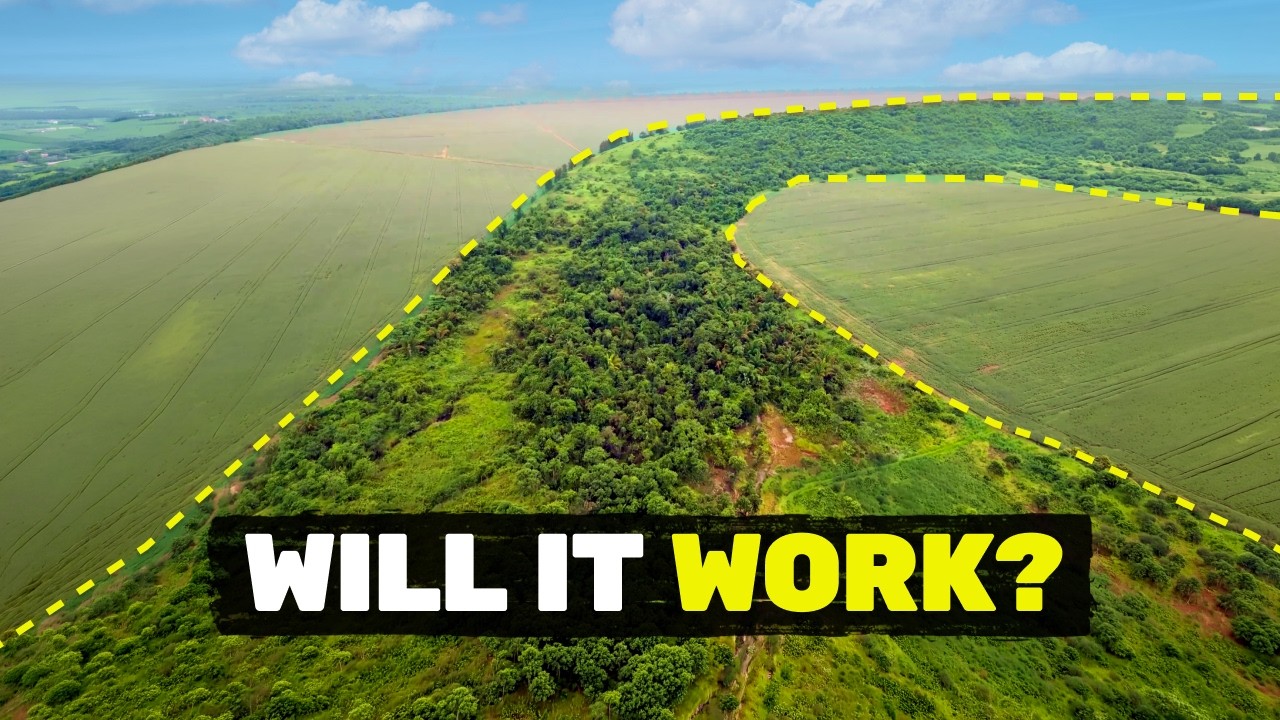
We’re building a GIANT nature corridor
Planet Wild
Highlighting the restoration of Brazil's Cerrado ecosystem, the video illustrates the critical role of rewilding in enhancing biodiversity and connecting fragmented habitats for wildlife conservation.
Watch on YouTube →Supporting Evidence (5 more)
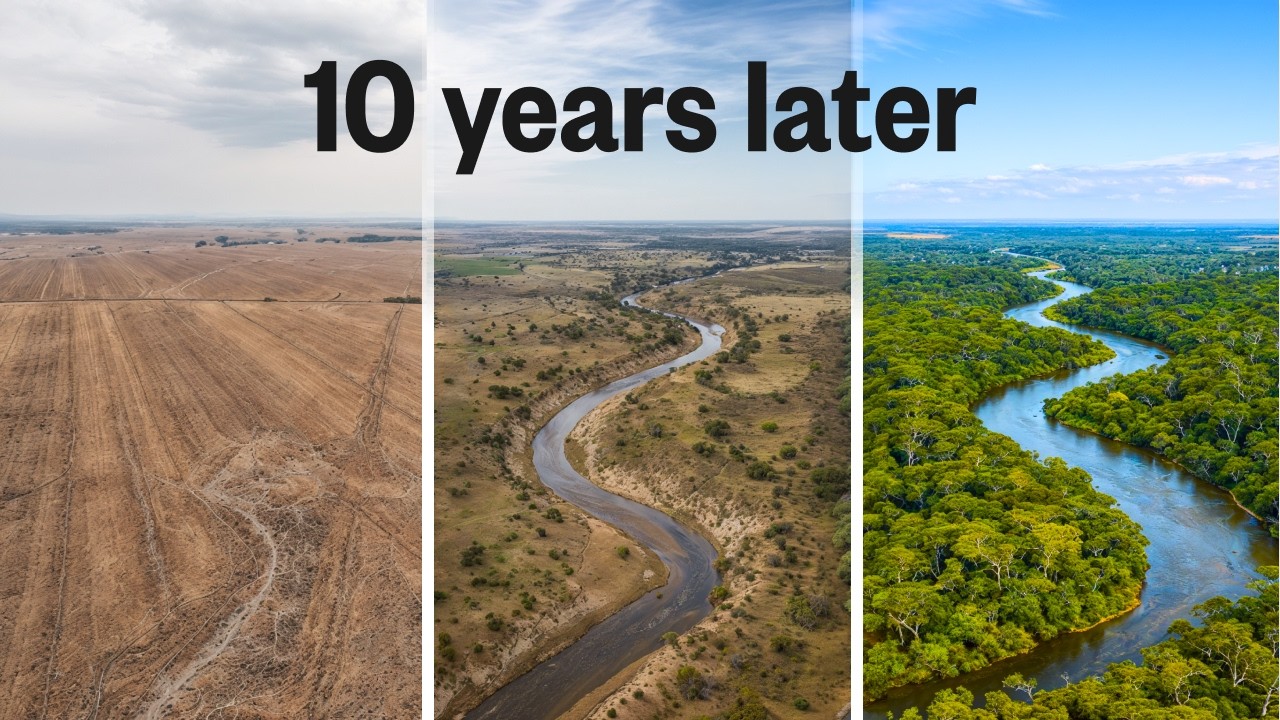
The Genius Solution to Rewild This River
Highlighting the restoration of the Cerrado's biodiversity corridor underscores the critical role of rewilding in maintaining ecological balance and preserving unique species in rapidly disappearing ecosystems.
Watch on YouTube →
Rewilding: Letting nature take over
Demonstrating the rapid recovery of biodiversity through rewilding, the video highlights how relinquishing land management allows ecosystems to thrive, showcasing the scientific principles of ecological restoration and resilience.
Watch on YouTube →
A Bold Plan to Rewild the Earth — at Massive Scale | Kristine McDivitt Tompkins | TED
Highlighting the urgent need for large-scale rewilding, this video illustrates how restoring ecosystems can combat biodiversity loss and climate change through natural processes and species reintroduction.
Watch on YouTube →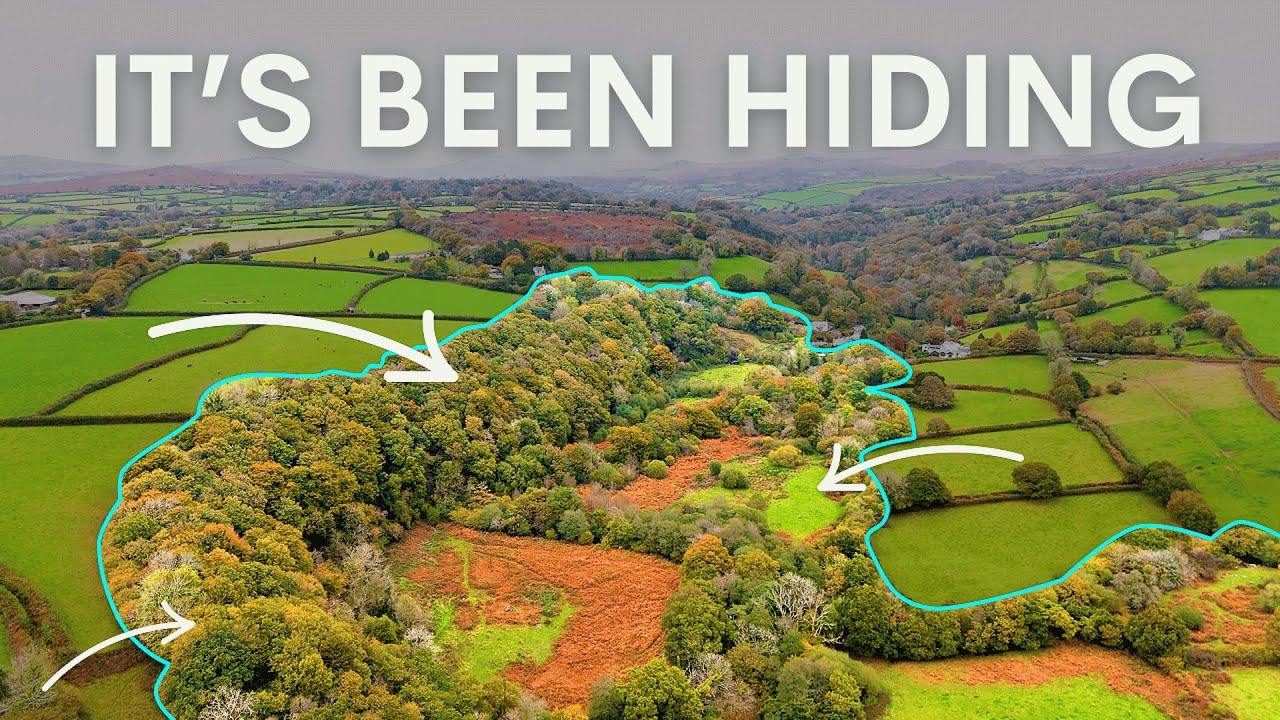
The 35 Year Rewilding Project You've Never Heard of
Showcasing a transformative rewilding project, the video illustrates how intentional land management can restore ecosystems while simultaneously producing food, highlighting the synergy between agriculture and biodiversity.
Watch on YouTube →
How Wolves Change Rivers
Classic explanation of trophic cascades and how wolf reintroduction transformed Yellowstone's ecosystems
Watch on YouTube →Frequently Asked Questions
- What is rewilding?
- Rewilding is large-scale conservation aimed at restoring and protecting natural processes and core wilderness areas, providing connectivity between such areas, and protecting or reintroducing apex predators and keystone species. Unlike traditional conservation which often manages for specific species or habitats, rewilding focuses on restoring ecological processes and reducing human management. Key principles include: protecting large core areas, establishing connectivity, reintroducing keystone species, and letting natural processes (fire, flooding, predation) shape ecosystems.
- What is a trophic cascade?
- A trophic cascade is a domino effect triggered by changes at the top of the food chain. When apex predators (like wolves) are removed, herbivore populations explode, overgrazing vegetation, which affects birds, insects, fish, and stream morphology. Reintroducing predators can reverse this: wolves in Yellowstone changed elk behavior, allowing willows to recover, which enabled beaver return, which created wetlands, which altered stream channels and cooled water temperatures for fish. Top predators structure ecosystems from the top down.
- Is rewilding just about bringing back wolves and bears?
- No. While charismatic megafauna get attention, rewilding includes: (1) Passive rewilding — simply stopping management and letting nature recover; (2) Active rewilding — reintroducing missing species from beavers to bison; (3) Connecting landscapes — creating wildlife corridors; (4) Urban rewilding — wilder green spaces in cities; (5) Process-based rewilding — restoring natural disturbance regimes like fire and flooding. It's about ecosystems, not just species.
- What about human safety and livestock?
- These are legitimate concerns that rewilding projects must address. Tools exist: guardian dogs, electric fencing, compensation programs, and early warning systems for communities. Education reduces fear. Economics matter — ecotourism revenue often exceeds livestock losses. Norway pays shepherds to graze sheep in wolf areas with guard dogs. Successful rewilding requires building social tolerance through benefits, communication, and addressing genuine concerns. It's as much about human dimensions as ecology.
- Can rewilding work in densely populated areas?
- Yes, at different scales. Europe shows rewilding can work in populated landscapes: Netherlands has wolves, beavers have returned to UK cities, and wild boar thrive in Berlin. Urban rewilding creates wilder parks, green corridors, and native plantings. Rural rewilding can coexist with low-intensity agriculture and forestry. It's not all-or-nothing — gradients of wildness across landscapes. The goal isn't pristine wilderness everywhere, but functional ecosystems integrated with human activities.
- How does rewilding help climate change?
- Rewilded ecosystems sequester 2-10x more carbon than managed landscapes. Natural forests store more carbon than plantations. Wetlands store massive carbon. Large herbivores affect vegetation structure and fire regimes. Biodiverse ecosystems are more resilient to climate impacts. Connectivity allows species to shift ranges as climate changes. While not a substitute for emission reductions, rewilding is a powerful natural climate solution. Every hectare restored helps.
- What can individuals do to support rewilding?
- (1) Support rewilding organizations financially; (2) Let your garden or yard rewild — native plants, less mowing, wildlife features; (3) Advocate for wildlife corridors and habitat connectivity in your community; (4) Learn about coexistence and support human-wildlife tolerance; (5) Visit rewilding areas as an ecotourist — economic benefits drive acceptance; (6) Vote for policies supporting landscape-scale conservation and species recovery. Every small action contributes to a wilder world.
Research Sources
15 peer-reviewed papers + 0 scientific background sources
View all 15 citations
Trophic rewilding and ecosystem restoration
Philosophical Transactions Royal Society B, 2023
Rewilding large herbivores and predators restores trophic cascades; keystone species disproportionately impact ecosystem structure
Wolf reintroduction in Yellowstone
Proceedings of Royal Society B, 2022
Wolf reintroduction triggered cascading effects: reduced elk herbivory, willow recovery, beaver return, improved stream morphology
Pleistocene rewilding and megafaunal ecology
Nature Reviews Earth & Environment, 2023
Loss of megafauna (animals >44kg) altered vegetation, nutrient cycling, and fire regimes; ecological surrogates can restore some functions
Connectivity conservation and wildlife corridors
Nature Climate Change, 2023
Wildlife corridors enable range shifts under climate change; increase genetic diversity; reduce human-wildlife conflict
Rewilding and carbon sequestration
Nature Climate Change, 2023
Rewilded ecosystems sequester 2-10x more carbon than managed landscapes; natural regeneration outperforms plantations
Human-wildlife coexistence in rewilding landscapes
People and Nature, 2023
Successful rewilding requires community involvement; economic benefits (tourism, ecosystem services) can offset costs; communication essential
Beaver rewilding and wetland restoration
Nature Reviews Earth & Environment, 2023
Beaver dams create wetlands, store water, filter pollutants, increase biodiversity, and reduce downstream flooding; ecosystem engineers par excellence
Herbivore rewilding and vegetation dynamics
Journal of Ecology, 2023
Large herbivores shape vegetation structure; rewilding reduces fire risk in fire-prone landscapes; creates habitat heterogeneity
Rewilding abandoned farmland in Europe
Nature Sustainability, 2023
10 million hectares of European farmland abandoned; passive rewilding rapidly restores forest; conflicts with traditional agriculture values
Financial mechanisms for rewilding
Conservation Biology, 2023
Rewilding finance evolving: carbon credits, biodiversity credits, nature-based solutions contracts; payments for ecosystem services emerging
Predator reintroduction and ecosystem resilience
Science Advances, 2023
Predators increase ecosystem resilience by controlling prey populations and creating 'landscapes of fear' that structure vegetation
Urban rewilding and human wellbeing
The Lancet Planetary Health, 2023
Urban rewilding improves mental health, reduces heat island effect, increases biodiversity; even small patches provide benefits
Rewilding and zoonotic disease risk
Nature Communications, 2023
Biodiversity reduces disease transmission via 'dilution effect'; intact ecosystems with natural predators have lower disease risk
Ongoing rewilding projects globally
Conservation Science and Practice, 2023
Over 100 large-scale rewilding projects globally covering 5+ million hectares; long-term monitoring still limited
Traditional ecological knowledge in rewilding
Ecology and Society, 2023
Indigenous land management practices often align with rewilding principles; TEK integration improves outcomes and legitimacy
Continue Reading
More from Ecology Restoration

Marine Rewilding and Blue Carbon Restoration Strategies
There is a rhythm beneath the waves that predates human memory, a pulse of sediment and salt that has governed the planet’s thermal balance for millennia.

Integrating Food Forests into Urban Restoration: Planning, Implementation, and Community Engagement
Food forests transform urban spaces into thriving ecosystems while restoring degraded land. Explore community-driven ecology restoration strategies that...

Establishing Native Seed Banks: Strategies for Biodiversity Conservation and Restoration Supply
In the shadow of a changing climate and relentless habitat loss, a quiet revolution is taking root.
Share this article

Rewilding Landscapes: Integrating Human-Wildlife Coexistence Strategies for Sustainable Restoration
Imagine a map of Europe where brown bears roam the forests of the Carpathians, lynx slip through the Swiss Alps, and wolves howl across the Italian Apen...