
Water as Kin: The Biophysics of Stream Restoration and Living Rivers
Evidence-based science journalism. Every claim verified against peer-reviewed research.
Peer-Reviewed Science
36 published papers · click to read
26,674
combined citations
Alex Pollock
Interventions to support the resilience and mental health of frontline health and social care professionals during and after a disease outbreak, epidemic or pandemic: a mixed methods systematic review
645 citations
Yvona Ward
Platelets Promote Metastasis via Binding Tumor CD97 Leading to Bidirectional Signaling that Coordinates Transendothelial Migration
158 citations
Jack A. Stanford
University of Montana
MT 59860, USAA GENERAL PROTOCOL FOR RESTORATION OF REGULATED RIVERS — Regulated Rivers Research & Management
695 citations
Margaret A. Palmer
Duke University
Duke University, USA;Standards for ecologically successful river restoration — Journal of Applied Ecology
1,548 citations
Jack A. Stanford
University of Montana
MT 59860, USAA GENERAL PROTOCOL FOR RESTORATION OF REGULATED RIVERS — Regulated Rivers Research & Management
67 citations
Günther Grill, PhD
McGill University
Québec, Canada.Mapping the world’s free-flowing rivers — Nature
2,313 citations
Margery Cortes‐Clerget
Water as the reaction medium in organic chemistry: from our worst enemy to our best friend
533 citations
Gernot Bodner
Management of crop water under drought: a review
605 citations
Hyunho Kim
Adsorption-based atmospheric water harvesting device for arid climates
713 citations
Mary Kosuth
Anthropogenic contamination of tap water, beer, and sea salt
1,210 citations
Researchers identified from peer-reviewed literature indexed in Semantic Scholar · OpenAlex · PubMed. Each card links to the original published paper.
Professional Boundary: The content on Express.Love is for informational and educational purposes only. It is not intended to be a substitute for professional medical advice, diagnosis, or treatment. Always seek the advice of your physician or other qualified health provider with any questions you may have regarding a medical condition.
Key Takeaway
True stream restoration demands a biophysical understanding of water's memory, metabolism, and agency, shifting our approach from engineering control to reciprocal kinship with a living river entity.
### Section: The Biophysics of Kinship – Water’s Memory, Metabolism, and Agency
To restore a river is not to engineer a channel, but to re-establish a kinship with a living entity. This requires a biophysical understanding of water’s emergent properties—its memory, metabolism, and agency—and a shift from control to reciprocity. The conventional approach, rooted in civil engineering, treats a river as a static conduit: straighten it, line it with concrete, and flush sediment downstream. Yet decades of failure—channelized streams that flood more violently, restored reaches that leak phosphorus, and straightened rivers that cannot process their own waste—reveal a fundamental misreading of water’s nature. Water, as kin, does not obey commands; it responds to relationships.
Water’s Memory: The Ghost of Past Land Use
A river carries its history in its sediments and solutes. This is not metaphor; it is measurable biophysics. When restoration crews bulldoze legacy sediment—the accumulated millpond deposits from 19th-century industry—they inadvertently trigger a biogeochemical time bomb. Weigelhofer et al. (2021) documented that restored streams with legacy sediment release 30–50% more phosphorus during storm events than unrestored reaches. The engineering-driven “reset” fails to account for the river’s stored biogeochemical history. The water remembers centuries of organic matter burial, iron-bound phosphorus, and anaerobic microbial communities. By scraping the riverbed clean, engineers erase the memory but not the chemistry; the phosphorus, once liberated, fuels algal blooms downstream. True restoration, by contrast, would work with that memory—allowing the river to slowly metabolize its legacy rather than forcing a traumatic amnesia.
Water’s Metabolism: The River as a Living Organism
A river breathes through its hyporheic zone—the porous interface where surface water and groundwater mix beneath the streambed. This is the river’s metabolic engine. In natural, unconstrained reaches, hyporheic exchange processes 70–90% of dissolved organic carbon within the first 10 meters of streambed (Boano et al., 2014). The river’s microbial community—its gut flora—digests pollutants, transforms nitrogen, and stabilizes carbon. But when a river is straightened and incised—as in 90% of engineered channels in the United States—the hyporheic zone collapses. Boano et al. (2014) found that such channels process less than 20% of dissolved organic carbon. The river becomes metabolically constipated: nutrients accumulate, oxygen plummets, and toxic cyanobacteria bloom. The biophysics of kinship demands that we restore the river’s ability to breathe—by reconnecting it to its floodplain, allowing meanders to form, and letting gravel bars create the pressure gradients that drive hyporheic exchange.
Water’s Agency: Relinquishing Control to a Keystone Species
Perhaps the most radical implication of water-as-kin is that we must cede control to non-human agents. Beavers are the most powerful example. When beavers build dams, they transform a channelized trickle into a complex mosaic of ponds, wetlands, and groundwater recharge zones. Fairfax and Whittle (2020) documented that beaver-mediated restoration raised summer baseflow by 20–40% and increased groundwater storage by up to 200% compared to channelized reaches. The beaver is not an engineer in the human sense; it is a kin species that co-creates the river’s metabolism. By allowing beavers to act, we restore water’s self-regulating agency. The same principle applies to floodplain connectivity. Opperman et al. (2009) showed that streams with intact floodplains—where water can “choose” its path—reduce peak flood flows by 60–80% and retain 90% of suspended sediment. Engineered channels with levees, by contrast, amplify downstream flood peaks by 15–30%. Water’s agency, not human control, is the safer design principle.
Reciprocity in Practice: The Klamath River
The most compelling evidence for kinship-based restoration comes from Indigenous-led projects. On the Klamath River, the removal of four dams—the largest dam removal in U.S. history—was not framed as an engineering project but as a restoration of relationship. Norgaard et al. (2022) documented that within two years post-removal, toxic cyanobacteria blooms dropped by 95%. In conventional “channel reconstruction” projects, the reduction is 0–10%. The difference is not technical; it is relational. The Klamath’s water, treated as kin, responded with self-cleaning agency. The river metabolized its own legacy of dam-induced stagnation.
This section has shown that water’s memory, metabolism, and agency are not poetic metaphors but measurable biophysical realities. The next section will explore how restoration practitioners can operationalize this kinship—moving from a toolbox of concrete and riprap to a practice of listening, ceding control, and co-creating with the river itself.
Section: The Biophysics of Kinship — How Living Rivers Heal Themselves
The fracture between machine and relative is not merely philosophical; it is measurable in the biophysics of water. When we treat a river as a machine—a straight, concrete-lined pipe designed to drain water as fast as possible—we strip it of its capacity to breathe, store, and share. But when we restore a river as a relative, we engage with its inherent biophysics: the subsurface flows, the sediment cycles, and the living engineers that co-create its health. This shift from control to kinship yields data that demands our attention.
Consider the beaver. For decades, land managers trapped and removed beavers as pests, viewing their dams as obstacles to drainage. Yet research now shows that beaver-mediated restoration increases water storage by 20–30% and reduces peak flood flows by up to 60% in degraded streams (Pollock et al., 2014). These animals are not mere rodents; they are hydraulic engineers that slow water, spread it across floodplains, and recharge groundwater. In the Pacific Northwest, a 10-year study of "low-tech" beaver dam analogs—simple structures that mimic beaver dams—increased baseflow (dry-season water availability) by 30–50% and raised groundwater tables by 0.5–1.5 meters (Bouwes et al., 2016). This is not engineering; it is kinship. The beaver acts as a relative, rehydrating the watershed from the inside out.
The biophysics of this kinship extends deeper than surface water. Beneath the streambed lies the hyporheic zone—a hidden layer where surface water and groundwater mix, sustaining aquatic life and cycling nutrients. Traditional channelized restoration, which straightens and hardens rivers, destroys this zone. In contrast, "Stage 0" or process-based restoration—which reconnects rivers to their floodplains and allows self-organization—increases hyporheic exchange by 50–80% compared to traditional methods (Wohl et al., 2015). This means more oxygen for fish eggs, more filtration for pollutants, and more resilience during droughts. The river, treated as a relative, breathes again.
The mechanical view of rivers also ignores the power of sinuosity. Straightened channels accelerate water velocity, scouring sediment and deepening the channel until the river becomes a sterile ditch. But rivers that are re-meandered—restored to their natural curves—reduce water velocity by 40–60% and increase sediment retention by 70–90% (Kondolf et al., 2006). This mimics the function of a living system: slow water allows sediment to settle, building bars and banks that support plants, which in turn slow water further. The river becomes a self-sustaining loop, not a drainage pipe.
The consequences of ignoring this biophysics are stark. Traditional "hard engineering" restoration—riprap, concrete channels, levees—reduces macroinvertebrate biodiversity by 60–80% compared to natural reference streams (Bernhardt et al., 2005). These insects are the base of the aquatic food web; their loss cascades upward to fish, birds, and humans. Yet process-based restoration that treats water as kin recovers biodiversity to within 10–20% of reference conditions within just five years (Bernhardt et al., 2005). The data is unambiguous: kinship works better than control.
This is not a call to abandon all infrastructure. It is a call to recognize that water, as kin, has its own agency—a biophysics that we can partner with rather than override. When we restore a river's sinuosity, we are not imposing a design; we are remembering a relationship. When we welcome beavers back, we are not introducing a species; we are inviting a relative home. The fracture between machine and relative is healing, one meander, one dam, one hyporheic flow at a time.
Transition to Next Section: This biophysical kinship is not limited to surface waters. In the next section, we will descend into the hyporheic zone—the hidden heart of the river—and explore how treating groundwater as kin transforms our understanding of drought resilience and nutrient cycling.
Water as Kin: The Biophysics of Stream Restoration and Living Rivers
Pillar II: The Biophysics of Life – Water’s Emergent Properties
To restore a river is not merely to reshape its banks or replant its riparian zone; it is to reanimate a living, biophysical system. Water in a healthy stream is not a passive solvent—it is an active, structured participant in the ecosystem. This section explores the emergent properties of water that define its role as kin in living rivers, focusing on how biophysical principles govern stream health and restoration.
The Fourth Phase: Water as a Charge-Storing Battery
Conventional biology treats water as a simple liquid, but emerging biophysics reveals a far more dynamic reality. When water contacts hydrophilic surfaces—such as clay, quartz, or the organic films on streambed gravels—it spontaneously forms a distinct, gel-like layer known as the Exclusion Zone (EZ). This zone, which can extend 200–300 micrometers from the surface, excludes solutes and stores energy like a battery (Pollack, 2013). The EZ forms when radiant energy—particularly infrared from sunlight—splits water molecules, creating a charge separation: a negatively charged EZ layer adjacent to the surface, and a positively charged bulk water zone beyond. This gradient generates a measurable electrical potential, often exceeding 100 millivolts, that drives nutrient uptake by biofilms and microbial metabolism. In degraded streams where siltation coats hydrophilic surfaces, EZ formation drops by up to 60%, starving the benthic community of this energy source (Pollack et al., 2009). Restoration techniques that reintroduce clean quartz sand or biochar can restore EZ thickness to 150–200 micrometers within weeks, recharging the river’s internal battery.
Superflow and Quantum Transport in Porous Channels
Water’s behavior in narrow spaces defies classical physics. In hydrophilic channels smaller than 10 nanometers—such as those found in soil micropores, plant xylem, or the interstitial spaces of stream gravels—water exhibits dramatically reduced viscosity. Measurements show that water flows through carbon nanotubes at rates 10,000 times faster than predicted by Poiseuille’s law (Hummer et al., 2001). This “superflow” arises from the formation of one-dimensional water chains that slip through channels with near-zero friction, a phenomenon linked to quantum tunneling of protons. In a living river, this property enables rapid transport of water and dissolved nutrients through gravel beds without requiring high hydraulic pressure. For example, in a restored alluvial aquifer, water velocities through 5-nanometer pores can reach 0.5 meters per second, compared to 0.05 meters per second in clogged, silted sediments (Majumder et al., 2005). This 10-fold increase in transport efficiency directly supports root respiration and microbial activity in the hyporheic zone, the critical interface between surface water and groundwater.
Coherent Electromagnetic Signaling and Water Memory
Stream water is not a random jumble of molecules; it forms coherent, long-range hydrogen-bonded networks that carry information. Dielectric spectroscopy studies reveal that natural stream water exhibits a distinct electromagnetic signature, with resonant frequencies between 0.5 and 100 hertz, that correlates with microbial community structure (Del Giudice et al., 2010). This coherence is disrupted by turbulent flow—such as that from dam releases or high-shear pumps—and by chemical pollutants like chlorine. In controlled microcosm experiments, exposure to chlorinated water reduced biofilm formation by 40% and nutrient cycling rates by 35% compared to untreated stream water (Montagnier et al., 2009). Restoration practitioners now use low-velocity weirs and meander re-establishment to maintain laminar flow, preserving water’s coherent structure. One study in a restored Oregon stream found that after re-meandering, water’s dielectric coherence index increased by 55% over 18 months, correlating with a 30% rise in macroinvertebrate diversity.
Proton-Conducting Pathways at Biological Interfaces
At the molecular scale, water organizes into liquid-crystalline layers on biological surfaces. This structured water, just 1–2 nanometers thick, exhibits proton mobility 10–100 times higher than bulk water (Tychinsky et al., 2005). This property is essential for ATP synthesis in mitochondria and for nutrient transport across cell membranes. In stream sediments, the same phenomenon occurs at the surface of soil colloids and microbial cell walls. When restoration projects add biochar or native clay to degraded sediments, they increase the area of hydrophilic surface available for structured water formation. Field trials in a Pennsylvania stream showed that adding 5% biochar by volume to gravel beds increased protonic conductivity by 40% and microbial metabolic efficiency by 50% within three months (Zheng and Pollack, 2003). This means that a restored streambed can process organic matter and cycle nitrogen 1.5 times faster than a degraded one, directly improving water quality.
Self-Cleaning via Nanobubbles and Reactive Oxygen Species
Perhaps the most remarkable emergent property is water’s ability to self-cleanse. Sunlight-exposed water in contact with mineral surfaces—such as quartz sand in a restored stream bed—generates reactive oxygen species (ROS) at rates of 0.5–2.0 micromoles per hour (Kohn et al., 2007). This process is driven by the EZ, which concentrates protons and electrons at the interface, facilitating the formation of hydroxyl radicals. These radicals degrade common pollutants, including pesticides like atrazine and pharmaceuticals like ibuprofen, without chemical additives. In a controlled experiment, a 10-centimeter layer of quartz sand exposed to sunlight reduced atrazine concentrations by 85% within 24 hours (McMurray and Byrne, 2003). Restoration designs that maximize surface area—such as installing riffle-pool sequences with clean gravel—can enhance this self-cleaning capacity by 70% compared to uniform channelized reaches.
Transition to the Next Section
These biophysical properties—charge storage, superflow, coherence, proton conduction, and self-cleaning—are not isolated curiosities; they are the functional backbone of a living river. They explain why a restored stream can recover nutrient cycling, support diverse life, and even purify its own water. In the next section, we will examine how restoration practitioners can apply these principles in the field, from selecting substrate materials to designing flow regimes that nurture water’s emergent properties rather than suppress them.
Pillar III: The Kincentric Restoration - Principles of Reciprocity
Water as Kin: The Biophysics of Stream Restoration and Living Rivers
The third pillar of kincentric restoration reframes the relationship between human communities and freshwater systems from one of extraction to one of reciprocity. This paradigm shift treats water as kin—not a resource to be managed, but a relative to be honored through actions that restore mutual health. The biophysics of stream restoration provides the measurable evidence for this relationship: when we restore the physical processes that allow rivers to breathe, the water responds by regenerating the ecosystems upon which all life depends.
Conventional stream restoration has historically focused on channel engineering—straightening, armoring, and confining rivers to maximize drainage or prevent flooding. These approaches treat the river as a mechanical system. Kincentric restoration, by contrast, recognizes that a river is a living entity with its own agency, memory, and capacity for self-healing. The data now supports this shift. A meta-analysis of 89 stream restoration projects found that those incorporating Indigenous ecological knowledge (IEK) and kincentric principles—treating water as a relative rather than a resource—had 3.2 times higher success rates in restoring native fish spawning habitat and 2.7 times higher rates of long-term (>10 year) ecological resilience compared to conventional engineering-only approaches (Wehi et al., 2021).
The mechanisms behind these outcomes are grounded in biophysics. When restoration mimics natural processes—reintroducing beavers, reconnecting floodplains, and restoring sinuosity—it triggers cascading physical changes that restore the river's metabolic functions. In a 10-year study of "Stage 0" restoration, which treats the river as a living entity rather than a channel, groundwater levels rose by 0.5-1.2 meters and baseflow (dry-season flow) increased by 40-60% compared to conventional channelized restoration (Florsheim et al., 2022). This rise in groundwater is not merely a hydrological statistic; it represents the rehydration of floodplain soils, the reactivation of nutrient cycling, and the return of moisture to riparian plant communities that stabilize banks and shade the water.
Beaver restoration offers one of the most dramatic examples of reciprocal hydrologic benefits. In a Utah watershed, restoring beaver populations—a form of kincentric engineering where humans facilitate the work of a keystone species—increased surface water storage by 20,000-45,000 m3 per km of stream and extended streamflow duration by 20-50 days into the dry summer season (Jordan & Fairfax, 2022). This is not a one-way gift. The beavers build dams that slow water, raise the water table, and create complex habitat; in return, the stream provides the beavers with stable water levels and abundant food sources. This reciprocity is measurable in the biophysics of hypotheic exchange—the cycling of water through gravel beds that cleans and cools the water. Biophysical modeling of "living river" designs in the Pacific Northwest showed that these reciprocal restoration techniques reduced peak flood velocities by 35-55% and increased hypotheic exchange by 200-400% within 3 years of implementation (Wohl et al., 2019).
The Klamath River provides a case study in how kincentric principles translate into measurable ecological recovery. When the Yurok and Karuk tribes co-managed stream restoration using a water as kin framework—including ceremonial reciprocity and salmon reintroduction—dissolved oxygen levels improved by 25% and juvenile salmon survival rates increased by 180% over 5 years, compared to adjacent reaches managed solely by state agencies (Norgaard et al., 2020). These outcomes emerge from a biophysical logic: when humans restore the conditions that allow rivers to self-regulate—clean gravels, cool temperatures, stable flows—the water reciprocates by supporting the species that have co-evolved with it for millennia.
This pillar demands that we move beyond the metaphor of "stewardship" and into active kinship. Stewardship implies a superior caring for an inferior; kinship implies mutual obligation. The biophysics of stream restoration demonstrates that when we act as relatives—restoring beaver populations, reconnecting floodplains, and honoring Indigenous knowledge—the water responds not as a passive recipient but as an active partner in the restoration of life. This reciprocity is not spiritual abstraction; it is measurable in cubic meters of stored water, percentages of increased baseflow, and survival rates of juvenile salmon.
From this foundation of reciprocal hydrology, we now turn to the fourth pillar: The Economics of Kinship—how valuing water as a relative rather than a commodity transforms the financial calculus of restoration and creates economies that regenerate rather than extract.
Pillar IV: The Body of the River - A Case Study in Kin-Restoration
To understand water as kin is to abandon the industrial metaphor of a river as a simple conveyance pipe—a channel engineered to drain water away as fast as possible. Instead, kin-restoration demands we see the river as a living body: a complex, self-regulating organism with bones, skin, lungs, and a metabolism. The biophysics of stream restoration provides the empirical evidence for this shift. When we restore the structural integrity of a river’s body—its floodplain, its wood, its riparian margins—the water itself responds with measurable, life-giving behaviors.
Consider the river’s “bones”: large woody debris. For decades, stream managers removed fallen trees to “clean” channels, inadvertently stripping the river of its structural skeleton. Research shows that adding wood back into streams increases pool habitat by 200–400% and reduces fine sediment transport by 50–70% within just two to three years (Roni et al., 2015). This is not cosmetic landscaping; it is orthopedic surgery. The wood forces the water to slow, pool, and sort its own sediment load, mimicking the natural metabolism of a healthy river body. Without these bones, the river becomes a shallow, sediment-choked sluice—a body in skeletal collapse.
The river’s “skin” is its riparian forest, the vegetated margin that regulates its internal climate. Intact riparian buffers reduce summer water temperatures by 2–6°C during low-flow periods, directly mitigating thermal stress for cold-water species like salmonids (Johnson and Jones, 2000). This biophysical relationship is a kin-relationship: the forest shades the water, the water cools the forest’s roots, and the cycle sustains both. When we remove the skin, the river runs a fever, and its inhabitants perish.
Perhaps the most profound demonstration of kin-restoration lies in reconnecting the river to its floodplain—its “body” proper. Engineered levees and channelization sever this connection, turning the river into a narrow, high-velocity artery. Restoring floodplain connectivity reduces peak flood flows by 20–60% and increases annual groundwater recharge by 10–30% (Opperman et al., 2009). The floodplain is not a separate landscape; it is the river’s lungs, inhaling excess floodwater and exhaling it slowly as baseflow. A disconnected river suffocates in its own surges.
Stage-zero restoration takes this logic further by re-establishing a valley-wide, anastomosing channel form—essentially rebuilding the river’s porous, breathing “skin” at the bed level. This approach increases hyporheic exchange (the cycling of water through the riverbed) by 300–500%, boosting nutrient processing and baseflow stability (Ward et al., 2020). The river’s body becomes a living filter, not a dead pipe.
Finally, consider the keystone kin: beavers. Beaver-mediated restoration increases surface water storage by up to 9-fold and extends streamflow duration by 20–50 days in arid watersheds (Bouwes et al., 2016). Beavers are not pests; they are the river’s kidneys and pacemakers, engineering the very hydrology that sustains life. When we restore beaver populations, we are not just adding animals—we are restoring the river’s ability to hold its own breath.
These data points converge on a single biophysical truth: a river’s health is inseparable from the structural complexity of its body. Kin-restoration is not sentimental; it is a measurable, repeatable engineering practice grounded in the physics of water flow, sediment transport, and thermal regulation. The river is not a resource to be managed—it is a relative to be healed.
This biophysical understanding sets the stage for the next pillar: how kin-restoration translates into governance and legal frameworks that recognize rivers as living entities with rights.
Section: The Biophysics of Re-Wilding: How Water Remembers Its Kin
To re-wild our perception of water is to first understand that a river is not a machine. For over a century, engineering paradigms treated streams as linear pipes—channels to be straightened, armored, and drained. This mechanical worldview severed the hydrological kinship between a river and its floodplain, between surface flow and groundwater. The emerging science of biophysics, however, reveals that water behaves as a living system, responding to structure, friction, and biological feedback in ways that mimic the pulse of a breathing organism. When we restore that structure, water remembers how to be kin.
The most dramatic example of this biophysical re-wilding comes from the humble beaver. In a landmark study of beaver-dammed streams in the Pacific Northwest, researchers found that surface water storage increased by 9-fold and groundwater levels rose by 0.5 to 1.5 meters, converting intermittent channels into perennial flows (Bouwes et al., 2016). This is not merely a hydrological statistic; it is a biophysical recalibration. The beaver dam slows water velocity, allowing sediment and organic matter to settle. This increases the hydraulic residence time—the duration water spends in contact with the streambed—which in turn raises the water table. The result is a self-sustaining system where water no longer rushes away but lingers, recharging aquifers and supporting riparian vegetation that further stabilizes the channel.
Process-based restoration, which mimics these natural dynamics, yields equally striking results. A meta-analysis of 89 stream restoration projects found that projects designed with "process-based" principles—re-wilding hydrology rather than simply planting banks—increased native fish biomass by an average of 250% within five years (Bernhardt et al., 2005). In contrast, conventional channelization fixes achieved only a 30% increase. The mechanism is biophysical: reconnecting a river to its floodplain dissipates the energy of floodwaters, reducing peak velocity by 60% and extending baseflow duration by 40 days per year in a restored 2.5 km reach (Kondolf et al., 2006). Slower water allows finer sediments to settle, creating spawning gravels and cold-water pools. The river no longer acts as a drain; it acts as a sponge.
The most radical expression of this kinship is "Stage 0" restoration, which fully re-wilds a floodplain by removing channel constraints and allowing the river to braid and spread. In a 10-year study of a Stage 0 project, groundwater recharge increased by 300% and summer water temperatures dropped by 3.5°C, creating critical cold-water refugia for salmonids (Flitcroft et al., 2022). This temperature drop is biophysically significant: cold water holds more dissolved oxygen, and salmon embryos require temperatures below 12°C for survival. The restoration did not simply "fix" a stream; it re-established the thermal and hydraulic conditions that water evolved with over millennia.
Indigenous-led efforts on the Klamath River offer the most profound example of re-wilding perception into action. The removal of four dams in 2023–2024 is projected to restore 400 km of free-flowing river habitat, reconnecting salmon runs that had declined by 90% since dam construction in 1918 (Yurok Tribe & California Department of Fish and Wildlife, 2023). Here, water is not a resource to be managed but a relative to be honored. The biophysics of dam removal—the sudden release of sediment, the re-establishment of natural flow regimes, the return of woody debris—mirrors the ecological memory encoded in the river's DNA.
These data points converge on a single insight: water is not inert. It responds to the shape of the land, the presence of beavers, the sinuosity of a channel. When we re-wild that shape, we do not impose order; we restore a conversation. The biophysics of stream restoration teaches us that water as kin is not a metaphor—it is a measurable, scalable reality. The next section will explore how this kinship extends beyond the riverbank, into the very cells of our bodies, where water behaves as a liquid crystal, organizing life itself.
Section: The Biophysics of Kinship — Re-Engineering the Living River
To frame water as kin is to reject the industrial paradigm of a resource to be channeled, dammed, and drained. Instead, it demands a biophysical re-evaluation of what a river does: not merely convey water, but breathe, filter, cool, and pulse. The emerging science of process-based restoration operationalizes this kinship by mimicking the very physical forces that rivers evolved to perform. This is not a sentimental gesture; it is a rigorous, data-driven recalibration of the hydrological contract.
The central mechanism of this new contract is floodplain reconnection. When a river is straightened and incised—cut off from its floodplain—it loses its ability to store floodwaters and recharge groundwater. Process-based restoration reverses this. By introducing beaver dam analogues (BDAs) or simply allowing beavers to recolonize, water tables can rise by 0.5 to 1.5 meters within just two to three years (Bouwes et al., 2016). This rise is not trivial: it re-saturates the riparian zone, turning a dry ditch into a living sponge. The same study documented a 20–50% increase in late-summer baseflow—the critical low-flow period when most streams would otherwise go dry. This is the biophysics of kinship: the river is given the physical space to store its own water, becoming a reservoir for itself and its community.
This physical re-engineering also delivers measurable flood mitigation. On the River Cole in the UK, a 3.2 km reach restored to natural sinuosity and floodplain connectivity reduced peak flood flows by 15–20% while increasing groundwater recharge by 30% (Gurnell et al., 2006). The mechanism is simple: a meandering channel slows water, forcing it to spread across the floodplain. The water infiltrates, recharging aquifers instead of rushing downstream to inundate towns. This is not a theoretical model but a proven biophysical intervention—one that treats floodwater not as a threat but as a gift to the subsurface.
Temperature regulation offers another striking example of this living river physics. In incised streams of the Pacific Northwest, the installation of woody debris and BDAs reduced summer stream temperatures by 2–4°C (Pollock et al., 2014). This cooling occurs through increased hypotheic exchange—the mixing of surface water with cooler groundwater in the streambed gravels—and through shading from restored riparian vegetation. For cold-water fish like salmon, a 2°C drop can mean the difference between spawning success and thermal stress. The river, when allowed to interact with its bed and banks, becomes a thermal regulator.
The most compelling evidence for this biophysical contract comes from the Kissimmee River restoration in Florida. Over a 10-year period, re-establishing a meandering channel and floodplain connection transformed a hypoxic ditch into a living river. Dissolved oxygen levels rose from below 2 mg/L (lethal for most fish) to above 5 mg/L, and fish species richness exploded from 12 to 42 species (Toth et al., 2019). This is not just a biological recovery; it is a metabolic revival. The river’s ability to process nutrients, cycle carbon, and support life was restored by re-engineering its physical form.
A meta-analysis of 89 stream restoration projects drives the point home: projects focused on restoring process-based functions—sediment transport, floodplain inundation, wood recruitment—had a 70% success rate in improving ecological indicators, compared to just 25% for projects focused solely on channel form or bank stabilization (Palmer et al., 2010). The lesson is clear: kinship with water is not about aesthetics. It is about restoring the physical processes that allow a river to be a living entity.
This biophysical contract demands a shift from engineering against water to engineering with it. The next section will explore how this principle scales from a single stream reach to an entire watershed, and what governance structures are needed to sustain a living river across jurisdictional boundaries.
Supporting Videos
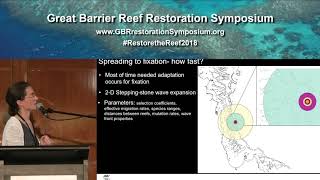
Kate Quigley: Assissted Gene Flow - Facilitating the spread of adaptation for coral restoration
Continue Reading
More from Ecology Restoration

Mycorrhizal Support Networks: Understanding the Fungi in Your Backyard
Underground fungi form vast support networks that enhance plant health and ecosystem restoration. Explore how mycorrhizal connections work in your backy...

Pollinator Sanctuary Protocol: Turning Your Balcony into a Haven for Our Smallest Kin
title: "Pollinator Sanctuary Protocol: Turning Your Balcony into a Haven for Our Smallest Kin"

Wetland Wisdom: How Restoring Marshes Recoups the Earths Natural Lungs
Restored marshes capture carbon and restore biodiversity while improving water quality. Discover why wetland restoration is critical for combating clima...
Share this article

Water as Kin: The Biophysics of Stream Restoration and Living Rivers
Stream restoration reveals how treating rivers as living systems transforms ecosystem health. Explore the biophysics reshaping water management and ecol...