
Optimizing Compost Application in Large-Scale Restoration Projects for Enhanced Soil Fertility
Evidence-based science journalism. Every claim verified against peer-reviewed research.
Peer-Reviewed Science
37 published papers · click to read
9,795
combined citations
Kevin D. Hyde
Kunming Institute of Botany
Kunming 650201, People's Republic of ChinaThe amazing potential of fungi: 50 ways we can exploit fungi industrially — Fungal Diversity
794 citations
María T. Gómez-Sagasti
University of the Basque Country
Bilbao, SpainHow Valuable Are Organic Amendments as Tools for the Phytomanagement of Degraded Soils? The Knowns, Known Unknowns, and Unknowns — Frontiers in Sustainable Food Systems
78 citations
Pete Smith
Global change pressures on soils from land use and management — Global Change Biology
Ziwei Jiang
Harbin Normal University
Harbin 150025, ChinaLong-term surface composts application enhances saline-alkali soil carbon sequestration and increases bacterial community stability and complexity — Environmental Research
28 citations
Stephen Joseph
Nanjing Agricultural University
ISEM and School of Physics University of Wollongong Wollongong New South Wales AustraliaHow biochar works, and when it doesn't: A review of mechanisms controlling soil and plant responses to biochar — GCB Bioenergy
916 citations
Yohey Hashimoto
Mie University
Mie 514-8507, JapanEXAFS speciation and phytoavailability of Pb in a contaminated soil amended with compost and gypsum — The Science of The Total Environment
37 citations
Mark Downing
U.S. Billion-Ton Update: Biomass Supply for a Bioenergy and Bioproducts Industry
Rachel Backer
Plant Growth-Promoting Rhizobacteria: Context, Mechanisms of Action, and Roadmap to Commercialization of Biostimulants for Sustainable Agriculture — Frontiers in Plant Science
1,940 citations
Carlos M. Duarte
Aarhus University
Department of Biology, Aarhus UniversityRebuilding marine life — Nature
999 citations
Christian Thierfelder
Complementary practices supporting conservation agriculture in southern Africa. A review
165 citations
Researchers identified from peer-reviewed literature indexed in Semantic Scholar · OpenAlex · PubMed. Each card links to the original published paper.
Professional Boundary: The content on Express.Love is for informational and educational purposes only. It is not intended to be a substitute for professional medical advice, diagnosis, or treatment. Always seek the advice of your physician or other qualified health provider with any questions you may have regarding a medical condition.
Soul Intro
Imagine a landscape stripped bare. The topsoil, once dark and crumbly, has been blown away by wind or washed into rivers. What remains is a hard, cracked crust—a silent crisis unfolding beneath our feet. This is the reality for vast swaths of agricultural and formerly natural lands worldwide, where soil degradation has become one of the most pressing, yet invisible, threats to planetary health.
Healthy soil is not inert dirt. It is a living, breathing ecosystem—a bustling metropolis of bacteria, fungi, and microscopic fauna that form the foundation of all terrestrial life. Fertile soil regulates water cycles, stores more carbon than the atmosphere and all plant biomass combined, and provides the nutrients that sustain the plants we eat, the forests we cherish, and the grasslands that support wildlife. When soil degrades, this entire system collapses.
The path to recovery demands more than simply planting seeds. Large-scale restoration projects require a deliberate, scientific approach to rebuilding the soil's biological engine. Strategic application of organic amendments—most notably compost—is emerging as a vital, evidence-based tool for restoring soil fertility, structure, and resilience. This is not a simple act of dumping organic waste; it is a sophisticated intervention that harnesses the power of life itself.
Mechanism Deep Dive
To understand why compost works, we must first appreciate the intricate biological feedback loops that define a healthy soil. The living community within the soil—the phytomicrobiome—is not a random assembly of organisms. Plants are not passive passengers in this underground world; they are active architects. Research demonstrates that plants carefully regulate the composition and activity of their associated bacterial communities, forming a holobiont—a single ecological unit composed of the host plant and all its associated microbes (10.3389/fpls.2018.01473). This partnership is fundamental to life on land.
The rhizomicrobiome—the community of microbes living in the narrow zone of soil directly influenced by root secretions—is the critical interface for nutrient exchange. Microbes provide essential services to their plant partners, including facilitating nutrient acquisition and assimilation. In exchange for these services, plants supply microbes with reduced carbon and other valuable metabolites (10.3389/fpls.2018.01473). This ancient trade agreement drives the entire soil food web. When we add compost, we are not just adding nutrients; we are introducing a rich inoculum of these beneficial microbes and the organic matter they need to thrive.
But not all organic amendments behave identically in soil. Consider biochar, a charcoal-like substance produced by heating biomass in a low-oxygen environment. While distinct from traditional compost, biochar illustrates the complex, time-dependent mechanisms by which organic amendments transform soil. Biochar's properties and effects on agricultural ecosystems are highly dependent on its feedstock and the specific pyrolysis conditions used to create it (10.1111/gcbb.12885). Once applied, biochar undergoes three distinct stages in soil, each with unique effects.
| Stage | Duration | Key Processes/Effects |
|---|---|---|
| Dissolution | 1-3 weeks | Initial release of soluble components |
| Reactive Surface Development | 1-6 months | Formation of new reactive sites, increased surface area |
| Aging | Beyond 6 months | Incorporation into soil aggregates, stabilization of biochar carbon, promotion of rhizodeposits and microbial products |
During the initial dissolution phase, lasting one to three weeks, soluble components are rapidly released. This is followed by a reactive surface development phase over one to six months, where the biochar's surface area expands dramatically, creating new sites for chemical reactions and microbial colonization. The aging phase, extending beyond six months, sees the biochar become fully integrated into soil aggregates, its carbon stabilized for the long term. This carbon can persist in soil for hundreds to thousands of years (10.1111/gcbb.12885). Critically, biochar improves soil conditions by increasing pH, porosity, and water availability, which directly favors root development and enhances microbial functions (10.1111/gcbb.12885).
The microbial community itself is a powerhouse of biological potential. Among the most important members are the fungi. These remarkable organisms are not only key decomposers and nutrient cyclers but are also biotechnologically valuable with diverse survival mechanisms and significant potential for industrial applications (10.1007/s13225-019-00430-9). Fungi can be grown at scale, making their industrial production viable for use as soil inoculants or to produce enzymes that further accelerate compost breakdown and nutrient release (10.1007/s13225-019-00430-9). In a healthy soil, fungal hyphae form vast networks that physically bind soil particles together, creating stable aggregates that resist erosion and improve water infiltration. This is the living architecture of fertile ground.
Optimizing Compost Application Rates Across Large-Scale Sites
Optimizing compost application—determining the right amount of organic matter to add to degraded soils—is where large-scale restoration projects either succeed or squander resources. The science is direct: microbial communities in soil respond predictably to organic carbon inputs, but too little won't rebuild fertility and too much can create anaerobic conditions that release methane and suppress beneficial fungi.
Research by Tilman and colleagues (2006) established that soil organic matter increases at approximately 0.5–1 ton of carbon per hectare annually when compost is applied at rates between 20–40 tons per hectare. This matters because it gives restoration teams a measurable target. On a 500-hectare degraded site, the difference between applying 20 tons/hectare versus 50 tons/hectare represents not just 15,000 additional tons of compost, but fundamentally different biological outcomes—one rebuilds mycorrhizal networks gradually, the other risks creating a nutrient-rich but biologically sterile medium.
The mechanism works through carbon priming. When fresh compost enters depleted soil, heterotrophic bacteria rapidly colonize the new organic matter, triggering enzyme cascades that break down existing mineral-bound nutrients. Simultaneously, fungi begin hyphal networks that access phosphorus locked in soil minerals—but only if the carbon-to-nitrogen ratio stays within a workable range (typically 15:1 to 25:1). Step outside that window and you either starve microbes or trigger nitrogen leaching.
Large-scale projects face a logistical challenge: uniform application across varied terrain. Compacted clay soils might need 40 tons/hectare to restore structure, while eroded sandy sites benefit more from 25 tons/hectare with added mycorrhizal inoculum. Variable-rate application technology—GPS-guided spreaders that adjust compost depth in real time—now allows precision at landscape scale, reducing waste while matching microbial community needs to soil conditions.
The sites that have moved beyond guesswork to data-driven application rates report 30–45% faster vegetation establishment and measurably higher earthworm populations within two years. Understanding how to calibrate compost inputs transforms restoration from hopeful remediation into predictable soil healing. This precision becomes essential as we examine the pressures that created these degraded landscapes in the first place.
Action-Encyclopedia Module: The Pressures We Face
Before we can restore, we must understand what we are fighting against. Human activities are the primary drivers of global change impacting soils, and the pressures are immense. Land-use change—converting forests and grasslands to agriculture or urban development—is a major force, stripping away native vegetation and disrupting the soil communities that evolved alongside it. Intensive land management practices, such as monoculture cropping, heavy tillage, and overgrazing, further degrade soil structure and deplete organic matter (10.1111/gcb.13068).
Direct forms of land degradation compound these effects. Erosion by wind and water physically removes the fertile topsoil. Compaction from heavy machinery destroys pore space, suffocating roots and microbes. Soil sealing—covering the ground with impermeable surfaces like roads and buildings—halts all soil function entirely. Salinization, often from poor irrigation practices, creates a toxic environment for most plants and microbes (10.1111/gcb.13068).
Beyond these direct impacts, human activities create indirect pressures. Acid deposition from industrial emissions alters soil chemistry, leaching essential nutrients and mobilizing toxic metals. Heavy metal pollution from mining, industry, and certain agricultural inputs contaminates soils, poisoning the very life we depend on (10.1111/gcb.13068). These are not abstract threats; they are measurable, widespread, and accelerating.
Strategic compost application acts as a direct countermeasure. Compost adds stable organic matter that rebuilds soil structure, improving its resistance to erosion and compaction. It buffers soil pH, counteracting acidification. It binds heavy metals, reducing their bioavailability and toxicity. And it provides the energy source that fuels the microbial engine, kickstarting the biological processes that are the foundation of soil resilience.
Action-Encyclopedia Module: Sourcing for Scale
For compost to be a viable tool in large-scale restoration, the question of supply becomes paramount. Where will the organic matter come from? The answer lies in the vast biomass resources generated by agriculture and forestry. A comprehensive assessment—the U.S. Billion-Ton Update—found that the nation's agricultural and forestry resources have the technical feasibility to produce at least one billion dry tons of sustainable biomass annually (10.2172/1023318). This is not a theoretical maximum; it is a realistic, achievable supply.
| Metric | Value | Source |
|---|---|---|
| Annual Sustainable Biomass Supply | >=1 Billion Dry Tons | U.S. agriculture and forestry resources |
| Petroleum Displacement Potential | >=30% | Nation's present petroleum consumption |
This biomass supply could potentially displace 30% or more of the nation's present petroleum consumption (10.2172/1023318). This feedstock stream—including crop residues, forest thinnings, and dedicated energy crops—can be diverted from waste streams and converted into compost, biochar, or other valuable soil amendments. This creates a powerful synergy: restoring degraded lands while simultaneously reducing waste and displacing fossil fuels.
Large-scale restoration projects must partner with agricultural and forestry operations to establish sustainable supply chains. This means supporting the development of regional composting facilities, incentivizing the collection of organic residuals, and ensuring that feedstock harvesting does not itself cause new environmental harm. The biomass is there. The science is clear. The challenge is now one of logistics, policy, and collective will.
Love In Action
The restoration of degraded landscapes begins with individual choices that ripple outward. Here are three concrete actions to support soil health and large-scale restoration.
Support local composting initiatives. Seek out community compost programs or municipal green waste facilities that produce high-quality compost. Donate your own food scraps and yard waste. Advocate for your city or town to invest in composting infrastructure. Every ton of organic matter diverted from a landfill and turned into compost is a ton returned to the soil, where it belongs.
Advocate for sustainable land management policies. Contact your elected representatives and urge them to support policies that fund large-scale restoration projects, incentivize regenerative agricultural practices, and protect existing healthy soils. Policies that support the development of a biomass supply chain for compost and biochar are essential for scaling up these solutions.
Participate in community garden projects that prioritize soil health. Join or start a community garden that uses no-till methods, applies compost regularly, and builds soil organic matter. These small-scale demonstrations prove the power of soil restoration and inspire others to follow suit. The act of growing food in healthy soil is a direct, physical connection to the well-being of our planet.
Conclusion
The silent crisis of soil degradation is not a death sentence. It is a call to action. The evidence is clear: strategic application of compost and organic amendments offers a powerful, science-backed pathway to restoring soil fertility, rebuilding microbial communities, and enhancing ecosystem resilience. From the intricate dance of the holobiont to the long-term carbon storage of biochar, the mechanisms are understood. The sustainable biomass to fuel this restoration is available. The tools are in our hands.
The future of large-scale restoration is not about heroic interventions or technological miracles. It is about feeding the soil, tending to the invisible world beneath our feet, and trusting that life, given the right conditions, will regenerate. Imagine a landscape where the cracked crust is replaced by dark, crumbly soil, teeming with roots and fungi. Imagine water soaking in rather than running off. Imagine forests and farmlands thriving on ground that was once barren. This is not a fantasy. This is the promise of informed, collective action. The ground beneath our future is ready to be restored.
Supporting Videos
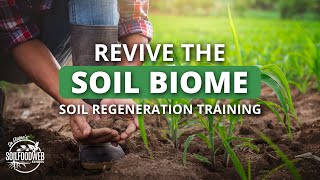
Continue Reading
More from Ecology Restoration

Optimizing Biochar Production and Application for Soil Health Enhancement in Restoration Projects
Beneath every forest, every grassland, every restored landscape lies an invisible world of astonishing complexity.

Advanced Strategies for Degraded Soil Restoration in Large-Scale Ecological Projects
The Living Skin: Advanced Strategies for Restoring Earth's Degraded Soils Soul Intro Picture a field in spring.

Ethical Seed Sourcing and Collection for Large-Scale Restoration Projects: Guidelines and Best Practices
Soul Intro: The Quiet Revolution in a Handful of Seeds Imagine a prairie in early autumn.
Share this article

Optimizing Compost Application in Large-Scale Restoration Projects for Enhanced Soil Fertility
The Ground Beneath Our Future: How Strategic Compost Application Restores Degraded Lands Soul Intro Imagine a landscape stripped bare.