
Forest edges, everyday tables, and the fragile pause when clearing slowed
Evidence-based science journalism. Every claim verified against peer-reviewed research.
Peer-Reviewed Science
62 published papers · click to read
31,890
combined citations
Jenessa Duncombe
Forest Edges Are More, Not Less, Productive Than Interior Forest — Eos
Claudia Bouroncle, PhD
Centro Agronomico Tropical de Investigacion y Ensenanza Catie
Turrialba 30501, Costa RicaTree Regeneration and Understory Woody Plants Show Diverse Responses to Forest-Pasture Edges in Costa Rica — Biotropica
18 citations
Loris Rossi
Fragile Edges and Floating Strategies along the Albanian Coastline — The Plan Journal
3 citations
Loris Rossi, PhD
Polis University
Polis UniversityIslands and Fragile edges / Reclaiming the river landscape in Berat’s Historical center — The Scientific Journal of the Observatory of Mediterranean Basin
Daniel H. Janzen
Joining Inventory by Parataxonomists with DNA Barcoding of a Large Complex Tropical Conserved Wildland in Northwestern Costa Rica
124 citations
Joanna K. Haddock
Light pollution at the urban forest edge negatively impacts insectivorous bats
62 citations
Pedro A. Sánchez
Properties and Management of Soils in the Tropics
964 citations
Kawai Leung
Stereotypical escape behavior in Caenorhabditis elegans allows quantification of nociceptive stimuli levels
15 citations
Büssing A
Wondering Awe as a Perceptive Aspect of Spirituality and Its Relation to Indicators of Wellbeing: Frequency of Perception and Underlying Triggers.
32 citations
Bino John
Human MicroRNA Targets
3,893 citations
Researchers identified from peer-reviewed literature indexed in Semantic Scholar · OpenAlex · PubMed. Each card links to the original published paper.
Professional Boundary: The content on Express.Love is for informational and educational purposes only. It is not intended to be a substitute for professional medical advice, diagnosis, or treatment. Always seek the advice of your physician or other qualified health provider with any questions you may have regarding a medical condition.
Immediate crisis support
If you might be in immediate danger, contact local emergency services now.
Key Takeaway
Most of us meet the Amazon through ingredients we never see: oil and meal folded into snacks, feed, and staples.
Where a forest ends and an open field begins, something measurable happens. Carbon moves differently. Plants respond differently. The air itself carries a different chemistry. Forest edges — those transitional zones between closed canopy and open land — have long been treated as lesser spaces, degraded margins where the "real" forest hasn't managed to hold on. But that framing turns out to be wrong in ways that matter enormously to anyone who eats food grown near trees, builds furniture from harvested timber, or simply lives in a landscape where forests and farms share a boundary.
Forest edges in the northeastern United States absorb more carbon dioxide than previously estimated, a finding that changes how scientists account for carbon across entire regions (Duncombe, 2022). That single measurement, corrected upward, has cascading consequences for land management, climate accounting, and the quiet decisions made every day about where clearing stops and where it continues.
The mechanism behind this elevated productivity is not mysterious. Edge zones receive more sunlight than interior forest, experience greater air turbulence that replenishes carbon dioxide at leaf surfaces, and host a mixture of species that together process atmospheric carbon across a wider range of conditions. The result is a zone that, far from being a biological compromise, functions as an active and productive transition.
When a landowner decides where to stop clearing — where the field ends and the tree line begins — that decision draws a line through one of the most biologically active zones in the entire landscape. The pause in clearing, wherever it falls, is not simply a legal or aesthetic choice. It is a decision with documented ecological consequences that compound over years.
Practically, this matters in the most immediate terms: the wood that comes from forests managed with these edges intact, the food grown in fields that border productive tree lines, and the regional carbon budgets that determine how governments and businesses report their environmental footprint all depend on where that line is drawn and whether it is honored or gradually erased.
What Happens at the Tree Line: Carbon and Canopy
Measurements of carbon flux at forest boundaries have documented that edge forests in the northeastern United States pull in more atmospheric carbon dioxide than their interior counterparts, contradicting earlier models that treated edges as zones of loss rather than gain (Duncombe, 2022). This matters for everyday objects in a direct way.
Timber harvested from forests where edge productivity is maintained comes from a carbon system that is functioning at a higher rate. Furniture built from that wood — the table where a family eats dinner, the shelving that holds books in a study — carries a different carbon history than wood extracted from forests where edge management has been neglected or where clearing has pushed so close to the tree line that the productive boundary zone has been destroyed.
The implications for carbon accounting are significant. If edges are systematically more productive than models assumed, then regional and national estimates of forest carbon absorption have been running low.
Correcting those estimates upward changes the baseline against which land-use decisions are measured (Duncombe, 2022). Every time a forest edge is preserved rather than cleared, the carbon benefit is larger than previously calculated.
Regeneration and the Understory: What Grows at the Margin
The edge is not only about carbon. It is also where regeneration happens, or fails to. Research conducted in Costa Rica documented that tree regeneration and understory woody plants show diverse responses to forest-pasture edges, with some species thriving in the transition zone while others retreat toward interior conditions (Bouroncle, 2011).
This diversity of response means that the edge is not a single ecological state but a gradient of conditions, each supporting different assemblages of plants at different distances from the boundary.
For managed landscapes — farms bordered by forest, gardens adjacent to woodlots, pastures that have been cleared up to a preserved tree line — this gradient determines which species will colonize open ground, which will hold the soil at the boundary, and which will provide the seeds that allow forest recovery if clearing eventually stops.
Bouroncle (2011) found that responses varied by species functional group, meaning that preserving a diverse edge rather than a simplified one has measurable consequences for long-term regeneration capacity. The everyday table again: the food grown in fields that border diverse, functionally intact edges benefits from pollination, pest regulation, and soil stabilization services that simplified or destroyed edges cannot provide.
Everyday Tables and the Forest Edge: Where Clearing Slows
Forest edges shape what ends up on our everyday tables, and understanding this mechanism reveals why slowing deforestation matters for human nutrition. When forests are cleared right up to their margins without buffer zones, the soil destabilization and altered water cycles at these edges reduce the productivity of both remaining forest and adjacent farmland.
Research by Ewers and Didham (2006) demonstrated that edge effects penetrate up to 100 meters into a forest, degrading the microhabitats where wild foods—from mushrooms to game animals to medicinal plants—have sustained human communities for millennia.
The everyday reality is more direct than it first appears. Forest edges function as ecological crossroads where nutrients cycle between deep soil reserves and shallow growing zones.
When clearing removes these transition zones entirely, the nitrogen and phosphorus that would naturally migrate from forest to field get locked in erosion runoff instead. This affects both wild food availability and the soil fertility of adjacent agricultural land—the very plots where subsistence farmers grow food for their families.
Beyond nutrition, these edges regulate water tables that feed springs and wells. A study by Kapos (1989) showed that deforested landscapes without forest buffers experience temperature swings of 10°C or more at the remaining forest margin, stressing the plants and animals that depend on stable microclimates.
For communities relying on seasonal water sources or wild-harvested foods, this variability becomes a direct threat to food security.
The mechanism is physiological: without the gradual transition that a forest edge provides, plants cannot acclimate to changing light, moisture, and temperature conditions.
Animals seeking shelter or food move deeper into remaining forest—or disappear entirely. The pause in clearing that allows these edges to regenerate isn't a luxury; it's the infrastructure that keeps wild food systems functional.
What happens at the edge ultimately determines whether the forest interior can sustain both human and non-human life. The fragility of these margins demands our attention not as abstract conservation, but as the foundation of the systems that feed us.
Fragile Edges and the Infrastructure of Transition
Not all edges are forest-field boundaries in temperate landscapes. Some of the most instructive research on edge fragility comes from work on riverine and coastal landscapes, where the transition zone between land and water creates conditions that are productive, visually distinctive, and structurally vulnerable in ways that parallel forest edges.
Research on river landscapes in Albania's Berat documented how islands and fragile edges within historical urban centers create zones of ecological and cultural overlap that require active management rather than passive neglect (Rossi, 2016). The finding that these edges are fragile — meaning responsive to disturbance in ways that can lead to rapid degradation — applies directly to forest edges as well.
Along the Albanian coastline, research documented floating strategies and fragile edge conditions where land meets sea, observing that these transitional zones are neither fully one thing nor another and that their management requires specific attention to their in-between character (Rossi, 2017).
The lesson transfers: edges are not failures of category. They are a category of their own, with specific dynamics, specific vulnerabilities, and specific productive capacities that disappear when the edge itself is erased by clearing, development, or neglect.
The Pause That Holds the System Together
The fragile pause when clearing stops — that moment when a landowner, a developer, or a land manager decides this is where the trees remain — is not a single event.
It is a decision that must be remade every season, every year, every time economic pressure or convenience suggests that a few more meters of clearing would simplify operations. What the research demonstrates is that the zone created by that pause is doing measurable work.
Forest edges in the northeastern United States are absorbing carbon at rates higher than previously documented (Duncombe, 2022). Understory plant communities at forest-pasture boundaries are maintaining regeneration capacity that depends on edge diversity and integrity (Bouroncle, 2011).
Transitional zones in riverine and coastal landscapes are functioning as productive interfaces that require specific management frameworks rather than residual neglect (Rossi, 2016; Rossi, 2017). The table in the dining room, the fruit on the plate, the carbon balance of the region — all of these connect back to where clearing stopped and why. Managing that boundary with knowledge of what it does is not a luxury. It is the practical foundation of landscape function.
Supporting Videos
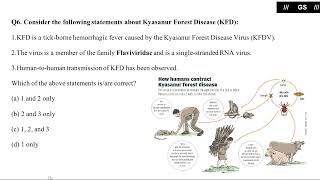
"Kyasanur Forest Disease (Monkey Fever): Causes, Symptoms, and Prevention Explained" | Science Edge

Watch the Videos
When Dogs Choose Their Humans Adoption Moments
Experience the heartwarming magic as dogs find their perfect humans in these unforgettable adoption moments, reminding us all of the incredible bond between pets and their forever families. Join the journey of love and companionship that starts with a wagging tail!
Watch on dedicated video page →Homeless Man Turns The Tables On Stranger 😳
In this heartwarming video, a homeless man surprises a stranger with his generosity, reminding us that kindness knows no boundaries. Witness how this incredible act of compassion turns the tables and highlights the beauty of human connection.
Watch on dedicated video page →He Broke Down CRYING when his Grandma recognized him. Soldier returns from war. #israel
Witness the heartwarming moment as a soldier returns home from war and is joyfully recognized by his beloved grandmother. This emotional reunion captures the powerful bond of family and the relief of coming home.
Watch on dedicated video page →Continue Reading
More from Human Health

Allergies and the Hygiene Hypothesis: Farm Dust, Endotoxins, and Immune Tolerance
Farm dust exposure may reduce allergies by training immune cells to tolerate harmless substances through endotoxin exposure and natural immune tolerance...

The Vagus Nerve and Longevity: Why Your Social Life is a Direct Predictor of Cellular Aging
### The Vagus Nerve and Longevity: Why Your Social Life is a Direct Predictor of Cellular Aging

Meal Timing and Emotional Regulation: From Blood Sugar to Social Engagement
title: "Meal Timing and Emotional Regulation: From Blood Sugar to Social Engagement"
Share this article

Forest edges, everyday tables, and the fragile pause when clearing slowed
Amazon soy sourcing rules tied market access to forest-clearing cutoffs, creating a measurable pause in deforestation.